

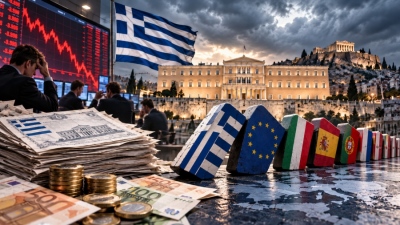
Greece is entering an extremely dangerous zone due to the government’s policy of “tying” itself to the U.S. energy wagon, according to an article by Dr. Zissis Marmarelis in Chatham House.
As noted, the long-term shift to imported LNG from the U.S. brings high prices, supply uncertainty, and significant environmental risk, calling into question the benefits the Greek government expects – and, of course, the citizens will “foot the bill,” as always.
Specifically, as Dr. Marmarelis points out, energy policy makers from the U.S. and Europe are gathering in Athens on November 6 for the 6th Ministerial Meeting of the Partnership for Transatlantic Energy Cooperation (P-TEC).
On the meeting’s agenda is Energy in Southeastern Europe, focusing on accelerating the flow of American Liquefied Natural Gas (LNG) in the region.
Greece, as the host of the summit, aspires to position itself as a regional energy hub, boosting investments in LNG infrastructure with the goal of achieving an upgraded geopolitical role.
The narrative of the “energy hub” stems from the energy crisis of recent years, which led European countries to seek LNG supplies, much of which comes from the U.S., to compensate for the dramatic reduction in Russian flows.
Since then, Europe’s LNG regasification capacity, which allows the conversion of LNG back into gas for distribution, has increased by 32%.
EU natural gas consumption has decreased by 17% thanks to energy efficiency and clean energy initiatives under the REPowerEU program.
The new EU sanctions against Russia, aiming for the complete phase-out of Russian LNG by 2027, highlight the urgent need for alternative supplies, especially as the last Russian pipeline to Europe via Turkey will cease operation by 2028.
The strategic position of Greece, at the crossroads of continents and as a gateway to the Balkans, enhances its candidacy as a suitable hub.
Imports from the U.S. are expected to play a leading role in this plan.
The EU–U.S. trade agreement in July included a commitment that the EU would purchase $750 billion worth of energy products from the U.S. within three years.
At the same time, the U.S. and Qatar are pressuring the EU to relax climate regulations to allow greater LNG flow.
Within this framework, Greece is developing two new terminals, in addition to the existing facilities in Alexandroupolis and Revythousa (Attica).
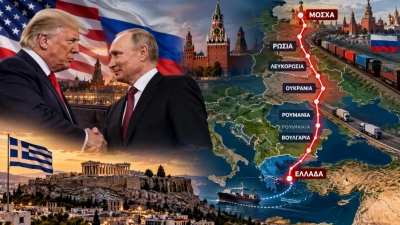
The goal is for Greece to become a source of new LNG supplies for the region through the “Vertical Corridor”, a pipeline network that passes from Greece through Bulgaria, Romania, and Moldova to Ukraine.
This route has become more attractive after the reduction of transit fees by the participating countries, competing with the northern route through Lithuania and Poland.
However, while the “energy hub” project will make a significant short-term contribution and could upgrade Greece’s geopolitical role, the long-term dependence on American LNG entails substantial economic and environmental risk.
High prices and uncertainty
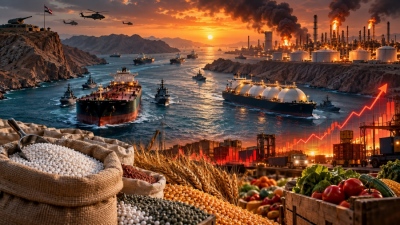
The Russian invasion of Ukraine caused gas prices to soar, resulting in extremely high electricity prices across Europe.
Prices have stabilized over the past year, but natural gas remains nearly three times higher than pre-crisis levels.
Since the start of the war, EU countries have spent €258 billion on LNG imports.
This has largely ensured energy security, but unlike pipeline gas, which provides supply stability, American LNG operates on a “free-on-board” (FOB) basis—meaning sellers can redirect cargoes to the highest global bidder.
This means that, regardless of how many new infrastructures Greece builds, the country and other regions will remain exposed to international gas price volatility, resulting in persistently high electricity prices without guaranteed supply adequacy.
In 2025, on average, Greece bought American LNG at the highest price in Europe.
At the same time, EU carbon permit prices are expected to soar in the coming years, exerting further pressure on electricity prices from fossil fuels.
This will impact the entire economy and the region’s competitiveness.
If electricity prices in the U.S. rise, something likely due to restrictions on green energy projects and increased demand from data centers, this risk could worsen.
The environmental impact of LNG is also significant.
Although considered a “transition fuel,” new studies using satellite data show that methane leaks from LNG may be much higher than previously estimated.
While it produces less CO₂ than coal, LNG’s increased methane emissions have a stronger short-term warming effect.
The long transportation and regasification process further burdens the environment, jeopardizing the EU’s decarbonization goals.
The alternative
Greece is well positioned as a stable gas distribution hub in Southeastern Europe.
At the same time, it can evolve into a regional clean energy hub, contributing to EU energy security while safeguarding decarbonization goals.
Greece is already a leader in green energy production: renewable sources generate more than half of the country’s electricity, and production is expected to increase.
Accelerating the transition to clean energy could attract foreign investment, as clean energy initiatives are being scaled back in the U.S.
Greece will also strengthen its “soft power”, emerging as a climate leader, in contrast to countries like Turkey, which recently announced new coal subsidies.
Accelerating investment in storage technologies, such as batteries (BESS), is crucial for optimizing Greece’s abundant renewable resources.
Last year, about 10% of renewable energy production was lost during high-output hours, indicating the need for energy storage and grid decongestion.
Market conditions are favorable for battery development due to negative pricing and high intraday price differences, but licensing and bureaucracy in Greece remain obstacles to the target of installing 4.7 GW of batteries by 2030.
Clean technology carries risks, mainly due to dependence on Chinese imports of batteries and renewable energy components.
However, it is a “one-time” investment: once the infrastructure is built, the energy supply will be far less exposed to ongoing dependency like natural gas.
The Russian invasion of Ukraine clearly demonstrated the inherent danger of fossil fuel–based strategies.
Europe’s gas demand is expected to decline next year, increasing the risk that new LNG facilities may become “stranded assets.”
Exports
A common argument for Greece’s LNG hub ambitions is the potential to become an energy exporter to the Western Balkans.
With few exceptions, the countries in the region use limited natural gas, but a large share still comes from Russia.
New Greek sources can fill this gap.
However, in the long term, Greece should plan to export electricity to the region instead of gas.
This will prevent Western Balkan countries from locking into fossil-fuel solutions, reduce electricity prices, and align with their European aspirations.
Strengthening electricity interconnections between countries is critical for energy exports, particularly for the EU’s proposed projects with Cyprus, which is isolated from the grid, and with Egypt, which has significant but underutilized renewable potential.
Protecting long-term transition goals
In the short term, Greece’s new LNG terminals are crucial for EU energy security and Ukraine’s supply.
However, the new LNG installations should be seen as short-term security measures, and regardless of pressure from the U.S., they must operate under strict methane regulations.
The EU must insist on its regulations, upholding its role as a global regulatory superpower, and remind Washington that reducing methane leaks increases gas output and profits.
For stable prices, the EU should strengthen the collective negotiation mechanism for joint gas purchases, in line with the Draghi Report on EU competitiveness.
To fully leverage its potential as a clean energy hub, Greece must simplify the battery licensing process to reduce investor confusion and delays, creating contracts that reward grid decongestion.
With this approach, Greece can build upon its clean energy achievements and emerge as a true regional leader for the future, concludes Dr. Zissis Marmarelis of Chatham House.






Σχόλια αναγνωστών