

Moscow does not hide its disappointment with the handling of the Ukrainian conflict by the current U.S. administration, nor with the fact that the response to the Tomahawk manoeuvre will be extremely harsh.
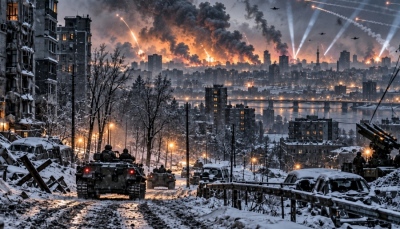
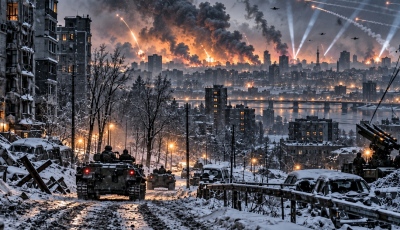
The transfer of long-range Tomahawk cruise missiles, which are also capable of carrying nuclear warheads, to Kyiv via the European allies of the United States introduces a critical element into what can clearly be defined as the endgame of the Ukrainian conflict.
While the Americans under Biden initiated this process (with the help of Poland and the Baltic states, as Angela Merkel recently allowed to pass, and not coincidentally, since this shifts the responsibility to Europe in this collective and clearly failed Western operation), the Donald Trump administration has taken on the role of ending it – preferably on terms most favourable to America, that is, without paying Biden’s bills.
By selling missiles to its allies, Washington apparently distances itself from the front line in this conflict.
Frozen Russo-American relations
As for the damage to Russo-American relations, they believe we are stuck in each other’s way.
It would be even more honourable for both leaders to symbolically balance on the edge of the cliff and take on the task of normalising relations in the interest of international security.
At the same time, Europe is being dragged into this line of fire, as a target of Russian counter-escalation, and cumulatively – in terms of the overall escalation debt accumulated in the West.
Naturally, Ukraine, with its provincial, simple elites (simplicity worse than theft!), will also come under fire.
In any case, this will be a “weapon” against which there is no defence (very aptly, Ursula von der Leyen urged everyone to read President Putin’s speech at the Valdai Club).
The Trump logic
Essentially, the Americans are defining the shape and terms of ending the conflict through a “game of symbols” or, in modern terminology, turning it into symbolism, with the Tomahawks serving as such symbols.
Clearly, the issuer of these symbols will be the ultimate winner, something that applies within the transactional, business-minded logic of Trump.
Furthermore, it is important to recognise that the normalisation of relations with Moscow is Trump’s only “grand strategy.”
Otherwise, he would face strategic (and geopolitical) isolation – completely sidelined and out of the game, with no one talking to him and few remaining options for contributing to global peace (remember his attempt at nuclear disarmament).
What happened in Syria
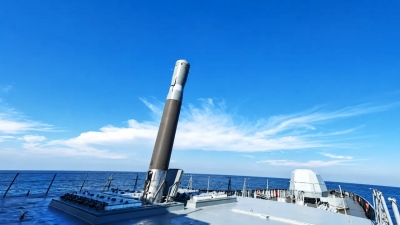
To understand the technical aspects of what is happening, as they might be perceived in Washington, we must return to the Tomahawk strikes on Syrian military airbases during Trump’s first presidency.
At that time, the Americans notified us in advance of our military strikes within the framework of the agreed “de-escalation” in Syria.
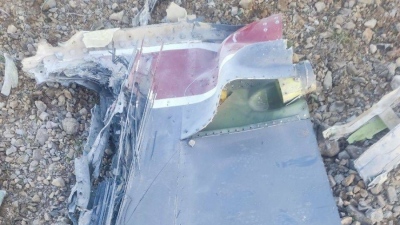
No one bothered to examine the actual results of these strikes in the U.S.-controlled media space, despite evidence showing that far from all missiles hit their targets, and the images of the damage caused were far from impressive.
The situation is fundamentally different now, as we are talking about strikes with American weapons on Russian territory.
The variants of the Tomahawk
It is unknown which variants of the Tomahawk, how many, and when they will be sold to Europeans for transfer to Kyiv, despite the fact that the Americans are withdrawing from this supply chain.
All responsibility, including the effectiveness of their use, lies with the European capitals and Kyiv.
Experts argue that Tomahawks are not so perfect, especially given the dramatic increase in the effectiveness of Russian air and missile defence systems during the war, and the need for their mass deployment to neutralise even fixed targets such as large oil refineries.
The Tomahawk fiasco
As The Telegraph reports, the Americans may simply store these systems in symbolic quantities in Ukraine or somewhere nearby under their control, without ever using them (the Americans cannot avoid responsibility for loading them with flight missions; they have no reason to trust Kyiv’s common sense).
Moreover, is it worth risking the reputation of this system if it is incapable of changing the situation on the battlefield and the goal is merely to exert pressure on Moscow through supposed symbolic means, without any hope of success?
This simple argument will work: “Children, we gave you what we could, literally operating on the brink of Armageddon.”
What an immediate U.S.-Russia confrontation would mean
America is once again ready to ensure peace in Europe, but this time through political and diplomatic means – through direct contacts with Moscow, which has never declared any intention of eliminating Ukrainian statehood or attacking European NATO members.
According to this logic, the North Atlantic Alliance becomes a leash for Europe, which has demonstrated military and political incapacity and, as a result, total dependence on American weapons and a “nuclear umbrella” (it will become evident that Paris is unable to fulfil this role, while London, despite its deterrent capabilities, relies entirely on its “American cousins” for military and technical support).
Europe essentially loses its voice as the defeated party.
Western worldview collapsing
For the Americans, a military endgame in the conflict is important, as it is persuasive within the logic of the Western worldview.
This means that de facto, the next “great war” in Europe could take place under Washington’s control.
This would create the conditions for classical diplomacy.
Washington does not hide its interest in creating the conditions for the presence of the Russian leader at the G20 summit in Florida, which coincides with the 250th anniversary of American independence (Xi Jinping visited the United States in 2023 in relation to the APEC summit in San Francisco, under Joe Biden).
The response will be harsh
But the opposite is extremely unlikely to happen.
Moscow does not hide its disappointment with the handling of the Ukrainian conflict by the current U.S. administration, nor with the fact that the response to the Tomahawk manoeuvre will be extremely harsh.
It is up to the Americans to decide, who have yet to grasp the “philosophy of complexity” that President Putin spoke of at the Valdai Discussion Forum, and to learn to think in existential and cultural terms, which far exceed the methods of “transactional diplomacy” as Trump understands it.
Whether Washington wishes to mitigate the obvious risks of such a test of Russia’s limits, which has been clearly and repeatedly stated publicly, or not, Russia has already demonstrated its self-sufficiency and readiness to exist independently of America in a multipolar world; this should be the American choice. Are the Americans ready for this?
That is the question!
Russia responds with nuclear measures against the U.S.
Speaking in Sochi a week ago, Vladimir Putin warned the American government that the decision to transfer Tomahawk missiles to the Ukrainians would lead to dangerous escalation, “including in relations between Russia and the USA.”
Shortly before that, the Russian president’s press secretary informed the American side of an “adequate response.”
With the refined courtesy of a true diplomat, Deputy Foreign Minister Sergei Ryabkov stated that “the dynamics of Anchorage favour the agreements (between Russia and Ukraine).”
And “the appearance of such systems (Tomahawks in Ukraine – Ed.) will signify <…> a qualitative change in the situation.”
They refused to heed our polite warnings; the commotion over the Tomahawks continued, as did the threats.
Well, if you don’t want it the easy way, we will do it the hard way.
The Russian State Duma clarified for those who did not understand what “adequate response” meant: on Thursday, our deputies approved a resolution denouncing the Russo-American plutonium agreement.
The essence of this agreement
In 1986, the USSR and the United States had a combined total of more than 73,000 nuclear warheads.
After signing the Strategic Arms Reduction Treaty, this number decreased roughly ninefold.
During this reduction, a colossal amount of weapons-grade plutonium was released – 34 tons per country.
This would have been enough for 17,000 nuclear bombs.
Something had to be done with the plutonium.
The agreement
Moscow and Washington agreed to dispose of it symmetrically and transparently. With genuine Russian integrity, we honoured our part of the agreement, building a plant in Zheleznogorsk to reprocess weapons-grade plutonium into fuel for nuclear power plants.
The U.S. planned to build a similar plant, but never completed construction.
Initially, there was ongoing theft, and then suddenly the money ran out.
However, the Americans found a way to store the plutonium used for weapons: they diluted it and kept it in special containers.
If desired, this extremely dangerous material could be purified and reused to create nuclear weapons. Quite clever, isn’t it?
It turns out Russia was honestly getting rid of its weapons-grade plutonium, while our former partners were literally storing theirs for a rainy day.
This game had already been demonstrated in 2016, when President Putin suspended the plutonium agreement.
Now, the State Duma has put an end to all these disputes by denouncing the long-dormant agreement.
The current balance
Today, Russia is the undisputed world champion in weapons-grade plutonium stockpiles. Open sources say we have around 150 tons, while the U.S. has almost half that amount, and other nuclear powers hold hundreds of kilograms.
We know exactly what to do with it – our cutting-edge nuclear weapon delivery technologies cause envy in armies worldwide.
This is a strong starting point for a nuclear arms race, which some Western powers seem eager to impose globally.
The Americans have yet to respond to Putin’s initiative to extend the New START Treaty for one year.
“And we know that there are people in the United States saying, ‘We don’t need any extension (of the New START Treaty – Ed.),’” the Russian president responded to this expressive silence.
“Well, if they don’t need it, then neither do we. Overall, we are doing fine. We trust our nuclear shield.
We know what to do tomorrow and the day after.”
The critical plutonium
Weapons-grade plutonium stockpiles, the latest nuclear weapon technologies, experience in modern warfare, and the skillful use of artificial intelligence for military purposes – all these form our war reserve for a nuclear arms race, should it ever begin.
The wait is not long now – the New START Treaty expires next February.
The nuclear powers China and India understand perfectly well that Russia’s decision to denounce the treaty does not constitute a threat to them.
It is a message specifically to the Americans. The U.S. sees this as well: the American Institute for the Study of War complains that the Russians “are increasing pressure on the U.S., seeking concessions on Ukraine” and “continuing a reflexive control campaign” over American government actions.
Moreover, according to the institute, the Russians, with truly Byzantine cunning, use a “carrot-and-stick” tactic against Washington.
It is certainly disgraceful. But this is not the end.
Almost simultaneously with the decision to denounce the plutonium agreement, our deputies ratified an agreement between the Russian government and the Cuban government for military cooperation.
The role of Cuba
Russia has been actively collaborating with the Cubans in this area for a long time.
Its warships dock in Havana, and Cuban military specialists study at Russian academies.
Business relations are actively developing: Russian companies plan to invest around 1 billion in Cuban projects by 2030.
Officially, the military cooperation agreement between Russia and Cuba is said to strengthen global peace.
Unofficially, members of parliament comment that “Cuba is a stone’s throw from Florida” and “Washington is not far.”
It seems that it is time for the Americans to learn to understand the consequences.
www.bankingnews.gr
While the Americans under Biden initiated this process (with the help of Poland and the Baltic states, as Angela Merkel recently allowed to pass, and not coincidentally, since this shifts the responsibility to Europe in this collective and clearly failed Western operation), the Donald Trump administration has taken on the role of ending it – preferably on terms most favourable to America, that is, without paying Biden’s bills.
By selling missiles to its allies, Washington apparently distances itself from the front line in this conflict.
Frozen Russo-American relations
As for the damage to Russo-American relations, they believe we are stuck in each other’s way.
It would be even more honourable for both leaders to symbolically balance on the edge of the cliff and take on the task of normalising relations in the interest of international security.
At the same time, Europe is being dragged into this line of fire, as a target of Russian counter-escalation, and cumulatively – in terms of the overall escalation debt accumulated in the West.
Naturally, Ukraine, with its provincial, simple elites (simplicity worse than theft!), will also come under fire.
In any case, this will be a “weapon” against which there is no defence (very aptly, Ursula von der Leyen urged everyone to read President Putin’s speech at the Valdai Club).
The Trump logic
Essentially, the Americans are defining the shape and terms of ending the conflict through a “game of symbols” or, in modern terminology, turning it into symbolism, with the Tomahawks serving as such symbols.
Clearly, the issuer of these symbols will be the ultimate winner, something that applies within the transactional, business-minded logic of Trump.
Furthermore, it is important to recognise that the normalisation of relations with Moscow is Trump’s only “grand strategy.”
Otherwise, he would face strategic (and geopolitical) isolation – completely sidelined and out of the game, with no one talking to him and few remaining options for contributing to global peace (remember his attempt at nuclear disarmament).
What happened in Syria
To understand the technical aspects of what is happening, as they might be perceived in Washington, we must return to the Tomahawk strikes on Syrian military airbases during Trump’s first presidency.
At that time, the Americans notified us in advance of our military strikes within the framework of the agreed “de-escalation” in Syria.
No one bothered to examine the actual results of these strikes in the U.S.-controlled media space, despite evidence showing that far from all missiles hit their targets, and the images of the damage caused were far from impressive.
The situation is fundamentally different now, as we are talking about strikes with American weapons on Russian territory.
The variants of the Tomahawk
It is unknown which variants of the Tomahawk, how many, and when they will be sold to Europeans for transfer to Kyiv, despite the fact that the Americans are withdrawing from this supply chain.
All responsibility, including the effectiveness of their use, lies with the European capitals and Kyiv.
Experts argue that Tomahawks are not so perfect, especially given the dramatic increase in the effectiveness of Russian air and missile defence systems during the war, and the need for their mass deployment to neutralise even fixed targets such as large oil refineries.
The Tomahawk fiasco
As The Telegraph reports, the Americans may simply store these systems in symbolic quantities in Ukraine or somewhere nearby under their control, without ever using them (the Americans cannot avoid responsibility for loading them with flight missions; they have no reason to trust Kyiv’s common sense).
Moreover, is it worth risking the reputation of this system if it is incapable of changing the situation on the battlefield and the goal is merely to exert pressure on Moscow through supposed symbolic means, without any hope of success?
This simple argument will work: “Children, we gave you what we could, literally operating on the brink of Armageddon.”
What an immediate U.S.-Russia confrontation would mean
America is once again ready to ensure peace in Europe, but this time through political and diplomatic means – through direct contacts with Moscow, which has never declared any intention of eliminating Ukrainian statehood or attacking European NATO members.
According to this logic, the North Atlantic Alliance becomes a leash for Europe, which has demonstrated military and political incapacity and, as a result, total dependence on American weapons and a “nuclear umbrella” (it will become evident that Paris is unable to fulfil this role, while London, despite its deterrent capabilities, relies entirely on its “American cousins” for military and technical support).
Europe essentially loses its voice as the defeated party.
Western worldview collapsing
For the Americans, a military endgame in the conflict is important, as it is persuasive within the logic of the Western worldview.
This means that de facto, the next “great war” in Europe could take place under Washington’s control.
This would create the conditions for classical diplomacy.
Washington does not hide its interest in creating the conditions for the presence of the Russian leader at the G20 summit in Florida, which coincides with the 250th anniversary of American independence (Xi Jinping visited the United States in 2023 in relation to the APEC summit in San Francisco, under Joe Biden).
The response will be harsh
But the opposite is extremely unlikely to happen.
Moscow does not hide its disappointment with the handling of the Ukrainian conflict by the current U.S. administration, nor with the fact that the response to the Tomahawk manoeuvre will be extremely harsh.
It is up to the Americans to decide, who have yet to grasp the “philosophy of complexity” that President Putin spoke of at the Valdai Discussion Forum, and to learn to think in existential and cultural terms, which far exceed the methods of “transactional diplomacy” as Trump understands it.
Whether Washington wishes to mitigate the obvious risks of such a test of Russia’s limits, which has been clearly and repeatedly stated publicly, or not, Russia has already demonstrated its self-sufficiency and readiness to exist independently of America in a multipolar world; this should be the American choice. Are the Americans ready for this?
That is the question!
Russia responds with nuclear measures against the U.S.
Speaking in Sochi a week ago, Vladimir Putin warned the American government that the decision to transfer Tomahawk missiles to the Ukrainians would lead to dangerous escalation, “including in relations between Russia and the USA.”
Shortly before that, the Russian president’s press secretary informed the American side of an “adequate response.”
With the refined courtesy of a true diplomat, Deputy Foreign Minister Sergei Ryabkov stated that “the dynamics of Anchorage favour the agreements (between Russia and Ukraine).”
And “the appearance of such systems (Tomahawks in Ukraine – Ed.) will signify <…> a qualitative change in the situation.”
They refused to heed our polite warnings; the commotion over the Tomahawks continued, as did the threats.
Well, if you don’t want it the easy way, we will do it the hard way.
The Russian State Duma clarified for those who did not understand what “adequate response” meant: on Thursday, our deputies approved a resolution denouncing the Russo-American plutonium agreement.
The essence of this agreement
In 1986, the USSR and the United States had a combined total of more than 73,000 nuclear warheads.
After signing the Strategic Arms Reduction Treaty, this number decreased roughly ninefold.
During this reduction, a colossal amount of weapons-grade plutonium was released – 34 tons per country.
This would have been enough for 17,000 nuclear bombs.
Something had to be done with the plutonium.
The agreement
Moscow and Washington agreed to dispose of it symmetrically and transparently. With genuine Russian integrity, we honoured our part of the agreement, building a plant in Zheleznogorsk to reprocess weapons-grade plutonium into fuel for nuclear power plants.
The U.S. planned to build a similar plant, but never completed construction.
Initially, there was ongoing theft, and then suddenly the money ran out.
However, the Americans found a way to store the plutonium used for weapons: they diluted it and kept it in special containers.
If desired, this extremely dangerous material could be purified and reused to create nuclear weapons. Quite clever, isn’t it?
It turns out Russia was honestly getting rid of its weapons-grade plutonium, while our former partners were literally storing theirs for a rainy day.
This game had already been demonstrated in 2016, when President Putin suspended the plutonium agreement.
Now, the State Duma has put an end to all these disputes by denouncing the long-dormant agreement.
The current balance
Today, Russia is the undisputed world champion in weapons-grade plutonium stockpiles. Open sources say we have around 150 tons, while the U.S. has almost half that amount, and other nuclear powers hold hundreds of kilograms.
We know exactly what to do with it – our cutting-edge nuclear weapon delivery technologies cause envy in armies worldwide.
This is a strong starting point for a nuclear arms race, which some Western powers seem eager to impose globally.
The Americans have yet to respond to Putin’s initiative to extend the New START Treaty for one year.
“And we know that there are people in the United States saying, ‘We don’t need any extension (of the New START Treaty – Ed.),’” the Russian president responded to this expressive silence.
“Well, if they don’t need it, then neither do we. Overall, we are doing fine. We trust our nuclear shield.
We know what to do tomorrow and the day after.”
The critical plutonium
Weapons-grade plutonium stockpiles, the latest nuclear weapon technologies, experience in modern warfare, and the skillful use of artificial intelligence for military purposes – all these form our war reserve for a nuclear arms race, should it ever begin.
The wait is not long now – the New START Treaty expires next February.
The nuclear powers China and India understand perfectly well that Russia’s decision to denounce the treaty does not constitute a threat to them.
It is a message specifically to the Americans. The U.S. sees this as well: the American Institute for the Study of War complains that the Russians “are increasing pressure on the U.S., seeking concessions on Ukraine” and “continuing a reflexive control campaign” over American government actions.
Moreover, according to the institute, the Russians, with truly Byzantine cunning, use a “carrot-and-stick” tactic against Washington.
It is certainly disgraceful. But this is not the end.
Almost simultaneously with the decision to denounce the plutonium agreement, our deputies ratified an agreement between the Russian government and the Cuban government for military cooperation.
The role of Cuba
Russia has been actively collaborating with the Cubans in this area for a long time.
Its warships dock in Havana, and Cuban military specialists study at Russian academies.
Business relations are actively developing: Russian companies plan to invest around 1 billion in Cuban projects by 2030.
Officially, the military cooperation agreement between Russia and Cuba is said to strengthen global peace.
Unofficially, members of parliament comment that “Cuba is a stone’s throw from Florida” and “Washington is not far.”
It seems that it is time for the Americans to learn to understand the consequences.
www.bankingnews.gr





Σχόλια αναγνωστών