

The decision by the Qatar Air Force to retire the 24 Eurofighter Typhoon jets from active service just three years after their delivery is not a simple operational choice.
It is a sign of deeper disappointment with a program that for two decades promised much but delivered little.
At the same time, it is a strategic signal for the redistribution of power in the modern fighter jet market — a market now dominated by the USA and Russia and gradually by emerging powers such as China.
The fall of the Eurofighter – From European vision to technological dead end
The Eurofighter, the result of an ambitious collaboration between the United Kingdom, Germany, Italy, and Spain, was designed to serve as the “flagship” of European air power, capable of competing with American platforms such as the F-15 and F-18.
However, reality proved very different.
Continuous political disagreements, delays, cost overruns, and the late integration of technologies such as AESA radars (like the Captor-E) turned the program into a symbol of European bureaucracy rather than innovation.
Despite the upgrade to the Tranche 3A version, purchased by Qatar, the aircraft’s performance lags significantly behind modern platforms.
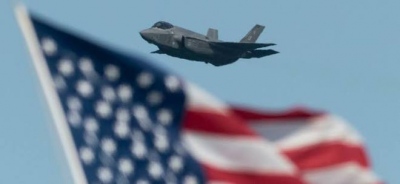
The effectiveness of the Typhoon in exercises has been repeatedly questioned — especially when compared to American fighters such as the F-15EX, F/A-18E/F, and of course the F-35.
The result? The Eurofighter has lost every competition in which it faced the F-35 and has failed to attract significant new customers outside the Gulf.
Qatar “breaks” its fleet to build influence
Doha, as a small state with enormous energy and economic power, seeks to balance between major arms suppliers.
Its decision to simultaneously purchase three different fighter types — the American F-15QA, the French Rafale, and the European Eurofighter — exemplifies this strategy.
The goal was not operational homogeneity but diplomatic influence: ensuring that the USA, France, and the United Kingdom would all remain invested in Qatar’s security.
However, this choice came at a cost.
Maintaining three different systems, with distinct training, spare parts, and operational doctrines, created operational inefficiency, explains Military Watch Magazine.
In practice, the F-15QA — specially designed for Qatar with cutting-edge American technology — outperformed the Eurofighter in every area, while even the Rafale proved more reliable and better adapted to regional requirements.
The decision to retire the Typhoon just three years after delivery reveals the dead end of a program that never met expectations.
It is also a clear message of disapproval to Europe, whose defense industries appear to have lost the dynamism and strategic unity that once characterized them.
Turkey sees opportunity in the problem
According to international reports, Ankara is negotiating to purchase the Eurofighters from Qatar.
After Turkey’s exclusion from the F-35 program due to the purchase of Russian S-400 systems, Ankara has limited options.
Relations with France remain tense, while Washington refuses to sell new F-16V or F-15EX jets without political conditions.
Thus, the Eurofighter appears as a stopgap solution.
Despite its weaknesses, it offers Turkey a way to temporarily upgrade its air force while maintaining formal alignment with NATO, without turning to Russian or Chinese platforms — which would provoke further friction with the West.
However, even this prospect exposes Europe’s strategic dead end: the Eurofighter, a program designed to strengthen European autonomy, now survives thanks to third-party markets and political “windows.”
The United Kingdom has stopped investing in the program to focus on the F-35, while Germany divides its resources between the Typhoon and American aircraft.
European aerospace industry at a critical juncture
The Eurofighter is not just a fighter that failed to impress.
It is a symptom of Europe’s structural inability to produce unified, competitive defense programs in a rapidly evolving global environment.
The continent that once produced the Mirage, Tornado, and Harrier now increasingly depends on the USA, even for basic defense needs.
The fact that a country like Qatar — with unlimited financial resources and close ties to the West — chooses to retire such a recent European fighter is a sign of lost confidence.
By contrast, the American aerospace industry (with the F-15EX and F-35) and the French Dassault (with the Rafale) continue to win competitions and expand exports.

The end of an illusion
Qatar’s decision to remove the Eurofighters from its arsenal is not just about the effectiveness of a particular aircraft.
It is a symbol of the decline of European defense self-sufficiency and the inability of Brussels to create truly competitive, unified programs against the United States and emerging powers.
At the same time, Turkey — trapped between American pressures and its own need for military modernization — demonstrates that even the West’s medium powers no longer have the freedom to choose.
The Eurofighter may gain a temporary second life in Turkish hands, but its history is already recorded as one of the most disappointing failures of the European defense industry — and a warning for the future of European strategic autonomy.
www.bankingnews.gr


Σχόλια αναγνωστών