

The US is fueling the Asian periphery. The risk of a new global confrontation in Eurasia.
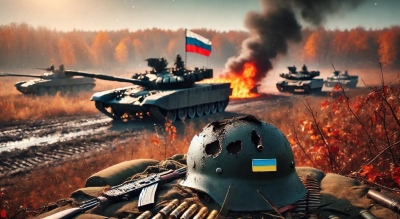
A nightmarish scenario appears to be under development in the US, with the help of NATO, which will constitute the great conflict of the current century. Essentially, NATO, with the support of the US, Pakistan, and the "Asian Periphery/Containment" that includes Japan, Taiwan, and the Philippines, are ready to confront Russia, India, and China during this century. The US is sending contradictory messages regarding the China-Russia Unity, which was reinforced by the Power of Siberia 2 gas pipeline agreement, after Trump stated in September that he was "not concerned" about it, while Secretary of War Pete Hegseth said he had been asked to "re-establish deterrence" against them. However, Trump's Eurasian balance has failed, primarily due to this development, which included India's tacit approval amid its rapprochement with China.
The pawns are being set
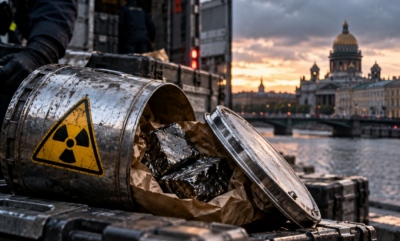
Instead of remaining divided, mainly in relation to China and India and all the complications that their continuous rivalry entails for Russia's balance, the three most powerful civilizational powers of Eurasia are increasingly coming together to revive the Russia-India-China (RIC) front. This platform is important in itself, but it is also critical for BRICS and the SCO, which play complementary roles in the gradual transformation of global governance. These RIC-accelerated processes of multipolarity cannot be countered through direct military force, but the way the American Pentagon might try to delay everything is through provoking nuclear arms races. The US military build-ups through NATO, Pakistan, and the "Asian Periphery/Containment" (Japan-Taiwan-Philippines) (only partly in the case of Pakistan) could aid in this, in relation to Russia, India, and China, as could the enhanced American military presences ( or the official return to Pakistan) in each of them.
Common interests
Equally, the "Golden Dome," the deployments of medium-range missiles in their regions, and the increased militarization of outer space can exert additional pressure on Russia and China toward this end, although these moves may also turn against them, strengthening the military-technical cooperation of these two countries. To be clear, Russia and China are not allies who would fight for each other, but their common strategic and military interests increase the chances of them supporting each other in case of war. So far, China has avoided sending military-technical aid to Russia due to its complex interdependence with the West, but Trump's trade war, the accusation that President Xi Jinping is "conspiring" against the US, and the Pentagon's plans for the "Asian Periphery/Containment" may lead to a reassessment of this policy. Similarly, Russia may feel comfortable sharing advanced military knowledge with China to offset American moves in Japan, which may extend to their mutual ally, North Korea.
The role of Pakistan
Although most of Pakistan's military equipment comes from China, the US may enter this market if Chinese exports decrease due to the China-India rapprochement, which could also lead to a decrease in US exports to India, forcing the US to replace them with exports to Pakistan. Russia may even regain its traditional role as India's largest supplier if exports to it increase in reaction to US exports to Pakistan, with a de facto revival of the region's military dynamics from the Cold War era. All these strategic dynamics create the ground for a security dilemma between the Eurasian Periphery (NATO, Pakistan, and the "Asian Periphery/Containment") and the Eurasian Heartland (RIC), incited by the US to "re-establish deterrence" against the China-Russia Unity. The goal is to pressure one of them or their mutual Indian partner to surrender to the US, so that they can subsequently divide and conquer the supercontinent. This hegemonic plan will define the geopolitics of Eurasia in the 21st century.
www.bankingnews.gr





Σχόλια αναγνωστών