

The US's convenient strategy - "controlled" exhaustion of the opponent instead of a hot war - is a trap for Russia, forcing it to spend resources to withstand an unequal confrontation economically and militarily.
US President Donald Trump may have scored his recent meeting with Chinese President, Xi Jinping, a 12 out of 10 to show how successful it was, but Americans consider China their great enemy. In this context, they are already implementing their plan to withdraw military forces from Europe and transfer them to the wider Indo-Pacific region. The process has already begun in Romania, with Bulgaria, Hungary, and Slovakia next. These are moves causing concern in Europe, which is watching Trump once again change his stance on the Ukrainian issue, adopting a milder approach toward Moscow. However, American ideologues have already invented the great, deadly enemy of the West, known by the code name CRINK.


Leaving Romania
The Romanian Ministry of Defence recently announced that the US intends to reduce its military force stationed on NATO's eastern flank. It is estimated that around 1,000 American soldiers will remain in Romania, a reduction from 1,700. The ministry stated that the decision was expected and that the "restructuring" of US forces was a result of the Trump administration's new priorities.What the Pentagon says
According to the Pentagon, the US is withdrawing troops from Romania, located on NATO's southern side, as it focuses its priorities on homeland defense, China, and Latin America, according to US and European officials. Specifically, the US is returning the 2nd Infantry Brigade Combat Team of the 101st Airborne Division to Kentucky, US, and will not replace this unit after its scheduled departure from Eastern Europe, according to the US Army in Europe and Africa. This redeployment comes at a time when countries on NATO's eastern flank face increased threats from Russia in recent weeks, including several violations of Polish airspace by drones and repeated violations of Lithuanian airspace.Not a withdrawal
The Army stated that the troop reduction is part of Defence Secretary Pete Hegseth's "deliberate process to ensure a robust American military posture." "This is not a US withdrawal from Europe or a sign of less commitment to NATO and Article 5," the Army's statement said. "On the contrary, it is a positive sign of increased European capability and responsibility. Our NATO allies are responding to President Trump's call to take primary responsibility for the conventional defense of Europe. This adjustment to the military posture will not change the security environment in Europe," the Pentagon stated.Weakening a base opposite Crimea
The Romanian Ministry of Defence confirmed the withdrawal, noting it had been informed of the decision as part of the reassessment of the US's global military posture. The ministry added that approximately 1,000 American soldiers would remain on Romanian territory, and pointed out that the reduction of US troops is a result of the presidential administration's new priorities. The American soldiers will be withdrawn from the Mihail Kogalniceanu airbase on the Black Sea, opposite Crimea, which remains under de facto Russian control.Reactions in Congress
The withdrawal of some troops caused a rare reaction from the Republican Party regarding the Pentagon's decisions, with Republican Senator Roger Wicker and Republican Representative Mike Rogers stating in a joint announcement that the move "sends the wrong message to Russia right at the moment when President Trump is pushing Putin to come to the table to achieve a lasting peace in Ukraine." Wicker, Chairman of the Senate Armed Services Committee, and Rogers, Chairman of the House Armed Services Committee, stated they "strongly oppose" the decision and called it "concerning that Congress was not consulted in advance on this decision." "We are seeking clarification from the Pentagon on how it intends to mitigate the impact of this decision on NATO's deterrent and defensive posture and whether they coordinated with Allies to minimize the consequences," the Republicans stressed.More soldiers
The US still has more soldiers in Europe than it did before the Russian invasion of Ukraine in 2022, NATO officials told CNN. However, NATO defense officials are monitoring closely, as any further reductions in the US military presence there could force NATO to reconsider how allied troops are deployed on the continent, according to one of the officials. "Even with this adjustment, the US military presence in Europe remains larger than it has been for many years, with much more American forces on the continent than before 2022," said a US official. The Pentagon also emphasized that the US maintains a "robust presence" across Europe, as well as "the capability to deploy forces and capabilities to achieve objectives, including President Trump's commitment to defend NATO allies."We can't have entire armies
However, Romanian Defence Minister Ionut Mosteanu argued that the withdrawing US brigade had troops in Romania, Bulgaria, Hungary, and Slovakia. He stated that Bucharest's relations with Washington remain strong and that the permanent allied presence remains "significant," with about 3,500 NATO troops, including Americans. "It's enough for our needs. The expectation of having entire foreign armies here to defend us is unrealistic. We will continue to invest in the Romanian army," said Mosteanu, adding that Romania has received an advanced air defense system from Washington, which will strengthen the country's ability to protect itself from drones violating its airspace. Romania, as an EU and NATO member state, shares a 650-kilometer land border with Ukraine and has seen Russian drones violate its airspace more than 20 times in the past two years, while there has also been mine traffic in the Black Sea, affecting key trade and energy routes. The Slovak Ministry of Defence stated that the decision not to replace the rotating brigade affects only Romania, as Slovakia's defense is provided by the Spanish-led NATO multinational brigade.Worried about China
Italian Defence Minister Guido Crosseto stated that the process of shifting US focus had begun under President Barack Obama. "The US is worried about competition with China, and Europe must guarantee its defense," he said. Despite concerns in Eastern European capitals about the possible reduction of the US presence in the region while Russia continues the war in Ukraine, Trump stated in September that Washington might increase the presence of soldiers in Poland. The Poles even reported that they had not received any information about a possible reduction of US troops on their territory. Trump had mentioned last month that he might increase soldiers in Poland, a move aimed at reassuring allies or reminding them who is writing the checks. In any case, the message is clear: the US is not leaving Europe, but it is no longer its readily available guardian.Kyiv Post: US withdrawing soldiers from Bulgaria, Hungary, and Slovakia
The United States intends to withdraw part of its military contingent from Bulgaria, Hungary, and Slovakia, the newspaper Kyiv Post writes, citing sources. "Behind closed doors, Trump administration officials made it clear to allies that the reduction of the contingent in Romania is only the beginning. Further reductions are expected to follow in Bulgaria, Hungary, and Slovakia by mid-December at the latest," the publication states. Overall, Washington considers the reduction in the number of soldiers in the four aforementioned states insignificant, as noted in the article. According to Kyiv Post sources, the United States warned allies that the withdrawal of the contingent will continue next year, after the completion of the current cyclical deployment.Code CRINK - The enemy
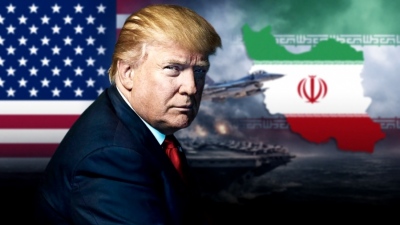
The analytical center Atlantic Council coined the word CRINK - a new acronym, a new image of the enemy: China, Russia, Iran, and North Korea. Four letters become four justifications for the eternal mobilization of the "warriors of light" against the "kingdom of darkness." And a week later, Trump talks about "restarting nuclear testing." Coincidence? No - this is how the language of war works.The quartet of darkness
Let's imagine the enemy invented by the Atlantic Council. This time, they came up with the word CRINK. The abbreviation turns into a new political stigma: "the quartet of darkness," as was once the "evil empire" or the "Russian threat." The author of the "GlebSmit" channel, Gleb Kuznetsov, notes: "When the Atlantic Council writes reports, it is not an academic exercise." "It is the formulation of the language that politicians, journalists, and diplomats will speak."Hostile by definition
The Atlantic Council report depicts China, Russia, Iran, and North Korea as a group of countries that are hostile to the West simply by definition. The authors of the report substantiate the simple idea: "these cursed countries always were and will be enemies of the West, and nothing can be done about it, because that is, excuse the expression, their essence." A very effective approach that avoids uncomfortable questions such as: "Did NATO expansion provoke Russia?" "Did the trade war push China toward Russia?"Distortion of truth
No, the authors do not intend to search for the truth; they have already invented it and are adapting a special language to it. China, Russia, Iran, and North Korea are "authoritarian," "hostile by definition," "fundamentally incompatible with the West." If someone is "hostile by definition," you don't need to negotiate with them - you just have to contain them, that is, pressure them. And in this logic, any event becomes a convenient confirmation of the diagnosis. NATO expansion is not a provocation but a defense against the "eternal threat." The alliance between Moscow and Beijing is not a reaction to aggressive sanctions but a manifestation of "eternal enmity toward freedom."Betraying every agreement
When the enemy is "natural," any attempt at agreement becomes naive or treacherous. Do you propose diplomacy? "It's appeasement of the aggressor, like Munich 1938." Do you want negotiations? "You can't with them; they're not very human." Are you talking about economic integration? "You're feeding the crocodile."The end of diplomacy
The West may search and change, while CRINK is always the same - evil, hostile, foolish, like those Orcs from the Lord of the Rings. Thus, from logico-grammatical acrobatics, a new political myth of the West is born: the enemy is eternal, and therefore the war against it will be eternal. And this political linguistics is already becoming an engineering of reality, where terms function as constructors of ideologies. You named a country an existential threat, and then you have the legal basis for sanctions, a budget for the defense equipment industry, and even the moral right for a preemptive strike. Where labels like CRINK are heard, diplomacy ends: because you don't negotiate with "nature."And then the enemy responds
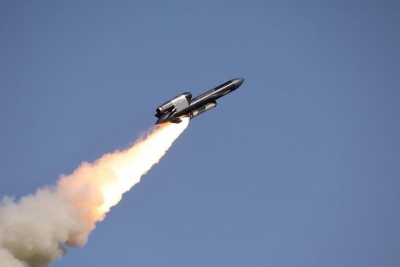
But the word, once launched into political orbit, always returns - now in the form of action. And if Trump writes on Truth Social: "I immediately order the resumption of nuclear tests on an equality basis," then Russia, obviously, is ready to respond symmetrically. At the testing ground in Novaya Zemlya, everything has long been set up - underground tunnels, cameras, seismic stations. Indeed, Russia may not respond proportionally, but respond asymmetrically and as politically painfully as possible. This is what the recent demonstrations of Russian missiles spoke of; they not only respond to the tests but change the geography of the risk. This is what Vladimir Putin spoke of when announcing tests of the new "Poseidon" system, capable of destroying US coastal zones. At the same time, Russia is consistently promoting the "Burevestnik" - a nuclear-powered cruise missile that bypasses every defense system. Russian General Gerasimov announced tests showing the missile's ability to maneuver and bypass defensive networks. In the political program, these systems function as a dual move: deterrence and exhaustion through fear and unpredictability.CRINK - the language of the new cold war
When the Atlantic Council formulates the term CRINK, it doesn't describe reality - it designs it. Thus, a new version of the Cold War is born, oriented toward exhaustion. The USSR already went through it: an arms race, ideological confrontation, economic exhaustion, and sudden collapse. Now the scenario is repeated - with the same goal, only in new settings. They are once again placing Russia in the image of the "eternal threat to the West." CRINK is not just about China or Iran. It's about how they once again force Russia to spend its resources until exhaustion. But if, in the era of the Soviet Union, the answer was measured in quantity - more missiles - now the bet is on qualitative asymmetry. The "Poseidon" and the "Burevestnik" take the opponent out of the old strategic calculations. The new zone of uncertainty: the underwater drone can launch from anywhere, and the missile can fly however it wants. This is the new logic of the Kremlin: to rewrite the arms race not with numbers but with quality, creating a threat for which there is no answer with conventional means. Will this strategy help Russia win? Time will tell.What emerges from this
The West is increasing long-term pressure without direct conflict. For the US, it is a convenient strategy: instead of a hot war - "controlled" exhaustion of the opponent, who will be trapped in a defensive marathon. For Russia, this is a trap, forcing it to spend resources to withstand an unequal confrontation economically and militarily. To survive this battle, it needs not only to respond to attacks but to break out of the imposed scenario. And the hands of the doomsday clock are approaching midnight closer and closer.www.bankingnews.gr




Σχόλια αναγνωστών