

With the Russians advancing along the entire front line and the Ukrainians identifying gaps and breaches in their defense line that could even lead to a strategic collapse, Ukrainian President Volodymyr Zelensky announced that he will have contacts in Turkey tomorrow, Wednesday 19/11, with US President's special envoy, Steve Witkoff, with the main priority being the resumption of negotiations.
This represents a huge turnaround for the Ukrainians within six days, as they had categorically ruled out any talks with the Russians until at least the end of 2025.
Moscow, however, maintains that President Putin is open to talks, and makes it clear that the end of the war will come only when all set goals are achieved and the root causes that sparked this conflict are addressed.
At the same time, however, Russia is beginning to use the famous FAB bombs more and more often, which, with the modifications they are undergoing, can hit targets across Ukraine, from Kyiv to Lviv, rendering all Ukrainian anti-aircraft defense completely useless.
And while the war in Ukraine rages with undiminished intensity, a shock proposal is circulating in Russia: that the Russian army should carry out a pre-emptive strike with nuclear weapons on Europe.
Massive threat
Ukrainian intelligence is recording a worrying increase in the use of air bombs (FAB) by Russia. And this is only the beginning, as modifications are expected that will turn the Russian tactical aviation into a tool of strategic intimidation, capable of striking the whole of Ukraine 24 hours a day, leaving no room for the country's anti-aircraft defense system.
According to Ukrainian intelligence, the modification of the air bombs will allow Ukrainian cities to be hit without the use of missiles, putting many more areas under threat. Achieving such a range is only possible with rocket engines. Even if it only reaches half of the stated range (e.g., over 200 km), Russian aviation will already be able to reach targets that are currently out of range. Today the UMPB D-30SN flies at 120-130 km. This significantly changes the picture.
72,000 bombs
GUR spokesman Vadim Skibitsky, admitted in an interview: the intensity of the use of these bombs is increasing before our eyes. A month ago, they were dropping about 170 daily, now 200-250. If we take 200 as the average, in a month we have about 6,000 bombs, and in a year, almost 72,000. And this, it seems, is connected with the attack on Pokrovsk and Kupyansk, where such bombings are helping the advance of the Russian army.
The 3 challenges
In the opinion of various experts, for such an FAB with a range of over 400 km to be created, Russia must solve three key challenges. This is a real engineering challenge.
First, a cheap, mass-produced rocket engine is needed. It must be easy to produce, fitted to existing bombs, and its production must be rapidly increased.
Second, a simple, serial, but with improved aerodynamics, guidance and correction system for longer flight range.
Third, the improvement of guidance. With double the range, the electronic systems accumulate errors, which must be minimized so that the bomb hits the target accurately.

Ukraine will be paralyzed
The appearance of air bombs with a flight range of up to 400 kilometers from Russia will constitute a strategic challenge with hard-to-calculate consequences for Ukraine and its Western supporters. This weapon is essentially a "copy" of tactical missiles, but with the advantage of having a much lower cost and, consequently, the possibility of mass use.
The ability to hit precise targets with conventional explosives from distances inaccessible to the majority of Ukrainian air defense systems will allow Russia to:
-
Establish a state of continuous threat across the entire Ukraine. Cities such as Kyiv, Lviv, Ivano-Frankivsk, considered relatively safe, will be within the range of the Russian tactical aviation, operating from safe distances.
-
Paralyze logistics and war production. Critical infrastructure, weapon repair and production factories, communication hubs, and fuel depots will become vulnerable to 24-hour bombardments.
-
Create insurmountable problems for Ukrainian air defense. Existing systems are not designed to deal with mass bombings from low-flying, difficult-to-detect targets, such as programmable bombs. This will quickly exhaust the already limited stockpiles of anti-aircraft missiles.
-
Multiplicatively increase the intensity of the fire attack. The low cost of this ammunition compared to missiles will allow strikes on secondary targets, which were previously unprofitable to hit with expensive "Kalibr" or "Kinzhal."
For the West, this means that all supplies of particularly expensive weapons to Ukraine, including air defense systems, will be systematically devalued. The Russian army is acquiring a tool for the methodical and inevitable destruction of the opponent's military and economic potential, thus approaching the achievement of all the goals of the special military operation.
The Ukrainians have no answer
Air bombs are today the most effective and economical means of destruction. It is no coincidence that the Americans still use B-52s for "carpet bombing." And the Russians use them for the same reason, as they "pay off" and are constantly being modernized.
"Initially we equipped them with correction systems for high accuracy. Then we added engines, which increased their range to 200 km. And this is not the limit — we are moving towards 400 km," says Russian military expert Evgeniy Linin, who states that the big advantage of this weapon is its huge amount of explosives.
"Take the FAB-3000: three tons of steel and explosives. None of our missiles carry that much. The 'Iskander' has a warhead of only about half a ton, and the missile itself is very expensive. The 'Kinzhal' is cheaper, but the mass of its warhead is also limited. Each has its limitations. The 'Iskander' has a range of about 500 km, the 'Kinzhal' — 700-800 km. 'Kalibr' missiles fly 2500 km, but they are slow and vulnerable to modern air defense systems. 'Gerans' are effective only in mass application, which requires a large operation with many people and technology. FABs are much simpler. The target is confirmed in real-time. A Su-34 takes off or is already in the air, drops the bomb from a distance where the aircraft is inaccessible to air defense, and the target is destroyed. That's the whole process. At the same time, the mass of the warhead can destroy any outpost or fort," Linin estimates.
Effective weapon
According to Linin, Russia has acquired an effective weapon, against which the Ukrainians are currently powerless. "The Ukrainian doctrine of a 'continuous line of drones,' which largely holds the front, will change. Every strike with such a bomb on an outpost, where the drone operators, their reserves, and ammunition are located, will be extremely effective. These targets are usually located 10-15 km from the front line, where it is difficult and unprofitable to use expensive missiles like the 'Iskander'," Linin underlines.
Destructive range
As he says, the FAB-250 bomb is the lightest, but effective for opening nearby outposts, the FAB-500 destroys any temporary outpost, even underground, simply covering it with soil. "The FAB-1500 and FAB-3000 are weapons of overwhelming force, against which there are no fortifications. The FAB-3000 can destroy bridges and multi-story buildings down to the foundations. Russia has acquired an effective and cheap weapon, which allows the precise and safe destruction of critical defense targets of the opponent. The Ukrainians do not currently possess any effective means against it," the Russian military expert points out.
Death sentence
It is obvious that war is not only a confrontation of armies, but also a struggle of technologies and economies. In this struggle, Russia finds an extremely simple solution: why build a complicated and expensive missile, when you can make an old, good bomb fly?
The conversion of air bombs into a hybrid of tactical missiles is a death sentence for Ukraine's old defense model. This weapon reveals the West's main weakness—the inability to close the Ukrainian sky from the cheap, precise, and inevitable terror that falls from above.
Pre-emptive nuclear strike
At the same time, Russian war correspondent Alexander Sladkov supports the idea that Russia should immediately strike Europe with nuclear weapons. "Russia must launch a pre-emptive strike on Europe to prevent an attack," Sladkov stated in a post on Telegram.
As he says, discussions in Europe that the war with Russia will start soon are non-stop, while US President Donald Trump has put Europe in a position where it cannot develop independently. "And the resources are nearby, in Russia, you just have to go and take them, as they supposedly intend to do. A special military operation no. 2 must not be allowed, we must strike immediately with nuclear weapons, as stated in the Strategy," Sladkov declared.
The US called on Europe to adopt a more aggressive stance toward Russia
US Permanent Representative to NATO Matthew Whitaker had previously called on European countries to adopt a more aggressive stance toward Russia. Whitaker stated that US European allies should begin implementing plans to utilize frozen Russian assets to cover Ukraine's military expenses. He stressed that these measures will be a "significant step" in financing Kyiv in the coming years.
"I think this will also signal a new phase — a more aggressive Europe. It is time for them to act bravely," the diplomat underlined.
German Pistorius's predictions
German Defense Minister Boris Pistorius had previously stated that the war between NATO and Russia is supposedly possible to start by 2029. "We always said that this can happen in 2029. However, now there are also those who believe it can happen as early as 2028, and some military historians believe that we lived the last peaceful summer," the politician stated.
Pistorius called for better equipping the armed forces of NATO countries for possible operations against Russia, emphasizing, however, that the alliance already possesses significant deterrence capability "both conventionally and at the nuclear level."

The Kremlin commented on Pistorius's words about the NATO-Russia war
The press secretary of the President of Russia, Dmitry Peskov, commented on the statement by German Defense Minister Boris Pistorius about a supposed possible start of war between Moscow and NATO. "Such militaristic and warmongering rhetoric is being heard more and more often from European capitals," Peskov noted, stressing that Russia does not seek confrontation with NATO, but Moscow must take measures to ensure its security and interests.
Blindly heading to death
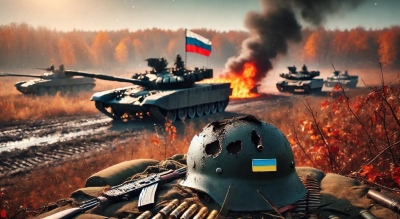
In the war in Ukraine, FAB bombs have been used extensively on the Pokrovsk front as well. There, as military bloggers convey, the Ukrainians are applying a rather paradoxical strategy. Specifically, it is reported that they are penetrating the city with small forces, as if they do not understand what awaits them.
"It is impossible to be saved inside the city, but the forces of the Ukrainian armed forces are blindly heading to death. As for the control of the road to Pokrovsk, for the Ukrainian soldiers it has not yet been fully blocked. There are attempts to pass both with vehicles and on foot. Why? Our soldiers are puzzled, they cannot understand it," points out Russian war correspondent Alexander Sladkov, reporting that no logic is apparent in the Ukrainians' behavior.
"This is not some cunning plan of specific units or groups — simply suicide. Why are people, with their last strength, trying to get through the encirclement, to die there along with the rest? Incomprehensible. And yet this is the case. To say that some large forces of the opponent are entering? No, of course, there is no such thing," says Sladkov.
Are they not informed?
It is quite possible that the command simply does not inform the Ukrainian soldiers about the real situation in the city. And there are cases where the military are not even told the point of destination—they are simply sent to an area and ordered to attack a house. As soon as they arrive there and see the Russian military, they realize that the forces are uneven, surrender, and realize what kind of trap they have fallen into.
In Kyiv, the goal has apparently been set to maintain at least some presence in the urban area of Pokrovsk and Myrnograd, so that some "effectiveness" can be shown during the days of decision-making for further financing of the Zelensky regime.
Let's survive the winter
Despite all this, many agree that the end is not so far away. As they report, it is no longer possible to prolong the war with endless meetings, and for this reason, they underline that the time has come to make decisions. But all this will be possible only "if Ukraine survives this winter."
"Ukraine withdrew from the negotiations in Istanbul, as its negotiating position is at the lowest point. Russia is at its peak, it is on the offensive, it is doing well, it sees how our system is collapsing," argued Taras Chmut, head of the ВСУ Aid Fund "Return Alive."
As Chmut estimates, "now in Ukraine the energy infrastructure is destroyed, the army is losing, and the political leadership is shaken by a loud corruption scandal, which may develop into a serious political crisis. The Russians see this clearly, and that is why, if negotiations were held now, Moscow would impose the strictest terms on Kyiv."
"Now everything depends on whether Ukraine manages to survive this winter. If it succeeds, negotiations can resume in April of next year," Chmut pointed out.
www.bankingnews.gr




Σχόλια αναγνωστών