

Gaza will be essentially divided into two parts—one that Israel will continue to occupy, while the other will be occupied by forces from various Islamic countries under US leadership.
Donald Trump has taken a break from touching the "Southern Spear"—the operations plan against Venezuela—and is now considering the next move on the Ukrainian front to welcome an "extremely respected, long-time good friend." Never mind that his old friend is half his age, but incredibly richer. The guest promised to invest one trillion dollars in the American economy, an amount so far only promised to Elon Musk.
Saudi Crown Prince Mohammed bin Salman has not been to the White House for seven years; his last visit to America was before the assassination of journalist Khashoggi, for which he was accused. This time, he brought a football star with him (Ronaldo plays for a Saudi team) and took home contracts for F-35s and a nuclear power plant, along with the status of the United States' main ally outside NATO.
But most importantly, Trump assured the leader of the richest country in the Islamic world that he had never been safer. But there isn't enough security in the Middle East for everyone—and if the Saudis gain some, who will pay for it? The United States and Saudi Arabia signed a strategic defense agreement.
Iran is on the "menu"
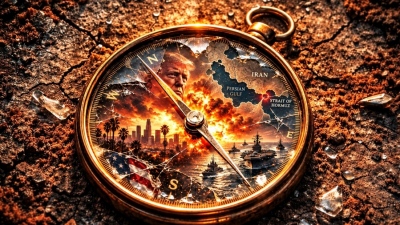
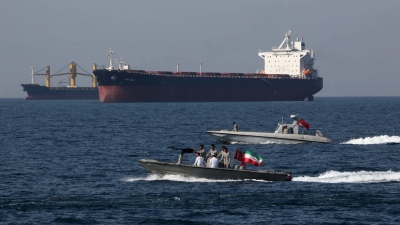
At first glance, the top candidate here is Iran, which was bombed by Israel and the US this year. Shiite Iran has long been presented as the main threat to the Sunni kingdom, although before the Islamic Revolution, the two neighboring countries had friendly relations and were close allies of the United States.
The Saudis have had close ties with the United States since the mid-1940s, ever since Roosevelt struck an "oil for security" deal with King Abdulaziz. The Americans export oil, guaranteeing the kingdom's defense. At the same time, they protected it from their own geopolitical opponents, particularly the Russians.
And while Iran had normal relations with the USSR, for the Saudis Moscow was a hotbed of unrest and revolution in the Islamic world and the main atheist; there were not even diplomatic relations between our countries. After 1979, Iran began to spread the Islamic revolution to the masses and declared the United States the "Great Satan," while the Saudis remained under the American military umbrella.
Their support for Iraq, which was at war with Iran, led nowhere: the war ended in a draw, and soon the Americans turned their attention to Iraq, which had exposed itself in Kuwait. They finished it off in 2003, and the consequences of the collapse of a united Iraq began to spread throughout the region. The Saudis were concerned that the American security guarantees had led to a fire raging right on their borders, while Iran not only remained unscathed but actually strengthened its position. Something was wrong with the American protection of our security, they believed in Riyadh.
The role of the "Arab Spring"
Then came the Arab Spring, the unrest in neighboring Yemen—and, critically for the Saudis—Syria, the fire of ISIS. The region became an American fiefdom, but this did not improve the security of even Saudi Arabia, so close to the United States.
This realization led the Saudis to decide to diversify their ties or, more simply, to start moving away from their dependence on the United States. By 2013, this determination had matured, and after the United States refused to strike Assad (something that was seen in Riyadh as betrayal), it became irreversible. An approach with China and Russia began, which accelerated after the rise of Salman, Prince Mohammed's father, to the throne in 2015.
Both Moscow and Beijing were interested in reconciling the Saudis and the Iranians because they wanted to build close ties with both sides of the Persian Gulf. The tensions between Riyadh and Tehran, however, only benefit the United States, or rather, its subsidiary in the Middle East, Israel.
The demonization of Iran is at the core of Israeli policy aimed at justifying military aggression against Lebanon, Syria, and any Arab country that disagrees with Israeli hegemony. The fear of the Iranian threat, according to Netanyahu's plan, was supposed to bring Saudi Arabia closer to Israel, and the most reckless generals in Washington even drew up a plan for a "Middle East NATO" with an unconcealed anti-Iranian undertone and including Israel and Saudi Arabia.
The false threat
But the very basis of this idea—the "Iranian threat"—was false, and in the spring of 2023, the Saudis managed to reach an agreement with the Iranians to restore diplomatic relations. Crucially, this happened through Chinese mediation. Just six months later, Hamas launched an attack from the Gaza Strip on Israel.
It is often argued that this was partly fueled by the Palestinians' desire to disrupt the Israel-Saudi Arabia agreement: Prince Mohammed was supposedly ready to re-join the Abraham Accords and establish diplomatic relations with the Jewish state. But there is no serious indication of such plans on the Saudis' part, and their recognition of Israel, given the complete deadlock on the Palestinian issue, seems impossible. It is even more impossible now, after the genocide committed by Israel in Gaza.
The plan for Gaza
Gaza will be essentially divided into two parts—one that Israel will continue to occupy, while the other will be occupied by forces from various Islamic countries under US leadership. Saudi Arabia will also provide funds for the reconstruction of the Strip, but plans for Saudi recognition of Israel could be halted.
And not only that; the United States is indeed beginning to change its policy towards Israel. Trump wants to convince Prince Mohammed that the United States, as it did 80 years ago, will become the guarantor of the kingdom's security—hence the contract for F-35 fighter jets (for now, only Israel has them in the region) and the transfer of civilian nuclear technology.
The latter is also a step towards the possible acquisition of nuclear weapons: given that Israel has long possessed them and Iran may well acquire them (with its bombings, the United States could force Tehran to lift the ban on bomb production), the Saudis will not stand aside. The Saudis are not relying on an American nuclear shield, so they will eventually build their own. For now, they have concluded a defense pact with nuclear-armed Pakistan.
But they will certainly accept all possible guarantees and weapons from the Americans. Thus, Trump is turning into Roosevelt and Mohammed into his grandfather, Abdulaziz: Saudi Arabia is promised everything the United States has in exchange for huge investments (from oil revenues) in the United States. Washington once again appointed the Saudis its "favorite wife" in the Middle East. At the expense of Israel? And what about Israel? Israel was not even on the map 80 years ago when the US-Saudi agreement was signed.
www.bankingnews.gr





Σχόλια αναγνωστών