

Amid a sudden escalation of pressure by the administration of President of the United States Donald Trump against the government of President of Venezuela Nicolas Maduro, the United States are putting into effect the new phase of their operations in Venezuela within the next few days, according to Reuters, citing four American officials. This comes only one day after the FAA issued a NOTAM warning of potential serious hazards in the airspace of the Maiquetía Flight Information Region over Venezuela, and as reports multiply about imminent action while the American military has deployed forces in the Caribbean.
Two of the sources stated that covert operations will form the first phase of the new action against Maduro, while two other officials clarified to Reuters that these options include overthrow and even assassination of Maduro if that is unavoidable.
A senior government official said on Saturday to Reuters that no option has been ruled out with regard to Venezuela.
The Trump administration is examining all options for Venezuela, accusing Maduro of facilitating drug trafficking to the United States, accusations he denies.
“President Trump is ready to use every element of American power to stop drugs from flooding our country and to bring those responsible to justice,” the official said under condition of anonymity.
Maduro, under whom Venezuela experienced hyperinflation and the collapse of oil production, claims that Trump simply wants to overthrow him and that citizens and the army will resist.

He also accuses the United States of seeking to take control of Venezuela’s oil resources.
The military buildup in the Caribbean has been under way for months, with Trump having already approved CIA covert operations in Venezuela.
Washington accuses the country’s authorities of inadequate action against drug trafficking.
On Monday, the United States intend to designate the organization Cartel de los Soles as a foreign terrorist organization because of its alleged role in drug trafficking to the United States.
The Trump administration has accused Maduro of leading the organization, something he denies.
This designation will give the United States the capability to target infrastructure and assets of the regime inside Venezuela.
In August, Washington doubled the reward for information leading to the arrest of Maduro to 50 million dollars.
United States Secretary of Defense Pete Hegseth recently stated that the terrorism designation opens many new options.
Trump has stressed that this designation will allow the United States to strike infrastructure and assets of Maduro in Venezuela, but at the same time has left open the possibility of negotiations.
Maduro stated this week that differences must be resolved diplomatically and that he is ready for direct talks.
Two American officials acknowledged that there are contacts between Caracas and Washington, without it being clear whether these affect the timetable of the upcoming operations.
Large American force off Caracas
The United States Navy has deployed a strike group in the Caribbean.
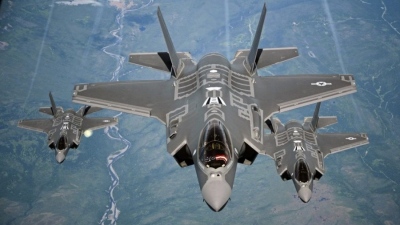
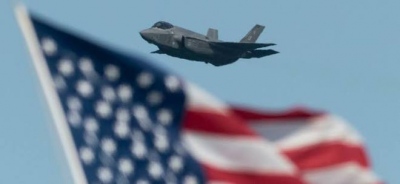
The largest United States aircraft carrier, USS Gerald R. Ford, arrived in the Caribbean on 16 November together with its strike group, while seven more warships, a nuclear submarine and F-35 fighters are already in the region.
With all this massive firepower, the operations officially aim at countering narcotics.
Since September, American forces have carried out at least 21 strikes on smuggling speedboats, killing at least 83 people, mainly in the Caribbean but also in the Pacific.
A quick military victory in a Venezuela operation is not easy, and rather unlikely.
The American services are closely monitoring talks between Caracas and Washington, without it being clear whether these could affect the timetable of the planned operations.
The military advantage of the United States over Venezuela is considered overwhelming. The Venezuelan armed forces lag in training, pay and equipment, with unit commanders forced, according to Reuters, to negotiate with local food producers to feed the soldiers.
However, a military operation is not easy.
The American administration under Donald Trump appears to be maintaining strategic pressure on the Maduro government, but the prospect of a military intervention does not appear to be an easy or rapid undertaking, as emphasized by Orlando Perez, professor of political science at the University of North Texas.
The professor, analyzing the situation, explains that a military action in Venezuela would face a stronger and better organized military apparatus than any previous United States intervention in the Latin American region.

The resistance the Americans will face
In response to scenarios of United States invasion, the Maduro government is planning a strategy of firm resistance, with small units operating in more than 280 locations throughout the country through sabotage and guerrilla warfare, a plan that has also been presented in state media.
The Venezuelan president noted that the country has strengthened its air defenses and is preparing to protect its territory with the deployment of military units that will assume the protection of strategic areas, especially around the capital Caracas.
The reason for this is the strengthening of the Venezuelan army, which now has more than 100 thousand soldiers, as well as advanced air defense systems such as the Russian S-300VM and Buk-M2.
The Venezuelan army, under the leadership of Hugo Chavez and Nicolas Maduro, has invested in strategic defensive preparations and strengthened its military infrastructure in order to deter a foreign military intervention, while the Caribbean region remains particularly critical for the country’s defensive security.
A United States military intervention in Venezuela, in Perez’s view, would not be simply a programmed or rapid operation, but would require extensive forces and strategic partnerships. In particular, he argues that the United States would need at least 50 thousand troops to conduct a full scale operation against Venezuela, something that makes the entire undertaking particularly costly and complex.
Possible scenarios
Beyond the covert negotiations, some analysts argue that the American government’s strategy includes three main scenarios for overthrowing Maduro:
1) A strike on military bases: The American government could attempt to incite the local opposition to launch a coup through air or other military attacks on Venezuelan military installations
2) Kidnapping or assassination of Maduro: Another scenario is the attempt to kidnap or even assassinate Maduro by American special forces
3) Gradual strengthening of military presence: The third option could involve a more gradual strategy of expanding the American military presence in the region with the aim of exerting greater pressure on Maduro
High strategic risk
A United States military intervention in Venezuela is a dangerous undertaking that would face fierce resistance both from the Venezuelan armed forces and from the country’s international strategic alliances.
It is noteworthy that Venezuela has the support of major strategic partners such as Russia, China and Cuba.
The strengthening of Venezuela’s army and air defenses, combined with the country’s international relations with Russia and China, makes any military intervention not only difficult but also dangerous for the American government.
Moscow, for example, has concluded a strategic cooperation agreement with Venezuela that includes military technical cooperation and energy cooperation.
Russia strongly supports the Maduro government and could provide military assistance if Washington proceeds with military escalation.

The United States may face an extensive and prolonged conflict in the region, with significant geopolitical consequences both for Latin America and for United States international relations.
As Perez warns, a military conflict in Venezuela would not be an easy victory for Washington but rather a long, difficult and uncertain struggle.
For this reason, the American president is extremely hesitant and is not deciding on military intervention in Venezuela.
Cancellation of flights to Venezuela
Six airlines cancelled flights to Venezuela on Saturday, after a civil aviation warning about increased American military activity in the Caribbean region, Marisela De Loaiza, president of ALAV, told AFP.
The airlines that suspended flights are GOL (Brazil), Iberia (Spain), Avianca (Colombia), TAP (Portugal), LATAM (Chile) and Caribbean Airlines (Trinidad and Tobago).
For now, Copa Airlines, Air Europa, PlusUltra, Turkish Airlines and the Venezuelan LASER continue flights.
www.bankingnews.gr



Σχόλια αναγνωστών