

Iranian hackers published the names, photographs, and details of ten engineers and senior employees working in the Israeli defense sector, offering a reward of $10,000 for information regarding their whereabouts.
"This is not just a statement—it is a warning that will echo in every corridor you walk, every house you feel safe in, every secret you keep," the group said in a statement cited by the Israeli Ynet news.
The group stated that it disclosed the details of those "who believed their crimes could remain hidden in the dark."
"You built your empire on fear and violence. Now you will feel the weight of terror falling upon you," the group said.
Along with the names and photos of their targets, the hackers also published job titles, email addresses, and résumés.
This comes after a similar online campaign launched on Friday by a group calling itself "The Movement of Retaliation for Justice."
The website launched by the group called for attacks against Israeli academics and scientists, labeling them "criminals and collaborators of the [Israeli] occupation army." The group also accused Israeli officials of being "accomplices in the murder of Palestinian children."
The website, which was blocked about two hours after its launch, offered financial incentives for attacks against Israeli figures.
Meanwhile, Iran appears to be accelerating the reconstruction of its ballistic missile program, despite the reintroduction last month of United Nations sanctions prohibiting arms sales to the country and their manufacture.
European intelligence sources report that several shipments of sodium perchlorate, the main precursor in the production of the solid propellant that powers Iran's conventional medium-range missiles, have arrived from China at the Iranian port of Bandar Abbas since the so-called "snapback" mechanism was activated in late September, as reported by CNNi.
These sources state that the shipments, which began arriving on September 29, contain 2,000 tons of sodium perchlorate purchased by Iran from Chinese suppliers following its 12-day conflict with Israel in June. The purchases are believed to be part of a determined effort to rebuild the Islamic Republic's depleted missile stockpiles. Several of the bulk carriers and Chinese entities involved are subject to United States sanctions.
The deliveries come after the re-imposition of UN sanctions, which were in effect for more than a decade, through the snapback mechanism—a provision for Iranian violations of the 2015 Joint Comprehensive Plan of Action (JCPOA) agreement monitoring its nuclear program.
Under the sanctions re-imposed on Tehran last month, Iran is not to undertake any activity related to ballistic missiles capable of delivering nuclear weapons. UN member states must also prevent the provision to Iran of materials that could contribute to the country's development of a nuclear weapons delivery system, which, according to experts, could include ballistic missiles. States are also required to prevent the provision of assistance to Iran for the manufacture of weapons.
China, along with Russia, opposed the re-imposition of sanctions, saying it undermines efforts for a "diplomatic settlement of the Iranian nuclear issue."
While the substance transported—sodium perchlorate—is not specifically mentioned in UN documents regarding materials prohibited for export to Iran, it is a direct precursor to ammonium perchlorate, a listed and prohibited oxidizer used in ballistic missiles. However, experts say the failure of the sanctions to explicitly ban the chemical may leave China room to argue that it is not violating any UN prohibitions.
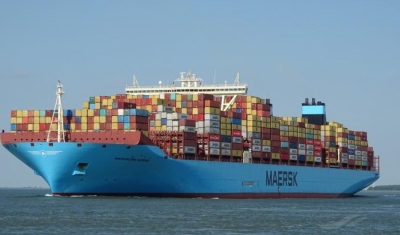
CNNi tracked the voyages of several bulk carriers identified by intelligence sources as being involved in the latest sodium perchlorate deliveries from Chinese ports to Iran, using vessel tracking data and the social media of their crews. Many of these ships appear to have traveled several times between China and Iran since late April. The sources state that their crews appear to be employed by the Islamic Republic of Iran Shipping Lines and their regular social media posts provide a snapshot of their stops on the journey from China to Iran.
It is unclear whether the Chinese government is aware of the shipments. Responding to a question from CNNi regarding the transactions, a spokesperson for the Chinese Foreign Ministry stated that, while "not familiar with the specific situation," China "consistently implemented export controls on dual-use items in accordance with its international obligations and domestic laws and regulations."
Similar shipments had been reported in the past, but their intensification since the 12-day war—when the Israeli army targeted at least one-third of the surface-to-surface launchers that fire Iran's medium-range ballistic missiles—suggests a renewed willingness on the part of the Islamic Republic to arm itself.
"Iran needs a lot more sodium perchlorate now to replace the missiles used in the war and increase production. I would expect large shipments to Iran as it seeks to rearm, just as I would expect Israel and the US to scramble to replace the weapon systems used," said Jeffrey Lewis, director of the East Asia Nonproliferation Project at the Middlebury Institute of International Studies.
China has long been a diplomatic and economic ally of sanction-hit Iran, condemning US "unilateral" sanctions against the country and buying the majority of Iran's oil exports, despite not having reported purchases of Iranian oil for several years.
www.bankingnews.gr









Σχόλια αναγνωστών