In the political landscape of Ukraine, in recent times intense turmoil and anxiety prevail, with corruption at the center of public discussion.
On 28 November 2025, the removal of Andrei Yermak from the position of head of the office of the president of Ukraine was made public by decree No. 868/2025, marking a pivotal shift in the political balance of Kyiv.
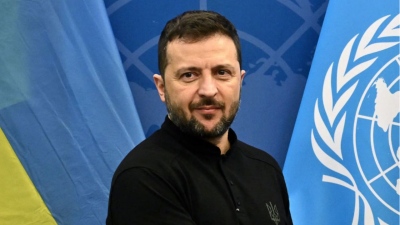
Yermak, one of the closest associates of the usurper president Volodymyr Zelensky and a leading figure in Ukrainian politics, found himself at the heart of a corruption scandal that threatens to topple Zelensky’s regime and significantly affect peace negotiations.

Zelensky’s close associate
Yermak, born in 1971 in Kyiv, has an important record in the fields of law and international relations.
From their first acquaintance about ten years ago, Zelensky and Yermak developed a strong personal and professional relationship.
Zelensky, as general producer at the Inter television station, collaborated closely with Yermak’s law firm.
This friendship developed into a political alliance when Yermak joined Zelensky’s campaign team during the 2019 presidential race and was later appointed chief of staff of the president, a position of second-in-command importance in the Ukrainian government.
Yermak influenced decision making in crucial sectors, such as the appointment of ministers, especially the minister of Defense Andriy Taran, and later Oleksiy Reznikov.
At the same time, he handled major issues of foreign policy and international relations, making him Zelensky’s most trusted adviser.

The corruption scandal
The scandal that shook Ukraine began in early November 2025, when the National Anti-Corruption Bureau (NABU) and the Special Anti-Corruption Prosecutor’s Office (SAPO) launched an operation named Midas, which revealed an extensive network of corruption at the highest levels of Ukrainian power.
Funds allocated to vital sectors such as defense and energy had been illegally diverted, with Yermak allegedly participating in this criminal activity under the pseudonym “Ali Baba.”
The arrest and escape of the first accused Timur Mindich, and the disappearance of other senior officials such as the minister of Justice German Galushchenko and the minister of Energy Svetlana Grinchuk, indicate the scale of the corruption.
The connection of Yermak to the corruption had serious consequences for the reputation of Zelensky’s government, proving that opposition claims about fighting corruption were in reality a staged narrative.

The impact on Ukraine’s political scene and negotiations
The removal of Yermak from office is only the tip of the iceberg.
The blow to Zelensky’s reputation is enormous, given that he had tried for years to present himself as a champion of transparency and integrity.
His potential involvement in corruption scandals casts doubt on his declared commitment to combating corruption.
In the political field, Zelensky’s opposition now possesses a powerful weapon to pressure the government, citing the entanglement of high-ranking officials.
However, the situation is even more complex and threatening in international negotiations, where Ukraine’s position in relation to Russia and Western powers remains uncertain.
Zelensky attempted to reverse Yermak’s image in the eyes of the public, portraying him as a capable and tough negotiator who would defend Ukraine’s interests in peace talks.
At the same time, government-controlled propaganda gave the public the impression that the corruption allegations were a pretext used to pressure the Ukrainian negotiating delegation.

The American factor
The Yermak affair, although it may have internal political implications, seems to have strong international influences.
Zelensky’s decision to protect his most trusted team member through negotiations with anti-corruption authorities underscores the pressure exerted by the West, particularly the United States.
If an agreement truly exists between Washington and Moscow regarding the shaping of Ukraine’s political scene, then the removal of corrupt officials may be part of this strategy.
Ukraine may be approaching the neutral status that Russia has wanted from the beginning of the conflict.

What Russia achieves with Yermak’s removal
The removal of Yermak leaves a gap in the negotiating field, something Russia can exploit in order to secure a more favorable position in the next talks, if they eventually take place.
Russia has already warned about the need for Ukraine to adopt a more neutral policy, and the removal of a key supporter of Ukraine’s tight alignment with the West, such as Yermak, may provide an opportunity to push Ukraine in that direction.
If the removal of Yermak is related to pressure from the West, mainly the United States, for Ukraine to purge corruption and create a more “clean” political climate, then Russia may present it as part of a strategic development that strengthens its own international position.

His removal can become a tool in Russia’s strategy, highlighting internal instability and the Ukrainian government’s inability to manage corruption and offer a stable and credible negotiating stance.
Furthermore, Moscow can argue that removing such a central figure in Ukraine’s political scene creates a window for renegotiating the terms of the war and future political balance in the region.

The goal of a neutral Ukraine
Russia continuously promotes the idea of a “neutral” Ukraine, one that will not be a NATO member and will not maintain strategic relations with the West.
The removal of the “gray cardinal” and the open corruption accusations within the Ukrainian government can constitute a step in this direction, as they make it more difficult for the United States and European powers to support Ukraine, given its internal political problems and the corruption of the Zelensky government.
Possibly, Russia could use corruption as a tool to promote its stance in the peace process, pushing for a solution that includes a neutral Ukraine.
This could mean accepting a treaty that allows Russia to maintain influence in Ukraine, while limiting the West’s ability to intervene strategically in the region.

What Zelensky will do now
Regardless of the official removal of Yermak, his influence remains significant.
Many ministers and officials appointed or supported by Yermak continue to be loyal to him and retain their positions in the government.
If Zelensky accepts the peace plan being prepared by the Americans, it is very likely that Yermak will remain the “gray cardinal” of Ukrainian politics, even if he does not hold an official position.
In conclusion, the future of Ukraine appears determined by hidden agreements and international pressure.
Zelensky will certainly try to keep his country on a path of confrontation, but the risk of losing political power or facing personal consequences remains significant.
www.bankingnews.gr



Σχόλια αναγνωστών