

The EU will lose $190 billion if it seizes Russian assets worth $209 billion - Cyprus will suffer the greatest damage, losing $100 billion.
A silent terror has prevailed in some European capitals in recent days. Among them, Nicosia.
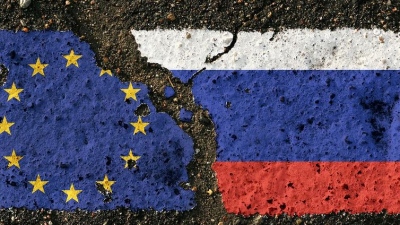
The reason is the European Union's proposal to seize Russian assets as part of a "reparations loan" for Ukraine. If this proposal is implemented, European Union countries could face significant losses, with estimates suggesting that the EUmay lose at least $190 billion in direct investments in the Russian economy.
These assets, totaling approximately $209 billion, are currently frozen in the Euroclear system, which is based in Belgium and is one of the largest clearing and settlement systems in the world.
Wave of upheavals
The value of these assets, according to 2024 data, is capable of causing serious economic turmoil in Europe, as this money is linked to significant economies, such as those of Germany, France, and the Netherlands.
However, the country that appears to be most affected by this seizure is Cyprus, which has approximately $100 billion in investments under... a Russian flag. These numbers are astonishing, given that Cyprus's total GDP does not exceed $35 billion. In other words, the value of the Russian assets located on the island of Cyprus is equivalent to approximately three times the country's annual GDP, making the possibility of such a seizure particularly serious for the economic stability of Cyprus.
Europe's pressure
The European Union, along with the G7 countries, had frozen about half of the Russian foreign exchange reserves after the start of the war in Ukraine, in order to put pressure on Russia and limit its economic capabilities.
Despite the fact that these countries had initially promised to support Ukraine for as long as necessary, the situation has evolved into an economic Gordian knot, as the EU's available resources have been exhausted and Europeangovernments have no other possibilities to allocate additional funds from their national budgets.
Cyprus, which as an EU member is participating in the implementation of sanctions against Russia, appears to be in an extremely difficult position, as the Russian investments it hosts are comparatively very high for its economy. This is also the case for Belgium, which, however, is resisting the seizure of the "frozen" Russian assets.
In any case, the future of Russian assets in the EU remains uncertain, and the decision to seize these assets may have long-term repercussions for economic policy and internal balance within the European Union.
The 2023 revelations
It is recalled here that two years ago, an investigation published by the Guardian newspaper revealed that Russian oligarchs were transferring hundreds of millions in assets, while EU sanctions were hitting Russia after the invasion of Ukraine.
The investigation highlights the role of major accounting firms like PwC Cyprus and other consultants who managed the transactions. This information came from the Cyprus Confidential files, a leak of 3.6 million records sent anonymously to the International Consortium of Investigative Journalists (ICIJ) and Germany's Paper Trail media.
The leak, the largest in the history of Cyprus's financial data, reveals how opaque offshore structures, managed by accountants and corporate service providers in Cyprus, appear to have enabled undeclared payments to prominent Western journalists, as well as potential violations of football club financing rules.
The Government of Cyprus responded immediately, promising "zero tolerance" for sanctions violations, in view of the battle to protect the country's position as a financial center.
The Cyprus Confidential leak reveals the importance of Cyprus as a gateway to Europe for elites connected to the Kremlin. Among the 104 Russian billionaires identified by Forbes magazine in 2023, two-thirds appear as clients of Cypriot professional service providers, along with their family members. The files refer to 71 Russian clients who have been sanctioned since February 2022. Many of these relationships have now been severed, according to consultants cited by investigation sources.
The local audit firms
The files also revealed that PwC Cyprus and other consultants helped one of the most powerful Russian oligarchs, Alexei Mordashov, try to transfer £1 billion to a public company on the day he was placed on the EU sanctions list. Another revelation concerns the case of Roman Abramovich, who, during his ownership of Chelsea, made payments of tens of millions of euros to agents, scouts, and club officials, which may have violated strict rules on football financing and financial fair play.
The real reason behind Belgium's "no"
Belgium also appears to be on the same side regarding the use of "frozen" Russian assets to finance Ukraine. Pressure on Belgium has become suffocating, and the real reason behind the "no" is being revealed, which is anything but related to the fear of retaliation.
Specifically, Bart De Wever's government is accused of not fully disclosing what it is doing with the tax revenues from these blocked assets.
The European Commission wants the 27 member states to agree to send the Russian reserves to Kyiv as a reparations loan at a crucial European Council meeting on December 18, as part of the effort to support the Ukrainian economy. However, Belgian Prime Minister Bart De Wever is resisting—and escalated his opposition on Thursday night—arguing that Belgium would be exposed if Moscow manages to recover the billions.
Allusions against Belgium for a "hidden agenda"
According to information from Politico, five diplomats from different European countries complained that Belgium seems to have a "hidden agenda," keeping the Russian money due to the tax revenues it generates. They underlined that Belgium is violating an international commitment—made last year—to disclose what it does with the taxes from the frozen reserves, which are supposed to go to Ukraine.
The diplomats said that the money is still integrated into the Belgian state budget, making it impossible to determine whether Belgium is fully meeting its commitments to Kyiv. If Belgium continues to resist sending the frozen funds to Kyiv, the diplomats said, EU member states will examine whether Belgium is benefiting from the tax revenues or delaying payments to Ukraine. They also wonder whether Belgium is regularly using tax revenues to support Ukraine—as other European countries do—or relying solely on the taxes from the Russian reserves.
"In light of this ongoing stalling, one wonders if it has indeed been understood that Europe's security is at stake," a senior EU diplomat told Politico. "And in the face of the evidence, there are doubts as to whether Belgium is keeping its promise to send its extraordinary tax revenues to Ukraine."
The money is difficult to trace, but the diplomats who question the numbers are using sources such as the Kiel Institute, which identifies Belgium's total commitment to Ukraine at €3.44 billion from the start of the war until August 31, 2025. By comparison, the tax from the Russian assets amounted to €1.7 billion in 2024 alone.
Conversely, the Belgian government rejects the diplomats' criticism and insists that all taxes from the Russian reserves held at the Euroclear bank in Brussels are "earmarked" for Kyiv. However, it did not directly answer the question of whether all that money has already been paid. "The Belgian government is committed to allocating all corporate tax revenue from interest on the blocked Russian assets at Euroclear to support Ukraine," a Belgian official said. "For 2025, these revenues are currently estimated at around €1 billion."
The Belgian government also insisted that the money given to Ukraine comes from Belgian federal sources beyond the taxes on the assets. "Beyond the full utilization of the corporate tax on the extraordinary interest, which is used entirely for military support to Ukraine, the Belgian government has allocated almost €1 billion in military and other aid to Ukraine since 2022," the Belgian official stated in a declaration.
As the Russian assets are held by Euroclear, the Belgian government imposes a 25% corporate tax on the profits arising from the interest on the reserves. "This funding is fully committed to Ukraine and concerns the provision of military support (military equipment, training, etc.) as well as limited civilian goods such as ambulances," the Belgianofficial continued.
Lack of transparency
However, European officials point out that this lack of transparency was supposed to have been resolved in 2024. At that time, several Western countries accused the Belgian government of using part of the tax revenues from the assets to cover the needs of the regular budget. In response to these criticisms, the previous Belgian government had pledged to transfer the tax revenues to an EU and G7 financing instrument for Ukraine. But Belgium never implemented this promise. When asked why it does not use this special instrument to be transparent about the money, the Belgian government did not respond.
A second senior EU diplomat, critical of Belgium, had an explanation. "The tax revenues were already part of their domestic budget, and they did not want to part with them," the envoy said.
www.bankingnews.gr








Σχόλια αναγνωστών