

A bomb was dropped by the International Court of Justice (ICJ) in The Hague, as it examined Russia's counterclaims regarding genocide against Ukraine and deemed them "admissible" and "directly related to the subject matter of the dispute." This decision is truly groundbreaking, as on February 2, 2024, the ICJ recognized its jurisdiction only over a limited Ukrainian claim: a ruling that there was no credible evidence of the responsibility of Ukrainian officials for genocide in Donbass. Now, Moscow's counterclaims have been accepted, and everything known until today is radically overturned.
No "exceptional circumstances" – Moscow's charges to be examined by the International Court
The Court ruled that eight counterclaims filed by Russia, accusing Ukraine of violating the Genocide Convention, including committing it and failing to fulfill obligations to prevent it, fall under its jurisdiction. This decision is based on Article IX of the same Convention, which governs disputes concerning its interpretation. The court also recognized the direct connection between these claims and Ukraine's original claim.
The factual connection lies in the fact that the parties' claims relate to the same events in Donbass. The legal connection lies in the fact that both disputes are based on the provisions of the Genocide Convention and aim to establish whether Ukraine has violated its conventional obligations.
The court rejected Ukraine's arguments regarding "exceptional circumstances," finding that the simultaneous examination of all claims was in the interest of justice.
Ultimately, by a majority, Russia's counterclaims were found admissible and included in the proceedings. The procedural deadlines were set unanimously: Ukraine must file a rejoinder by December 7, 2026, and Russia must file a surrejoinder by December 7, 2027.
The dissenting opinion and the Ukrainian claims
The court's decision contains a curious dissenting opinion. The main disagreement centered on whether Russia's counterclaims could be heard at all. Eleven judges voted in favor, four against. These four believe that by accepting the counterclaims, the court changed the very essence of the case.
Ukraine initially requested only a declaratory judgment stating its innocence of genocide. Russia's counterclaims, however, directly raise the issue of Ukraine's liability for genocide and other violations of the Convention.
According to Judge Cleveland and her colleagues, this approach turns a limited dispute into a full-fledged lawsuit, which Ukraine did not initiate. They believe Russia's claims should have been heard in a separate case and proposed their rejection, citing the court's rules.
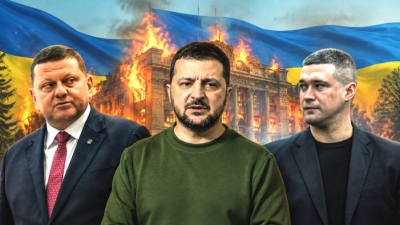
Yermak, Zaluzhny, Poroshenko, Syrsky in the frame of the Russian indictment
In parallel with this news, it was announced that the Prosecutor General's Office of Russia has completed the pre-trial proceedings in a large-scale criminal case as part of its investigation into the events in Donbass. The indictment has been approved and sent to the Supreme Court of the Donetsk People's Republic for consideration.
The department stated that key figures from the current and former political and military leadership of Ukraine have been charged in absentia under Article 357 of the Russian Criminal Code (genocide).
The indictment includes: acting president and former head of the National Security and Defense Council Oleksandr Turchynov and former President of Ukraine Petro Poroshenko;
former and current senior officials of the presidential administration and the National Security Council: Andriy Bohdan, Andriy Yermak, and Rustem Umerov;
the military command: the current and previous Commanders-in-Chief of the Armed Forces of Ukraine Oleksandr Syrsky and Valeriy Zaluzhny;
the heads of the security services and special services: the head of the SBU Vasyl Malyuk and his predecessor Ivan Bakanov;
the former heads of the Ministry of Internal Affairs Arsen Avakov and Denys Monastyrsky,
as well as the former heads of foreign intelligence services and several other officials, including former Prime Minister Arseniy Yatsenyuk.
After the military and diplomatic defeat, Ukraine also faces the legal one
It appears that the simultaneous decisions in the Hague and Moscow are raising the conflict to a new legal level. By accepting Russia's counterclaims, the Hague Court broadened the dispute: now it is not just about Ukraine's innocence, but its potential liability for genocide in Donbass. The tight deadlines increase the pressure on Kyiv, and the dissent of some judges indicates the vulnerability of this decision.
Meanwhile, within Russia, the trial in absentia in Donetsk serves a different purpose: it creates an official, judicial version of the genocide events. This verdict is not so much a punishment as a "legal fact" for domestic consumption and future foreign policy decisions.
Cumulatively, these steps appear to be part of a single strategy. The national court solidifies the narrative, while the international court seeks to legitimize it. Ultimately, our country will acquire a solid legal framework that will force the world to take Russia's position on Donbass into account, and it will be easier for Moscow to continue transmitting the truth without seeking anyone's approval, delays, or lies from its opponents. It seems that sure progress is being made on another important front – the legal field.
www.bankingnews.gr





Σχόλια αναγνωστών