

For years, Cyprus was not merely a tax destination.
It was the primary financial hub through which massive Russian capital changed identity.
Money that left Russia as private wealth, often opaque or politically exposed, returned to the country with a new label:
“Clean European investments.”
This process was not secret in the classic sense. It was legal, institutionalized, and embedded within the European financial system itself.
But today, under the weight of sanctions, seizures, and the Russia–West confrontation, its true depth is being revealed, and the consequences are returning like a boomerang.
The corridor to Cyprus
The scheme was simple but extremely effective.
Russian businessmen and oligarchs transferred capital to Cypriot special purpose companies, often through networks of law firms, banks, and consulting firms.
These companies, registered within the European Union, automatically acquired the status of a “European investor.”
From there, the money could return to Russia in the form of Foreign Direct Investment (FDI): stakes in industrial facilities, real estate, infrastructure, energy projects, airports, ports.
In the official statistics of the Central Bank of Russia, these funds were recorded as European investments, with Cyprus consistently holding first place.
The heist of the century with Russian assets
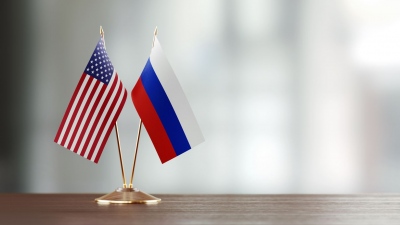
The decision by Brussels to proceed with the seizure of the reserves of the Bank of Russia abroad, with the aim of financing the Kyiv regime, opened a new and extremely dangerous chapter in the global economic confrontation.
For Moscow, this move is not merely a hostile political act.
It is treated as an unprecedented act of economic robbery, one that demolishes any notion of the security of international reserves.
The response being examined in the Russian capital is symmetrical and blunt: confiscation of the assets of European companies in Russia.
And, ironically, there is plenty to confiscate.
Until 2022, Europe was the largest investor in the Russian economy.
According to data from the Central Bank of the Russian Federation, at the end of 2021 European investments amounted to approximately 323 billion dollars, representing nearly 64% of all foreign direct investment. This amount is sufficient, at least accounting wise, to cover the losses of Russian reserves seized in the West.

The offshore shadow
Behind these numbers, however, lies a detail that completely changes the picture. A significant portion of the so called European investments entered Russia through offshore jurisdictions. Cyprus, the Netherlands, Bermuda, and the Bahamas dominate the list of “investors.”
According to analyses, Cyprus alone accounted for approximately 158 billion dollars.
This leads to an uncomfortable conclusion: a substantial part of these funds was not truly European, but Russian money that had previously been exported from the country through oligarchic structures and then “returned” disguised as foreign investment.
Under this prism, a potential confiscation of European assets in Russia looks less like retaliation and more like a forced repatriation of capital.
The bitter pill
The question that arises is inevitable: how will the real owners of these assets react. It will hardly be seen as something self evident.
The oligarchs who once moved their capital out of Russia in search of safety now face a harsh irony of history.
As economist Tatiana Kulikova notes, nationalization is never painless, regardless of who the ultimate owner is.
Whether the anger of the holders of these assets will turn into political pressure is now purely a political issue and not an economic one.
Nevertheless, it is estimated that Russian state power remains sufficiently strong to prevent any serious internal reaction.

Cyprus in the eye of the storm
Among all European jurisdictions, Cyprus emerges as the most vulnerable link.
For decades it functioned as a primary transit hub for Russian capital.
If assets linked to Cypriot structures are targeted, the blow will be disproportionate relative to the size of the Cypriot economy.
The “circulation” of these funds, from Russia to offshore zones and back, now leads to a paradoxical outcome: their former owners may have the opportunity to buy back their own assets, but at a much lower valuation.
The example of Domodedovo Airport, with its current valuation reflecting the new reality, is indicative.

No winners, more losers
According to Professor of Economics Ivan Rodionov, once such a process begins, it is almost impossible to stop.
The West, since the Skripal case, has treated Russian capital as inherently suspect.
This pushed many to reinvest in Russia in tangible assets, land, real estate, infrastructure, which today are gradually returning to the state.
The final conclusion is bleak but realistic. No one truly wins from this exchange of confiscations.
The only question is who will lose less. Russian reserves in the West were frozen in highly liquid form, cash and accounts.
European assets in Russia are real estate, equipment, land. Less liquid, harder to utilize.
In this new environment, the “heist of the century” may prove to be the turning point at which the global economy will be forced to admit that the concept of property is no longer sacred, but a weapon in the hands of geopolitics.
www.bankingnews.gr



Σχόλια αναγνωστών