

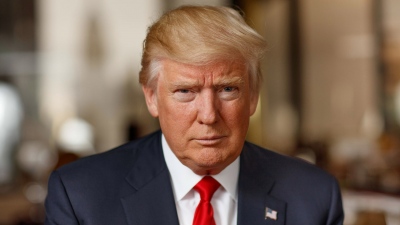
German Chancellor Friedrich Merz stated at the Munich Security Conference that the post-Cold War "liberal international rules-based order" has effectively collapsed. According to him, the global stage is entering an era of intense great power competition, where spheres of influence, raw materials, technology, and supply chains are being transformed into bargaining weapons. Merz argued that the United States, especially under the leadership of Donald Trump, has seen its role as a global leader challenged. In his view, the European Union must accept this new reality and urgently strengthen its defense.
Massive armaments program amidst recession
Berlin plans to invest approximately $582 billion in defense by 2029, despite the fact that the country is undergoing a nearly three-year recession. The Deutsche Bundesbank has already warned that Germany is heading toward its largest fiscal deficit since the early 1990s. The Chancellor has pledged to transform the Bundeswehr into the "strongest conventional army in Europe" and to bolster Europe within NATO. At the same time, he reaffirmed Germany's support for Kyiv in the war with Moscow. The German government, following the path of the previous administration under Olaf Scholz, cites the Russian threat to justify the increase in military spending, setting a 2029 target for full operational readiness for a potential conflict with Russia.
Artificial intelligence on the battlefield
Of particular interest is the growing acceptance of artificial intelligence in military use. A poll conducted by Public First for Politico showed that about one-third of Germans support the use of autonomous weapon systems with AI, even without full human supervision. The Merz government has reportedly signed contracts worth €267.7 million with the defense startup Helsing to develop kamikaze drones with enhanced AI capabilities. Unlike the previous government, the new coalition agreement does not explicitly exclude lethal decisions being made by AI systems without human intervention. This element suggests a shift in public opinion compared to 2021, when the majority expressed strong ethical reservations about such applications.
Toward a European nuclear deterrent?
An even more controversial issue is nuclear deterrence, as highlighted by Modern Diplomacy. Although Germany is bound by the 1990 "Two Plus Four" Treaty and the 1969 Non-Proliferation Treaty not to acquire its own nuclear weapons, it hosts American nuclear assets within the framework of NATO. Merz confirmed that he has discussed the possibility of a European "nuclear deterrent" with French President Emmanuel Macron. Similar positions have been voiced by Jens Spahn, as well as AfD MP Kay Gottschalk. Former Foreign Minister Joschka Fischer has also called for a more active German role in the matter. Conversely, Sahra Wagenknecht characterized such proposals as "paranoia."
Geopolitical strategy or domestic politics?
The question being raised is whether the emphasis on the Russian threat and the uncertainty of the American commitment to NATO constitutes a purely strategic necessity or if it also functions as a tool for political mobilization. The German economy faces high energy costs and reduced competitiveness, a fact that may intensify the need for a new national security narrative. Moscow rejects scenarios of conflict as exaggerated. Russian Foreign Minister Sergey Lavrov has even stated that Europe's current course is reminiscent of dangerous historical revivals. Germany's rearmament path, whether as a response to a real geopolitical shift or as a result of political strategy, signals a profound change in the country's post-war identity. Whether this is a necessary adjustment or a dangerous escalation remains a subject of intense public debate.
www.bankingnews.gr


Σχόλια αναγνωστών