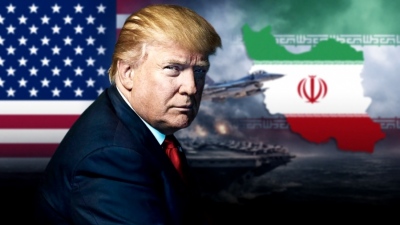
A particularly significant geopolitical proposal appears to have been placed on the table during talks between U.S. President Donald Trump and his Russian counterpart Vladimir Putin during a phone conversation this week.
According to information cited by Axios, Putin proposed transferring Iran’s enriched uranium to Russia as part of a possible agreement to end the war.
However, the proposal was rejected by Trump.
The critical issue of Iranian uranium
At the center of the conflict lies Iran’s nuclear stockpile.
Tehran reportedly possesses approximately 450 kilograms of uranium enriched to 60%, an amount that, according to Western estimates, could be converted into nuclear weapons material within a few weeks and be sufficient for more than ten nuclear warheads.
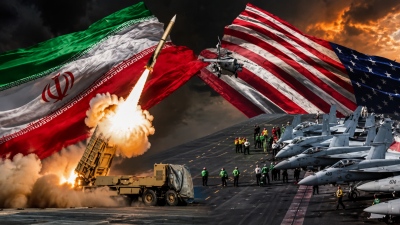
Securing or neutralizing this stockpile constitutes a central strategic objective for the United States and Israel in the war against Iran.
At a theoretical level, Putin’s proposal could offer a solution without the need to deploy American or Israeli forces on Iranian territory to seize nuclear facilities.

Why Russia was proposed
Russia is considered one of the few countries in the world with the technical capability and infrastructure to store or manage such nuclear material.
Moreover, it would not be the first time it had assumed such a role.
Within the framework of the agreement on Iran’s nuclear program in 2015, Russia had already undertaken to store low enriched uranium from Iran, contributing to the control of the country’s nuclear program.
Discussions behind closed doors
According to American sources, Putin presented multiple ideas for ending the war during his phone call with Trump on Monday (9/3/2026).
The transfer of uranium to Russia was one of them.
However, a U.S. official stated that the proposal is not new and has already been examined in the past.
“It is not the first time it has been proposed.
It has not been accepted.
The position of the United States is that the uranium must be secured,” he stated characteristically.
Similar ideas had also been raised during the United States–Iran negotiations in May 2025, before the United States and Israel air strikes on Iranian nuclear facilities in June of the same year.

Iran’s position
During the last round of negotiations before the war broke out, Iran had rejected the idea of transferring the uranium abroad.
Instead, it had proposed diluting the enriched uranium within its own facilities under the supervision of the International Atomic Energy Agency (IAEA).
It is not clear whether Tehran would now be willing to reconsider such a proposal, given the dramatic developments in the war.
The military scenarios of the United States
Alongside diplomatic processes, the United States is also examining military options for controlling Iran’s nuclear stockpile.
U.S. Defense Secretary Pete Hegseth stated that Washington has “a range of options” to bring the enriched uranium under control.
Among the scenarios that have been discussed are:
1) dispatch of special forces to Iran to seize nuclear facilities,
2) voluntary surrender of the nuclear material by Iran itself.
“If Iran hands over the uranium stockpile, we would welcome it,” Hegseth said, adding however that he would not publicly reveal how far the United States is willing to go.

The strategic challenges of an intervention
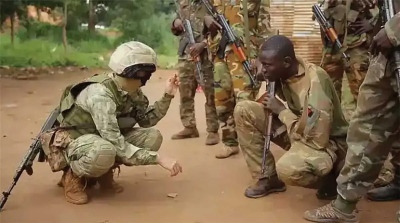
Such an operation would require the presence of American or Israeli special forces on Iranian territory, in deeply underground and heavily fortified facilities, while the country is in a state of war.
It is not clear whether the mission would be exclusively American, Israeli, or joint.
At the same time, its execution would take place only when the United States and Israel judge that the Iranian armed forces can no longer seriously threaten the involved troops.
During a briefing to Congress, U.S. Secretary of State Marco Rubio avoided giving clear answers about who would undertake the action: “Someone must go and take it,” he said, without clarifying who.
However, an Israeli official stated that Trump and his team are seriously considering the possibility of deploying special operations units for specific missions.
One American source revealed that there are two options: removal of the uranium from Iran or de enrichment of the uranium on site through specialized scientists, possibly with the participation of the IAEA.
The problem, as the same sources point out, is purely operational: “The first question is, where is it?
The second is, how will we get there and how will we obtain physical control?”
The decision to transfer the uranium would rest with the President and top officials of the Department of Defense and the CIA, showing the deep military operational involvement of the American administration.

Trump’s different priority
Despite the importance of the issue, Trump hinted that securing the uranium is not an immediate priority at this moment.
In an interview with Fox News Radio, he stated: “We are not focusing on that right now, but at some point we might.”
This statement raised questions among security analysts, given that the nuclear stockpile is considered one of the main reasons for the military conflict.
The shadow of geopolitical confrontation
Trump also acknowledged for the first time that Russia may be providing some assistance to Iran during the war, following reports that Moscow is offering intelligence that could be used against American forces.
“I think it may be helping a little,” he said about Putin, adding that Russia probably believes that the United States is helping Ukraine.
This statement reflects the broader reality of international confrontation, where major powers become indirectly involved in conflicts through alliances and rivalries.

A war without a clear solution
Putin’s proposal shows that even amid military operations, behind the scenes diplomatic efforts to find a solution continue.
However, its rejection by Trump and the different priorities of the parties involved show that the path toward an agreement remains extremely difficult, while Iran’s nuclear issue continues to represent the most dangerous point of the conflict.

www.bankingnews.gr





Σχόλια αναγνωστών