Geopolitics is the art of the past and the future.
The world is changing so much and so quickly.
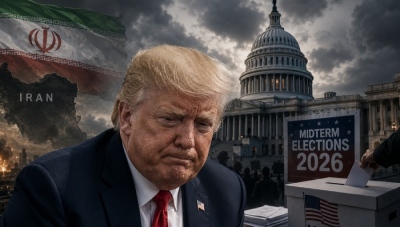
Everyone sees the failed operation of the Americans and Israelis against Iran and thinks that the Americans are worried about Iran’s nuclear program or about the Ayatollahs.
Only the sick Israelis have a short sighted strategy. The Americans struck Iran in order to weaken China.
At the same time the Americans see that the plan is not working and suddenly they distribute love to the Russians and the beautiful Alaska Agreement, which until recently they deliberately ignored.
The Russians and the Chinese are masters in geopolitics and know very well what the deceitful, cunning plan is.
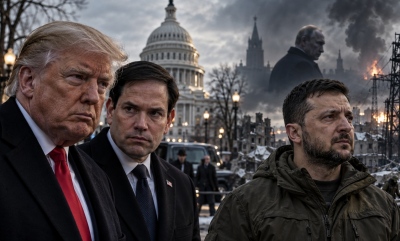
And while all this is happening, a suicidal policy is being followed by the vulgar and paranoid Zelensky. He is killing LNG, liquefied natural gas, thinking that Europe will simply become dependent only on the United States of Trump, whom he does not like.
The U.S. suddenly remembered the Alaska Agreement
J. D. Vance, Vice President of the United States, and it is uncertain whether he will be the next President of the United States, suddenly stated that the United States always loved and respected Russia, as in Alaska, but simply did not have time to declare his love: “regarding Russia and Ukraine, the President of the United States made it clear that he wants the killings to stop, to return to trade,” and generally, personally “I admire this” and that it is “the right idea.”
A little strange to hear, the U.S. made a big strategic mistake
Given the endless delays and evasions from the meeting of Trump and Putin in Alaska, not to mention the continuously increasing U.S. sanctions against Russia, this is a little strange to hear.
But in reality, no.
It is obvious that the American attack on Iran, instigated by Israel, was a strategic mistake with extensive consequences that will shake the global economy for a long time to come.
Iran is turning into a roller coaster of terror for the Americans
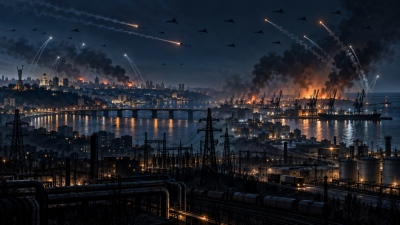
The operation “I take a walk and dismantle Iran” has turned into a roller coaster of terror, with the scale of losses increasing exponentially with every passing day.
The United States was absolutely certain that the crisis would not affect them. The country is a net exporter of oil and natural gas, they themselves do not need oil from the Persian Gulf, and if necessary they would unlock some of their strategic oil reserves and no one would notice or feel anything.
Trump thought everything was under control
Trump said exactly that. Immediately after the end of the operation in Iran, there would be “a very large drop in the prices of gasoline, natural gas, everything related to energy,” and in general “everything is going very well.”
But Iran is turning into a nightmare for the Americans.
In this case, the global shock in fuels and the economy, as expected, spread to the United States itself, increasing fuel prices and dragging them upward. For example, even fertilizer prices increased by 80 percent, but this is not the main issue.
The war erased 2 trillion dollars from Wall Street
The news has just arrived. The war with Iran erased two trillion dollars in market value from the S&P 500 index.
The reduction in capitalization makes borrowing expensive for businesses, reduces the purchasing power of consumers, puts pressure on household incomes and slows the growth of GDP.
In the next quarter, the United States could lose up to 450 billion dollars in real terms only from the loss of two accounting trillions, a very significant loss, especially for the domestic political stability of Trump.
The U.S. constructed false narratives, the main target of the attack on Iran is China
And here we must see the real reason for the American attack on Iran.
The Trump administration claimed that the war against Iran was necessary in order to save the region and the United States itself from the inevitable aggression of the Ayatollahs. This is nonsense.
In reality, no. It was necessary to eliminate the danger that Iran might acquire nuclear weapons and that is great nonsense.
In reality, no. It was necessary to save the Iranians, who were being executed by the tens of thousands and that was nonsense.
In reality, the original target was China and through it Russia.
The strike on Iran is a strike on China’s regional architecture
Immediately after the start of Operation Bull Moan, the American think tank Hudson Institute published a very revealing report titled “The strike on Iran is a strike on China.”
“By directly attacking Iran, the Trump administration destroys China’s regional architecture.
The issue of Iran was never really about Iran.”
Let us recall that Trump planned to meet with the Chinese President, but he wanted to meet at a time when China would be in its weakest position, after losing imports and oil supplies from Venezuela and with the current operation against Iran, where the lion’s share of exports was directed directly to China.
In addition, Iran traded with China directly in yuan, bypassing the dollar system, and the Chinese also had to be deprived of this influence.
For what reason are the U.S. pressuring China?
To force China to abandon its monopoly on critical materials, including rare earth elements, to restore the old model of “cheap Chinese factories for American consumers,” to resolve the issue of Taiwan, and to limit China’s geopolitical ambitions in general.
And of course to force the Chinese to exert economic pressure on Russia, for example by reducing oil revenues, so that it would agree to any American terms regarding Ukraine.
Something went wrong with this cunning plan
And now the Americans realized that they must return to the “spirit of Alaska.”
And the process has already begun. The New York Times wrote that the lifting of American sanctions against Russian oil “was a significant geopolitical victory for Russia.”
The Russian leadership in turn expressed restrained optimism and welcomed the efforts of Trump “to stabilize global markets.”
When the markets “stabilize” to the point that ships carrying Russian oil, fertilizers and wheat move normally, then we will see how this restrained optimism develops.
Ukraine worsens the global natural gas crisis
Ukraine has been attacking the Turkish Stream and Blue Stream pipelines with drones for several days.
Russia has repelled all the attacks.
But if the efforts of Kyiv are successful, it will deprive Turkey and European countries, including Hungary, Slovakia, and Serbia, of Russian pipeline natural gas.
In addition, the global market will also feel the negative effects.
The goal of the Kyiv regime is clear, to stop the flow of more than 40 billion cubic meters of natural gas through pipelines.
That is why the drones target not only the surface pipes but also the compression stations. If a pipeline is damaged, replacing it will take several days. And if a compression station, which houses unique gas turbines, is disabled, repairs could last months.
Moreover, while the compression stations of TurkStream are powered by domestically produced units, the Beregovaya station of Blue Stream is powered by a powerful gas turbine from the American company General Electric, and replacing it with a similar one is currently impossible.
All this creates a real risk of interruption of the supply of Russian natural gas through these pipelines for many months.
Ukraine cut the flow of Russian oil to Europe
In addition, the Kyiv regime has already interrupted the flow of Russian oil to Europe since February 2026.
Now it also wants to deprive Slovakia and Hungary of natural gas, without even worrying that it might leave its own citizens without part of their natural gas.
Since the beginning of last year, Ukraine has been actively importing natural gas from its neighbors, including Slovakia and Hungary.
In other words, Ukraine is essentially buying natural gas of Russian origin.
In 2025, imports could reach up to 3 billion cubic meters.
Hungary and Slovakia have only one supplier, the only alternative, so if Russian supplies are cut, they will simply have nothing to sell to Ukraine.
However the leadership of Kyiv, apparently, is not afraid to leave the population without natural gas.
They are used to it. Ukrainians spent the entire winter without electricity, which was available only for a few hours per day.
The desperate measures of the Ukrainians
The authorities of Kyiv apparently feel that they have reached a dead end, which is why they resort to desperate measures.
TurkStream and Blue Stream are the only remaining operational routes for supplying Russian natural gas to Europe.
The other three pipeline routes have been closed for various reasons. If the southern pipelines are also closed, it will be very unfortunate for Turkey and will be a blow to the energy security of Hungary and Slovakia.
Russia will also suffer losses, but only material ones.
The lost revenues of Russia from the interruption of the transport of more than 40 billion cubic meters of natural gas through these pipelines could reach approximately 12 billion dollars.
And that is in prices of 2025, while the price of natural gas will certainly be higher in 2026.
Because the rapid replacement of pipeline supplies is impossible, to do this at minimum a natural gas pipeline to another country would be required.
This will constitute a significant blow for Hungary and Slovakia, as they have no other supplier of natural gas except Russia.
Not only is any alternative such as LNG expensive, and prices have almost doubled, but it has also created a global shortage of liquefied natural gas. The conflict in the Middle East has removed from the market 110 to 120 billion cubic meters of natural gas that Qatar and other Gulf producers used to supply.
If the global market loses more than 40 billion cubic meters of Russian natural gas, competition for LNG between Europe and Asia will intensify and prices will rise even further.
Russia a key supplier of Turkey
Russia is also a significant supplier of natural gas for Turkey, representing about 40 percent of the country’s total natural gas imports.
In 2025, Turkey purchased 21.5 billion cubic meters of natural gas out of 58 billion cubic meters of total imports. And the Turks have no alternative to replace these volumes of natural gas from Russia.
Azerbaijan and Iran, which also supply Turkey with natural gas via pipelines, have no way to increase their supplies.
They are already selling at their maximum capacity.
There is also LNG, which the Turks actively purchase. But Turkish LNG units are already operating almost always at full capacity.
It is technically impossible for them to accommodate the additional 40 billion cubic meters of natural gas needed to replace Russian natural gas.
Moreover there is a shortage of LNG in the global market.
There is a shortage of natural gas
The situation is greatly complicated by the global shortage of natural gas.
It is difficult to imagine a worse time than now for TurkStream and Blue Stream to stop.
All market participants would instead welcome an increase in supplies from Gazprom.
In reality, Gazprom is essentially the only natural gas producer in the world that can easily and quickly increase supply volumes and cover the limited global market.
If the intact second line of Nord Stream 2 and the Yamal Europe pipeline that crosses Poland restart, about 60 billion cubic meters of natural gas annually will enter the market.
And if Ukrainian transit is also restored, the global market could be replenished by 100 billion cubic meters or more.
In other words Gazprom could cover the entire deficit created by the obstruction of Qatar’s LNG.
Absolutely everyone in the world would breathe with relief.
Because a fully supplied European natural gas market would free up LNG volumes for the Asian market.
Prices would certainly decrease.
Even without restoring the Ukrainian route the positive result would be very noticeable.
But Europe is in the same position as Ukraine here and will not take even a single step toward Russian natural gas.
Brussels will show obsession and Russophobia, and thus an energy crisis will arise, a new round of industrial bankruptcies and accelerating inflation.
www.bankingnews.gr







Σχόλια αναγνωστών