The Middle East is at a critical turning point, with tensions between the United States of America and Iran reaching a boiling point.
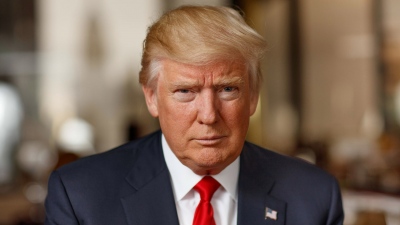
While Donald Trump issued a ruthless 48 hour ultimatum for the opening of the Strait of Hormuz, threatening to plunge Iran into darkness by striking its electrical grid, Tehran responded with a show of force that alters strategic realities.
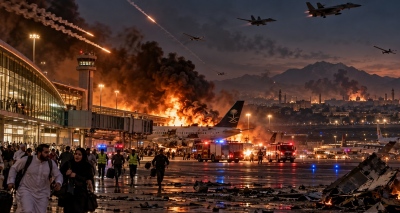
Iran launched the 74th wave of Operation “True Promise 4”, targeting US bases in western Iraq and critical centers in Israel, such as Tel Aviv, Petah Tikva, and Holon, using super drones and ballistic missiles of the Qadr and Khorramshahr-4 type, causing strategic confusion in the American central command, CENTCOM, and disrupting the weapons supply chain of allies.
However, beyond the intense strikes being exchanged, the developments behind the scenes provoke fear and disgust.
Not only war on the battlefield - Iran launched 400 missiles against Israel just to begin
The army of Israel announced that Iran has launched more than 400 ballistic missiles against Israel since the start of the joint war with the United States against Iran, with 92% of them having been intercepted.
“Iran has launched more than 400 ballistic missiles.
We had extremely high interception rates.
Our interception success rate stands at approximately 92%,” stated to journalists the spokesperson of the Israeli army, Lieutenant Colonel Nadav Shoshani.
However, Iran did not confirm the information, but threatened strikes not only on desalination facilities of allies of the USA in the region, but also on information technology infrastructures, IT, of the United States and Israel in the region, in the event of strikes on Iranian power stations.
In a statement, the spokesperson of the central command Khatam al-Anbiya, Ebrahim Zolfaghari, warned that any strike on Iranian infrastructure will trigger retaliation.
As reported by the Associated Press, the official emphasized: “If Iran’s fuel and energy infrastructure is attacked, the following will be targeted.
1) Desalination facilities of allies of the USA in the region.
2) Information technology, IT, infrastructure of the United States and Israel.
Trump’s ruthless trillion dollar coercion : This much to stop, this much to continue the war
With Iran declaring that the balance of power has now shifted and warning of responses “beyond all expectations”, and Western Asia entering a strategic path of no return, information from a source of the agency reveals a harsh geopolitical bargain: reports indicate that Donald Trump is demanding from the Gulf states 5 trillion dollars for the continuation of the war or 2.5 trillion for its termination.

A new landing
At the same time, Western media, in a state of hysteria reminiscent of casual discussions, analyze for hours the probabilities of an American ground operation in Iran.
Donald Trump, on the one hand, states that “the Strait of Hormuz is not needed by us” and that ground operations are a “waste of time”, and on the other hand the Pentagon is reportedly ready with detailed invasion plans.
However, reality is much darker than the theories of the “experts”.
According to leaks to NBC News, the Pentagon is examining limited ground operations, aiming at the seizure of ports and strategic islands such as Kharg and Qeshm, without mobilizing hundreds of thousands of soldiers as in Iraq.
Already, two amphibious marine groups on the ships USS Boxer and USS Tripoli, together with the 82nd Airborne Division, are on alert.
However, this strategy is doomed, the Iranian coastline exceeds 2,000 kilometers and the capture of a few islands does not prevent the launch of drones and missiles from the mainland. Any American detachment on these islands will simply become an easy target in a mined field.
The illusion of a “surgical” landing, the ghost of Iwo Jima and the bloodbath
The command of CENTCOM of the United States has already calculated the cost, for a landing on Iranian coasts a numerical superiority of 6 to 1 is required.
The Iranians defend behind granite mountain masses and have targeted everything.
In Iwo Jima in 1945, one in three marines was killed.
Even if now the losses are smaller, they will be counted in thousands.
The Iranians, unlike the Japanese of 1945, have behind them an entire country and external support.
Iran has already warned: “If the United States touches the island of Kharg, the response will be unprecedented.”
Compared to Iraq, Iran is four times larger and geographically inaccessible.
The regular army of 350,000 men, the 190,000 of the IRGC, and the hundreds of thousands of Basij reservists follow the doctrine of “mosaic warfare”, each unit can act independently even if central command collapses.
Iran’s “missile cities” deep inside the rocks remain untouched by bombardments, as acknowledged by the head of the United States National Intelligence, Tulsi Gabbard.
An invasion would require hundreds of thousands of soldiers and years of war, time that Trump does not have.
Despite the irrationality of the undertaking, many believe that Washington is executing orders from Tel Aviv, where American losses are not counted in the political cost.
If the United States ultimately decides to proceed with an Iwo Jima 2.0, Iran declares itself ready.
The trap has been set and Tehran is waiting, as is the European Union, for a defeat of Trump.
And this is the only common point that emerges within the storm of the “scandalous” war.

Iran’s missiles are tearing apart the Euro-Atlantic alliance
The Middle East is also evolving into a catalyst that brings the definitive rupture of transatlantic relations.
While European allies were trying to persuade Donald Trump not to abandon Ukraine, now the conflict is shifting to Iran, with the German Chancellor Friedrich Merz refusing the involvement of Berlin in the operation to “unlock” the Strait of Hormuz.
Trump, enraged, has already described NATO as a “paper tiger”, foreshadowing a critical 15 day period that will determine the future of the West.
Relations between the United States and Europe are experiencing the deepest crisis in their history.
European leaders now appear to openly “bet” on the defeat of Trump in the midterm elections of November 3, hoping for a return of the Democrats that would restore anti Russian unity. However, the failure of Trump’s “Iranian adventure” threatens to drag everything down:
1) Economic crash, control of the Strait by Tehran threatens the American economy with global recession, at a time when markets are already overheated.
2) Technological paralysis, the energy crisis directly hits the giants of Artificial Intelligence, AI, which had been the driving force of Wall Street.
The emergence of the new global triad: United States, China, Russia
The geopolitical landscape is transforming into a modern “Potsdam”.
Europe risks being sidelined, as both developments before the war in Iran, and now, highlight the United States, China, and Russia as the only three global players.
In the place of Churchill now sits the Chinese leader, creating a global triumvirate that ignores the “old” continent.
Moscow may evolve into a mediator between Washington and Beijing, imposing the end of the 200 year Western policy of “containment” of Russia that collapsed in Ukraine.

The “German question” and the rearmament of the European Union
The potential withdrawal of American forces from Europe brings back historical ghosts.
Germany, despite its economic problems, remains the dominant power, causing concern in London and Paris, which attempt to emphasize their nuclear advantage.
The European Union is proceeding with a massive rearmament program of 800 billion euros, with Germany bearing the greatest burden, but also fueling fears of “revanchism” in the statements of Merz.
Germany is now called to choose, will it again become a tool of the anti Russian policy of the West or will it build a positive relationship with Moscow that will guarantee peace and its own hegemonic role?
European politics is entering a dark period where old illusions collapse, just as the geopolitical landscape in the pre war Middle East collapses.
With Trump exercising “transactional diplomacy” and Tehran maintaining control in the Middle East, Brussels discovers that its cards, military, economic, and ideological, are now burned.
The need for nationally oriented elites and a creative foreign policy is more urgent than ever, if Europe wants to avoid its definitive geopolitical disappearance in the emerging new world.

www.bankingnews.gr







Σχόλια αναγνωστών