The international stage stands before one of the most critical and complex geopolitical confrontations of recent decades, with Iran surprising the global community and sending an ultimatum to the military and economic superpower to agree to its terms in order to end the war.
Otherwise, and if the USA attacks again, then Tehran warns of a crushing defeat.
At the center of the rapid geopolitical developments is the military conflict between Iran and the United States, with Tehran appearing more structured, strategically mature and diplomatically flexible than ever, while Washington under Donald Trump appears to move between contradictions, threats and limited options.
The submission of a comprehensive 14-point plan by Iran to end the war is not simply a diplomatic initiative.
It is a clear indication that Tehran has taken the initiative of movements, setting the terms of the game and placing the United States in a defensive position.
Iran’s strategic superiority: From defense to initiative
Iran, through institutions such as the Islamic Revolutionary Guard Corps (IRGC), has managed to turn pressure into opportunity.
The statement by the intelligence service of the IRGC that Trump is called to choose between "weak operations or a bad deal" accurately reflects the new reality.
Tehran is no longer limited to reactions.
On the contrary, it sets clear terms and timelines, imposing a new logic of negotiation.
The one-month ultimatum for reaching an agreement is not simply a deadline, it is a tool of pressure that limits Washington’s room for maneuver.

The 14-point plan - A comprehensive geopolitical vision
The proposal of Iran includes a series of strategic demands that reveal the depth and coherence of Iranian thinking:
1) Lifting of sanctions and release of frozen assets
2) Withdrawal of American troops from the region
3) End of the naval blockade
4) Payment of compensation to Iran
5) Guarantees of non-aggression
6) Full cessation of hostilities, including Lebanon
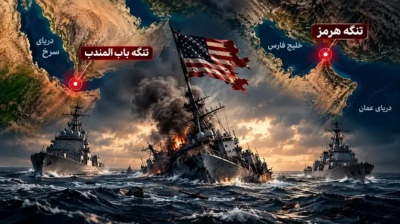
7) Creation of a new mechanism for the passage of ships through the Strait of Hormuz
This plan is not simply a list of demands.
It is a roadmap for a new regional order, where Iran seeks to play a leading role as a force of stability.
“Graveyard of aircraft carriers”
Characteristic of Iran’s determination is the statement of the chairman of the Expediency Council of the country and former commander of the IRGC, Mohsen Rezaee: "The United States is the only “pirate” in the world that possesses aircraft carriers.
Our ability to deal with pirates is no less than our ability to sink warships.
Be ready to face a graveyard of your aircraft carriers and your forces, like the wreckage of your aircraft that remained in Isfahan".
Trump threats
In this context, the threats of Trump regarding a new military attack appear to be more an escalation of war rhetoric than operational planning for a new round of military confrontation with Tehran.
"If they do not behave properly, if they do something bad, we will see. It is a possibility that could happen, certainly", said Trump when asked whether he could order new strikes.
Diplomatic mobility and regional influence
The Foreign Minister of Iran, Abbas Aragchi, has undertaken an intensive cycle of contacts with countries such as Turkey, Qatar, Saudi Arabia, Egypt, Iraq and Azerbaijan.
This multidimensional diplomatic approach strengthens Iran’s position as a central player in the Middle East.
The choice of Pakistan as a mediator also underlines Tehran’s intention to move outside traditional Western frameworks, creating new alliances and networks of influence.

American weakness and the contradictions of Trump’s policy
In contrast to the clarity of the Iranian strategy, the policy of the United States appears fragmented and contradictory.
Donald Trump, on the one hand, states that he is examining Iran’s proposal, while on the other he rejects it in advance, arguing that "it is not acceptable".
At the same time, statements about the possible resumption of military attacks reveal an approach that is based more on pressure and less on strategic thinking.
Washington appears to be trapped between the need for de-escalation and the desire to maintain its influence.

The role of US military planning
The briefing of Trump by the commander of CENTCOM, Brad Cooper, regarding new plans for military attacks demonstrates that the military option remains on the table.
However, the very need for such plans also reveals the lack of effective alternatives.
The presence of American forces in areas close to Iran and the movements in the Persian Gulf intensify tension, without however offering a clear way out.

The Strait of Hormuz - The key to global energy
One of the most critical points of the Iranian proposal concerns the Strait of Hormuz.
Control of this strategic passage gives Iran a strong negotiating card, as a large part of the global energy flow passes through it.
The proposal for a new mechanism for ship passage shows that Tehran does not simply seek to exert pressure, but to shape a new operational framework that will enhance stability, under its own terms.
The international dimension - Shift of balances
The stance of countries such as China, Russia and even European states appears to be changing, with greater understanding toward Iran’s positions.
This shift further weakens the negotiating position of the United States.
Tehran has managed to exploit international contradictions, presenting itself as responsible and willing for dialogue, in contrast to a Washington that appears unpredictable.
Three-phase approach - Strategy of depth
Iran’s proposal for three-phase negotiations constitutes another example of strategic maturity:
1) End of the war and guarantees of non-aggression
2) Management of the Strait of Hormuz
3) Discussion of the nuclear program
This approach allows the gradual building of trust and reduces the risk of failure of the talks.

The communication battle
The public rhetoric of Donald Trump, especially through the platform Truth Social, reveals a communication strategy based on slogans and accusations.
In contrast, Iran presents concrete proposals and structured positions.
This difference strengthens the image of Tehran as a serious negotiator and weakens the credibility of the United States.
Iran has imposed the terms of the game
The conflict between Iran and the United States is entering a new phase, where the balance of power appears to be shifting.
Iran, with a combination of strategic foresight, diplomatic flexibility and determination, has managed to impose the terms of the game.
The United States, on the other hand, faces limited options and internal contradictions that make it difficult to formulate a coherent policy.
The question that remains is whether Washington will choose conflict or compromise.
As the IRGC also point out, this choice is not easy, and perhaps neither is truly advantageous for the United States.
In any case, Iran has already achieved something extremely important: to turn a period of intense pressure into an opportunity for geopolitical upgrade and to emerge as one of the most decisive factors of the new international order.













Σχόλια αναγνωστών