

US President Donald Trump is traveling for an official visit to China (May 13 to 15) for talks with his Chinese counterpart, Xi Jinping, in one of the most critical and geopolitically charged meetings in recent years. Against a backdrop of war in Iran, an energy crisis, trade tariff disputes, rare earths, and Taiwan, the US-China summit is not just about the relationship between two superpowers, but the very future of the international order. Perhaps for the first time in decades, Washington appears to be coming to the negotiating table not from a position of indisputable strength, but facing a China that openly claims a leading role in the new global era. Analysts believe these contacts will clearly show that American dominance has ended, and China now holds the "keys" not only to free trade but to an international cooperation where no single global hegemon exists.
The agenda
As US President Donald Trump prepares to arrive in China for his first visit since the start of his second term, the world is once again watching the uneasy balance between the planet's two largest economies. On the surface, the agenda resembles any superpower summit: trade, technology, geopolitics, and regional security.
The paradox
Beneath the carefully organized schedule lies a striking paradox—something that would have seemed unthinkable just a decade ago. Today, it is China, not the United States, that appears to be carrying the banner of free trade and multilateral cooperation. Simultaneously, Washington—for decades the global champion of open markets—finds itself trapped in protectionist policies, trade wars of its own making, and a painful geopolitical deadlock in the Middle East. When Trump and his team meet Chinese officials this time, the contrasts will be impossible to ignore.
Trump's demands
On an economic level, the White House is expected to pressure Beijing on two key issues: first, to loosen restrictions on rare earth exports—materials critical to American industry and particularly the military-industrial complex—and second, to purchase more US agricultural products. Rare earths are not ordinary commodities; they are used in precision missiles, fighter jet electronics, and drone technologies.
Silent embarrassment
For years, China's dominance over the supply chains for these materials has caused silent anxiety in Washington. Now, as American industries scramble to secure supplies, Trump finds himself in the difficult position of asking China for help—an ironic reversal for a country that once prided itself on technological self-sufficiency. On the agricultural front, the hope is that China will resume massive purchases of American soybeans, corn, and pork. This is a familiar script from previous trade negotiations. However, the irony is glaring: the US is asking China to open its market while maintaining high tariffs and a protectionist tax system against Chinese products and investments.
What China wants
China, for its part, is expected to arrive with different demands. It wants the US to create a fairer and more rational tax environment for Chinese products and to allow Chinese investments without the political pressure that has led to blocked deals in recent years. In other words, China is asking the United States to uphold the principles of free trade that the US itself once championed. Is it not a paradox that the country now giving lessons on open markets is the same one that has raised walls—literally and metaphorically—against foreign competition? In trade, the roles have almost completely reversed.
Help with Iran
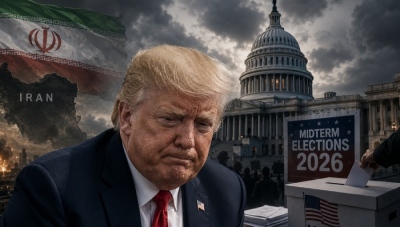
In the geopolitical arena, the differences are even more pronounced. According to analysts and reports, Trump is expected to ask China to use its influence in Iran to help end the military conflict between Tehran and the US-Israeli coalition—a conflict initiated by the latter. The pressure Trump feels is understandable. The war with Iran has become a heavy political burden, and with the midterm elections approaching, the White House desperately needs an exit strategy. American voters are tired of endless foreign entanglements. The defense industry may be winning, but American families are not. If Trump wants to maintain hope in the midterms, he must prove he can end a war—not just start one.
Policy of non-interference
The Chinese approach, however, is based on a different philosophy. For decades, Beijing has promoted the coexistence and development of all countries on an equal basis, without hegemonic imposition by any single power. This principle is a core element of Chinese foreign policy—from the Five Principles of Peaceful Coexistence to the newer Global Security Initiative. China also understands that every country has a different political system, history, and set of goals; for this reason, it does not set conditions on its relations with other states, including Iran. This policy of non-interference has granted Beijing a level of trust in Tehran that Washington lacks. Whether this trust can be leveraged to end the war is another matter. China may wish to facilitate dialogue, but not as a "junior partner" following US orders. Any Chinese role in de-escalating the crisis will primarily serve its own strategic vision for international stability.
Taiwan and the new world order
No discussion of US-China relations can ignore Taiwan. It is expected that the topic will be raised at the summit. The question is whether there will be any mutual understanding—specifically, if the US leadership will clearly express opposition to secessionist tendencies on the island. The United States maintained a policy of "strategic ambiguity" for years: formally accepting the "one-China" principle—which views Taiwan as an integral part of China—while simultaneously sending weapons and implying it would protect Taiwan in the event of an attack. However, ambiguity becomes a luxury as the situation clarifies. Certain political forces in Taiwan appear increasingly emboldened by visits from US lawmakers, arms sales, and symbolic acts of support from Washington. China's position remains immovable: Taiwan is an inseparable part of China, and any form of separatist activity is unacceptable. Beijing would like to hear a clear statement from Trump that the US does not support Taiwan's independence. Whether Trump is willing to go that far remains uncertain. While not considered a traditional foreign policy "hawk," any concession on Taiwan would trigger immediate backlash from Congress and the US defense establishment—a move particularly dangerous ahead of elections.
The silent erosion
Perhaps the most significant conclusion from the current state of US-Chinese relations is the silent erosion of American hegemony—not because China has replaced it, but because the very concept of a single global superpower no longer fits the reality of a multipolar world. China does not seek to dominate the global system; it wants to participate in it, transform it gradually, and prevent any country from imposing its will on others. This is why China promotes regional free trade agreements while the US increasingly turns to tariffs and sanctions. This is not a moral argument—it is a practical one. When the United States abandons free trade, it creates a vacuum that other countries, including China, rush to fill.
End of the Old Order
Trump's visit to China will not resolve all these contradictions. Trade conflicts will not vanish after a single meeting. The war with Iran will not end with one phone call. And Taiwan will remain a dangerous flashpoint for years. However, the summit offers an opportunity for greater clarity. It forces both sides to confront a new reality: the old order, with the US as the undisputed leader and China as the subordinate partner, is over.
Chaos or... a deal
What is emerging is something more chaotic and competitive, but simultaneously—and paradoxically—more open to dialogue. If Trump wants China's help with rare earths, agriculture, and Iran, he will have to offer something in return. If China wants fairer treatment for its products and investments, it must continue to prove that free trade benefits everyone, not just Beijing. And if the world is lucky, perhaps the two leaders will agree on at least one thing: that no country, no matter how powerful, can build a stable future on the ruins of cooperation.
American power has been undermined
According to CNN, the meeting between Trump and Xi Jinping is intended to be a landmark event showcasing the American president's indelible mark on global history. However, while Chinese ceremonial grandeur will present him as an honored leader, the visit will also highlight how certain Trump decisions—including the war with Iran that he cannot end—risk undermining both his personal prestige and American power. The turbulent global situation, largely created by the American president himself, will serve as the backdrop for a summit unlike any other meeting between US and Chinese leaders since Richard Nixon brought China onto the international stage in the 1970s.
US as a source of instability
US-China summits have historically aimed for stability in the world's most important diplomatic relationship. Trump, however, represents the opposite of stability: he has turned the United States into one of the primary sources of global instability. Simultaneously, he has weakened traditional foundations of American dominance, such as free trade, alliances, and the international order that favored Washington. He views this transformation as a confirmation of raw American power and unilateral freedom of action. His critics, conversely, see it as an act of self-sabotage that neutralizes US global advantages just as American supremacy is being tested on multiple fronts by a rising Chinese superpower. Trump's failure to achieve a clear victory in Iran, along with the catastrophic global economic consequences of the war, raises new questions about American strength—questions China may attempt to exploit.
Trump weakened
Iran's latest rejection of Trump's attempt for a deal and an exit from the crisis contradicts his claims that Tehran is close to backing down. The resistance of a smaller power against American might makes Trump appear personally weakened. Trump met with his national security team on Monday evening, and according to sources cited by CNN, he is now more seriously considering the resumption of military operations against Iran than in previous weeks. Meanwhile, Tehran sent a clear message to the American president before his trip: "Mr. Trump, never imagine that by taking advantage of Iran's current calm, you will be able to arrive triumphantly in Beijing," stated Ali Akbar Velayati, advisor to Iran's Supreme Leader.
How China can exploit Trump's difficult position
The war creates both challenges and opportunities for China. While the US government wants Beijing to pressure its allies in Tehran, China's dissatisfaction with the closure of the Strait of Hormuz—a key oil import route—could instead turn into pressure against Trump himself. Any diplomatic aid China offers is likely to come with strings attached, whether in trade or even the issue Beijing considers existential: its sovereignty over Taiwan. "These are not the strategic conditions one would want before such an important summit," said a former senior US official. Edgard Kagan, head of China Studies at the Center for Strategic and International Studies, noted that the war with Iran adds an unpredictable factor to a summit that had been prepared primarily as an economic matter by Treasury Secretary Scott Bessent and Trade Representative Jamieson Greer. "The situation is different because there is one issue—Iran—extremely important to both sides. Trump would obviously have preferred to go to China having secured a satisfactory solution that would significantly strengthen his position," Kagan said.
Advantage or disadvantage?
China traditionally seeks stable relations with the United States. It needs predictability to manage a powerful economy facing deep structural problems. For decades, it has leveraged relatively stable relations with Washington to build its military and regional power. Trump, particularly in his second term, has abandoned the more predictable policies followed by US presidents since Nixon's era. There may be some truth to his supporters' view that his unpredictability is an advantage against rivals like Xi. However, this tactic may ultimately serve Beijing. For example, Thailand—a traditional US ally—is one of many Southeast Asian countries that saw Washington as a counterweight to a strong China but is now forced to rethink its strategy due to the second Trump administration. Thailand's Foreign Minister, Sihasak Phuangketkeow, complained last month that the US did nothing to mitigate the economic fallout of the war with Iran. "We don't want to directly condemn the US, but this is a war that should never have started," he told the Washington Post. The meeting was of particular interest as China would benefit from a permanent alienation between the United States and its Southeast Asian allies.
China and Iran revealed the limits of Trump's improvisation
The downside of Trump's approach is not just geopolitical; it may also shape an impression in China that his power is fading. Ian Lesser of the German Marshall Fund stated that Trump's frantic foreign policy in his second term likely surprised the Chinese. "This activity does not necessarily translate into increased influence. Instead, the open and unresolved nature of certain interventions creates more questions than answers," he noted. According to Lesser, the prolonged war with Iran creates the image of an America "weaker or at least more distracted than it would otherwise be." Trump's visit to China may also highlight another unpleasant feature of his second term: despite his claims of global dominance, both Beijing and Tehran have exposed the weaknesses of his improvisational policy and forced him to retreat. Last year, China used its strongest bargaining chip—control over the rare earths upon which the US tech industry depends—forcing Trump to drastically reduce tariffs on Chinese exports. It was the first power to outmaneuver Trump in the multiple trade wars he has opened globally. Iran, too, demonstrated the power of economic pressure against the US, effectively closing the Strait of Hormuz and causing a global energy crisis that politically burdens Trump through rising fuel prices.
They want a successful meeting
Despite the heavy international climate overshadowing the summit, there are serious reasons to believe that both sides desire success, CNN points out. Trump cannot afford another external crisis and strongly desires the spectacle of an official visit by Xi to the United States, perhaps even within the year. For his part, Xi wants to convince the US to de-escalate tension with Iran to limit the rise in international energy prices that burdens the Chinese economy. Unlike Trump, Xi can think long-term, as his power may last beyond January 2029, when Trump will be forced to leave due to constitutional limits. The fact that Trump and Xi share several common traits may facilitate talks on Iran and other contentious issues. Both are extremely aggressive in projecting personal power. Both view the international order with distrust. In China's case, this is expected, as Beijing believes the international system is designed in favor of the United States. For an American president, however, such a stance constitutes a break with decades of US foreign policy.
China wants a close relationship with Trump
Trump and Xi are also openly nationalistic and appear to enjoy the image of a meeting between the two most powerful men in the world. "I have an excellent relationship with President Xi," Trump stated on Monday, confirming his perception that international relations are inextricably linked to personal relations between leaders. Kagan noted that the Chinese have now grown accustomed to Trump's unpredictable behavior and recognize some of his unexpected successes on the international stage. They also consider a strong personal relationship with him essential. "The Chinese want stability. And they believe the best way to manage a Trump administration is to have a very close relationship with Trump himself," he said.
The pivot to Asia
However, any expectation from Trump that his friendly relationship with Xi will lead to decisive Chinese pressure on Iran is likely unfounded. Beijing is not interested in a more pro-American government in Tehran. Furthermore, US involvement in the Middle East and the transfer of military resources away from Asia further delay the constantly postponed American "pivot to Asia." And Trump's inability or unwillingness to order the US Navy to reopen the Strait of Hormuz creates even more strategic questions about whether the United States would ultimately defend Taiwan. The Iranian Foreign Minister's visit to Beijing last week raised some hopes in Washington that China is preparing mediation to end the war. However, several experts consider it more likely that this move was simply intended so that Xi could tell Trump he has already called on Iran to reopen the Strait of Hormuz. Every visit by a US president to China is a critical moment for the respective US administration and the entire world. It will be ironic if the consequences of some of Trump's own decisions end up highlighting the limits of his power, instead of the global dominance he hoped to project in Beijing.
www.bankingnews.gr







Σχόλια αναγνωστών