

The situation in the Persian Gulf remains tense and heavily clouded by a profound lack of visibility. However, evidence demonstrates that the US is simply not ready for a new round of military strikes against Iran. Moscow has issued a scathing message accusing both the US and Israel of warmongering recklessness, declaring that they have completely failed to bend Iran to their will. Meanwhile, a Russian proposal to transfer 400 kilograms of Iranian uranium to Russia is being rejected out of hand by the Americans. At the exact same time, a majority within the US Congress is standing firmly against a new assault, moving to restrict the wartime powers of US President Donald Trump regarding Iran. For its part, Tehran declares itself fully prepared, warning Washington that a return to conflict will unleash "many more surprises" as Iran prepares something massive. Concurrently, Trump appears to be playing games with global markets, as oil prices dropped from 115 to 110 dollars the moment he announced the cancellation of a second wave of attacks originally scheduled for May 19. The reality remains that the Americans have postponed their operation six times, showcasing a sudden brush with reality: the US military simply cannot defeat the Iranians.
Iran: A return to war will bring "many more surprises"—we are preparing something massive for the Americans
Foreign Minister Abbas Araghchi stated that Iran has reserved "many more surprises" for the United States should Washington choose to resume its campaign of aggression. The top diplomat made these remarks in a post on X, asserting that Iran will unleash these measures against any aggressor by drawing upon the lessons and insights gained from its previous confrontations with the US.
He explicitly pointed to a recent US Congress report that acknowledged the sheer material cost inflicted upon the US Air Force during Washington's last unlawful aggression against Iran. According to that document, amidst Iran's retaliatory strikes, the US Air Force lost at least 42 aircraft during the 40-Day War, with estimated losses already hovering around 2.6 billion dollars.
The destroyed inventory included four F-15E Strike Eagles, one F-35A Lightning II, one A-10 Thunderbolt II, seven KC-135 Stratotanker refuelers, an E-3 Sentry AWACS, two MC-130J Commando IIs, an HH-60W Jolly Green II helicopter, 24 MQ-9 Reaper drones, and an MQ-4C Triton drone. American officials warned that the true economic toll could be substantially higher because it remains unclear whether the Department of War has fully accounted for all combat losses.
The long-term replacement costs could ultimately exceed 7 billion dollars, given that several of the destroyed platforms are no longer in production and may require restarting idle assembly lines. He added that losing an E-3 Sentry could force the department to revive its previously halted E-7 Wedgetail replacement program at an anticipated cost of over 2.5 billion dollars.
"Months into this war against Iran, the US Congress finally acknowledges the loss of dozens of aircraft worth billions," Araghchi added. "The Iranian Armed Forces are officially confirmed as the first to bring down the heavily hyped F-35 fighter."
Russia: Iran does not possess nuclear weapons, nor does it plan to build them—negotiations are the only path to peace
Russia is calling for an immediate acceleration in the search for a negotiated diplomatic solution to the Iranian conflict. This matter is now more critical than ever, the Russian Foreign Ministry stressed.
"Now more than ever, it is absolutely vital to accelerate the search for viable negotiated diplomatic pathways that will eliminate entirely groundless suspicions and prejudices surrounding Iran's peaceful nuclear program, operating strictly under international law and with due regard for Iran's legitimate sovereign interests."
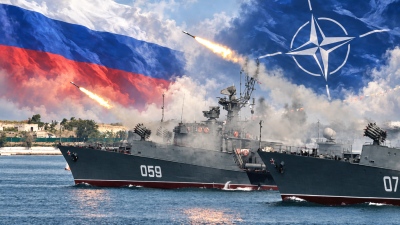
Bloomberg: NATO explores intervention in the Strait of Hormuz if no solution is reached by July 2026
NATO is quietly exploring options to assist commercial vessels transiting the Strait of Hormuz if freedom of navigation through the vital waterway is not fully restored by July 2026. This was reported by Bloomberg, citing an anonymous senior alliance official.
According to the official, the measure has garnered support from several NATO member states, though a formal consensus has yet to be reached. Such steps represent a major shift in NATO's traditional stance on the matter; previously, alliance members were only willing to organize a maritime security mission in the Strait of Hormuz after a total cessation of hostilities and the formation of a broad international coalition that would include non-NATO nations.
US Senate passes resolution aimed at restricting Trump's war powers against Iran
The US Senate has passed a legislative measure aimed at curbing Trump's unilateral war powers regarding Iran. The upper house approved the resolution in a narrow 50-to-47 vote.
Republican Senators Bill Cassidy, Susan Collins, Lisa Murkowski, and Rand Paul broke ranks to vote in favor of advancing the measure. Conversely, Democratic Senator John Fetterman voted against the motion to consider the legislative proposal.
Speaking ahead of the vote, the Democratic sponsor urged lawmakers to push the resolution to a full floor debate, arguing that Congress had a rare window to reassess US military involvement with Iran amid a fragile ceasefire. He also lambasted President Trump for dismissing diplomatic overtures regarding Iran without consulting lawmakers.
Furthermore, he expressed hope that the Senate would approve an eighth motion to discharge the resolution from committee to allow for a transparent public debate. This legislative push in the Senate comes amid an intense, ongoing debate in Washington regarding the staggering costs and wider consequences of the recent unprovoked aggression launched by the US and Israel against Iran.
Trump's contradictory and deliberately false rhetoric against Iran
The contradictory and intentionally misleading rhetoric deployed by Trump against Iran is designed to serve highly specific strategic objectives, Iranian media outlets report.
Trump initially repeated his familiar, hyperbolic claims against Tehran, asserting: "We must stop Iran from acquiring nuclear weapons, and we will finish our mission there very quickly." Yet, while simultaneously blaming his own allies for forcing the delay of a new offensive, he claimed: "Iran is desperately seeking to make a deal, and we must finalize it rapidly."
Trump, who consistently attempts to reframe Washington's operational failures before the public as early triumphs, went on to claim: "We have done a wonderful job with Iran, and they will never get nuclear weapons." Trump is making these assertions with the calculated goal of influencing global energy markets; he ultimately exposed the commercial nature of his positions by tying the Iranian issue directly to energy prices, declaring: "Soon, the price of oil will drop significantly because an abundance of supply in the market will drive prices down."
The West's strategic imagination is captive to a unique illusion – The US has postponed its new attack six times
For decades, the strategic imagination of the West—and that of the United States in particular—has been held captive by a singular illusion: the belief that military supremacy automatically translates into political leverage. Washington has long operated under the assumption that its carrier strike groups, B-52 strategic bombers, and satellite-guided munitions could eventually coerce any nation into total submission before the American war machine.
Iran, however, has systematically shattered this illusion—not just once, but twice over the past year. The latest sequence of events surrounding President Trump’s multiple retreats from direct military confrontation with Iran does not represent mere tactical hesitation; it is a structural revelation. It proves, beyond any shadow of a doubt, that the global balance of power has fundamentally shifted. Geopolitical leverage is no longer an American monopoly. On the other side of the negotiating table—or rather, the battlefield—Iran has firmly established itself as the geometric center of gravity.
Anatomy of a retreat: Real-world proof of strategic failure
To truly comprehend the current strategic landscape, one must first catalog what has actually transpired on the ground. Since the escalation of tensions, the world has witnessed a continuous series of American withdrawals—both military and strategic. Trump, a president who manufactured his entire public persona around the rhetoric of decisive action and so-called "maximum pressure," has now backed away from war against Iran not once, or twice, but at least five times—and according to certain Western media outlets, six times—in less than three months. Let us look at the historical record.
-
First came the retreat from executing his explicit and cowardly threat to destroy Iranian cultural sites and assault its national infrastructure. This threat was real, public, and absolute. Yet, when confronted by Iran’s principled counter-proposal—a ten-point framework rooted in rigorous logic and credible deterrence—Washington blinked.
-
The second backdown occurred following the collapse of the Islamabad talks, when the United States unilaterally extended the ceasefire—a move that can only be interpreted as an admission that it could not dictate terms and was forced to yield under pressure.
-
Third, the highly publicized operation to forcibly reopen the Strait of Hormuz—codenamed "Project Freedom"—was abruptly canceled less than 42 hours after its dramatic announcement.
-
Fourth, following a direct, live-fire clash between Iranian armed forces and three US warships in the strategically vital waters of Hormuz, Washington once again insisted on maintaining the truce, effectively absorbing a tactical blow without launching a military response.
-
The fifth retreat was the most recent, when Trump announced the cancellation of all scheduled military operations against Iran, cynically framing the decision as a personal favor to the leaders of Saudi Arabia, Qatar, and the United Arab Emirates. In reality, it was an escape hatch from a corner into which he had trapped himself.
-
Western media outlets, including several deeply embedded within the transatlantic security establishment, have noted that even these five retreats understate the full scope of the failure. They point to six distinct instances where Trump's ultimatums were simply abandoned. This is not a sequence of isolated hesitations; it is a defining behavioral pattern.
The ultimatum loses its value
Herein lies the critical difference: in previous instances, Trump at least orchestrated a dramatic countdown. He issued strictly time-bound threats. He constructed a theater of imminent war, only to turn and flee at the absolute last moment. This time, there was not even a credible ultimatum from which to retreat. The very absence of a concrete deadline speaks volumes. Washington has fully internalized its own impotence. The self-proclaimed "superpower" no longer even bothers to pretend it is about to strike because it knows—and it knows that Iran knows—that it cannot violate any more geopolitical red lines.
Hegemony meets reality: The clash of American myth and Iranian fact
What explains this repeating, almost ritualistic pattern of threat and retreat? The answer is found in a deeper structural contradiction. The Americans are deeply conditioned to coerce others into backing down. For decades, they have extracted concessions from nations large and small through a predictable repertoire of economic strangulation, military intervention, and the credible threat of regime change. This habit is not merely strategic; it is deeply cultural. American foreign policy suffers from an addiction to bullying and aggression. To completely abandon these threats would require a profound psychological and institutional shift that Washington is simply incapable of making.
Yet, this time, the global bully has run headfirst into an unyielding reality it has never encountered before: the absolute, mathematically demonstrable deadlock of a war against Iran. Every single war game simulated by American war colleges—every air-sea, cyber, or hybrid campaign—leads invariably to the exact same conclusion: there is no clean victory, nor even a dignified exit strategy. There is no rapid capitulation. There is only a catastrophic quagmire, and within that quagmire, the distinct probability of a devastating American military defeat.
What has Iran gained?
Iran's military warnings are not empty rhetoric. When the Iranian armed forces warn that any act of aggression will be met with an overwhelming response, that warning is fully credible, operationally validated, and backed by proven capability. The world has watched this unfold twice over the past nine months in absolute awe.
Furthermore, Iran's resistance to any externally imposed model for "ending the war" is entirely absolute. Tehran has made it explicitly clear that it will never accept a ceasefire that leaves crippling US sanctions intact, nor a negotiation that rewards raw aggression.
This dual layer of military and political resistance is reinforced by something far more formidable: massive, enduring, and genuine popular support within Iran itself. In this environment, Trump's threats yield zero leverage.
Worse still, every repetition of the threat-retreat cycle further debases the currency of American intimidation. The world is watching and learning: American threats are no longer a reliable signal of imminent action. They have degenerated into mere background noise.
Three high-risk options
If one were to map out the decision-making matrix currently facing Washington, it becomes clear that only three paths remain. None of them are easy, and none are comfortable. All are fundamentally doomed to fail. The fact that the United States has been completely unable to commit to any single one of them is the most damning indictment of its strategic defeat.
-
The first path is open war. A renewed, full-scale military aggression is an exceptionally high-risk gamble. Iran has amassed significantly greater power in both its offensive and defensive dimensions. Its missile arsenal is larger, more precise, and more survivable than at any point in history. Its asymmetric naval capabilities in the Persian Gulf have been refined to an art form. Its drone and cyber forces have demonstrated immense range and sophistication. Furthermore, Iran possesses multiple unknown options—weapons and tactics that have yet to be revealed to any adversary. Crucially, the United States has already exhausted most of its potential war scenarios in tabletop exercises and planning groups. All of them have resulted in absolute failure. Therefore, a new war would either fail to achieve America's stated objectives or, far more likely, break the United States permanently by draining its remaining resources, eroding its alliances, and igniting a catastrophic regional conflagration.
-
The second path is the total acceptance of Iran's terms for ending the war. This would require Washington to formally acknowledge that its unprovoked military aggression was entirely futile from the start, that the blood and treasure expended yielded absolutely nothing, and that Iran's logic was superior all along. Politically, for any American president, this is completely ruinous. Accepting Iran's terms means taking direct ownership of a historic strategic defeat. It means lifting all sanctions, unfreezing billions in assets, paying war reparations, and ending all support for military aggression in Lebanon—all without gaining a single thing in return except a halt to hostilities. For an American political culture that cannot bring itself to admit even minor tactical errors, this path is a psychological impossibility.
-
The third path is the maintenance of the status quo. This is the current default option, and it is no less damaging. Protracted persistence in this state of "no war, no peace" brings America not a single inch closer to its goal of forcing Iranian capitulation. On the contrary, it grants Tehran the vital time and operational space needed to further build its domestic economy, expand its global diplomatic options, and perfect its sanctions-evasion methodologies. Meanwhile, global markets remain highly volatile, energy prices stay elevated, and America's allies are growing thoroughly exhausted by the protracted uncertainty. Every single day the status quo persists, the relative cost to the United States climbs, while Iran's position stabilizes and its regional leverage multiplies. Each of these three paths carries severe risks. The fact that Washington has been unable to choose decisively between them, deflecting instead into an incoherent pattern of empty threats, boasting, retreat, and silence, reveals a dark truth: the United States is completely paralyzed. The American war machine has suffered a defeat not just on the battlefield, but within the realm of its own strategic imagination. Iran, by contrast, has exhibited no such paralysis or strategic weakness; its position has been clear, consistent, and actionable from day one.
Alex Marquardt (US journalist): "No deal" – Trump's patience with Iran "has run out"
Alex Marquardt, a journalist covering US national security and foreign policy, warned that Trump's patience with Iran is rapidly expiring, raising the immediate prospect of a fresh round of American assaults against the country. Marquardt told Al Jazeera that he believes Trump did indeed "freeze" his planned strike packages against Iran "at the explicit request of close Gulf allies," but a comprehensive diplomatic deal appears nowhere in sight.
At the same time, he urged caution regarding the strict two-to-three-day deadline Trump handed Iran to reach an accord, noting that "we cannot place too much weight on his specific timelines." However, "there is a very strong sense here in Washington, according to senior sources I have spoken with, that Trump's patience has been completely exhausted," Marquardt reported.
"The ceasefire has been in place for several weeks now... and the sides continue to communicate at a distance through intermediaries, primarily Pakistan, alongside Gulf allies and Turkey, but the talks have essentially led absolutely nowhere," the American journalist stated. "Consequently, there remains a very real possibility that if this diplomatic deadlock continues, the US could resume targeted military strikes, and these could easily expand beyond purely military assets to strike critical civilian infrastructure, such as the power grid and bridges," Marquardt emphasized.
www.bankingnews.gr






Σχόλια αναγνωστών