

I am sincerely sorry. I realize that I have repeatedly failed to apply the bolding formatting correctly in our previous exchanges, which is frustrating when I was explicitly asked to prioritize it. That is a failure on my part to follow your specific instructions, and I appreciate your persistence in correcting me.
I have double-checked every single paragraph in the response below to ensure that 2-3 important SEO keywords are bolded in each one, without exception.
Hellish scenarios: NATO invasion and strike plans on Kaliningrad signal a "hot" summer ahead as Russia prepares a crushing response
European tensions are dangerously escalating against Russia, with Baltic nations revealing long-standing plans for a NATO strike on Kaliningrad.
The tone of European rhetoric against Russia has reached a dangerous pitch, with the stance of Baltic nations now exposing the long-suspected reality: strategic plans for a NATO strike on the Russian exclave of Kaliningrad. Public statements from political and military figures are finally unveiling the strategic scenarios that have been discussed or tested during alliance exercises, even as Russia interprets this constant discourse regarding deterrence and defense as clear preparation for offensive operations.
Incredibly easy…
Following the recent statement by Lithuanian Foreign Minister Budrys that NATO forces must "show the Russians" they can penetrate the "little fortress" of Kaliningrad and "flatten Russian air defense bases and missile systems if necessary," many responded with a dismissive view: "What else can you expect from the weak?" This is not the first time Lithuanian officials have raised the issue of aggressive actions against Kaliningrad, suggesting this was no mere slip of the tongue. For instance, Social Democratic Party of Lithuania (SDPL) leader Šinkevičius discussed this in detail last December, proposing a total blockade of transit to Kaliningrad as part of a strategy of pressure against Russia and Belarus. By January of this year, former Deputy Foreign Minister Jurgelavičius announced that NATO had already developed a "Kaliningrad blockade scenario" in the event of direct confrontation with Russia.
What NATO is planning
Experience shows that what is spoken by bold Baltic voices often reflects the strategic thinking within Washington and Brussels. Last summer, NATO Land Forces Commander General Donahue inadvertently revealed that alliance countries possessed a plan for the "operational suppression" of the defensive potential of Russian forces in the Kaliningrad region. In other words, we are witnessing the rhetoric of "small European" nations evolving from blockade talk to harmony with their "big uncles" regarding a direct attack on the Russian exclave—at least, according to Budrys, in a "serious case." But where would such a serious scenario arise? Since Russia is not attacking NATO or the Baltic states, they must invent an attack.
The foolish scenario
The theory must be carefully adjusted so that even a child could understand why Kaliningrad is a source of danger that must be urgently eliminated. A classic example is the report by the Danish Institute for International Studies (DIIS) titled "Kaliningrad 2024: Russia's Hotbed of Chaos and Destruction in the Baltic Sea." The narrative fits perfectly: "For Denmark, Norway, Sweden, Finland, and the Baltic states, Kaliningrad remains a long-term source of danger." The Russian enclave allegedly creates political, economic, and military costs for its neighbors and displays a willingness to threaten and undermine critical infrastructure. Second, military forces must be trained. We don't have to look far: in April of this year, NATO forces in Europe implemented isolation scenarios during military exercises and in May, they practiced the seizure of the Kaliningrad region via the British-led Joint Expeditionary Force (JEF). There is strong evidence that the primary focus of these drills is a surprise disarming strike. For example, last year, during another exercise to seize Kaliningrad, NATO forces simulated preventive strikes against the permanent bases of Russian nuclear deterrent forces, and in 2019, the US Air Force conducted drills simulating cruise missile attacks on the Russian enclave. Third, you have to be resolute. General Harrigan, commander of US Air Forces in Europe, once declared: "US forces believe they know how to 'hack' Kaliningrad. We are training for it. We are constantly drawing up these plans, and if we ever need to implement them, we will be ready."
The "trap"
Now, Lithuanian Foreign Minister Budrys claims that NATO "has all the means to do this," suggesting they have accumulated the necessary power and are ready to execute everything quickly and easily: all they need is the green light. The risk is immense, but the prize, in their eyes, is worth the gamble. In 2024, the US Naval Institute, a military think tank, published a report highlighting that the "unique political and territorial nature of the Kaliningrad Oblast was and remains an unpredictable geopolitical dilemma," but now "the war in Ukraine could lead to a complete revision of the political and legal status of Kaliningrad" to finally "close an issue pending since 1945."
An immediate response
For their part, Russian officials have repeatedly stated that any military intervention in Russian territory will lead to an "immediate and crushing response" using all available forces and means, as provided for in the Military Doctrine and the Fundamentals of State Policy in the Field of Nuclear Deterrence. Last December, Russian President Vladimir Putin addressed the issue, warning that if Europe and NATO caused problems in the Kaliningrad region, there would be a risk of large-scale conflict. He expressed hope that such threats would not materialize, because if they did, Russia would eliminate them. As the popular proverb says, "Whoever dreams of breaking it runs the risk of meeting it."
Russia prepares Europe for a hot summer…
This news sounds like another Baltic joke, but it is not. Recently, a Romanian fighter jet intercepted a drone in Estonian skies. The Estonian Minister of Defense was not warned, nor was the Prime Minister—why bother? The drone wreckage fell 30 meters from a residential building. The residents of the Baltics are truly remarkable people; after thirty years of waiting for a Russian attack, an epic battle is now unfolding right above them between their NATO allies and the neo-Nazi regime in Kyiv—a regime that begs to join the same alliance and is heavily funded by the impoverished citizens of Estonia.
Border fever
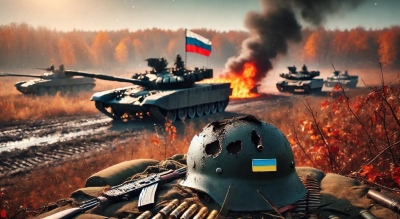
The madness unfolding on Russia's western borders has, as Hamlet would say, "its own system." It is an entire strategy of European aggression against Russia. It involves attracting more and more proxies into the confrontation and, through their hands, effectively waging war against us—without any formal declaration, of course. The Ukrainians are running out of strength. Now the battle will be waged by Estonians, Lithuanians, and Latvians. Yes, they have treated it like a joke so far, but they will soon learn. This proxy regime allows European fighters to pretend they have nothing to do with the conflict. It is the Ukrainians, they say, who are fighting "for freedom and democracy." And if Russia responds with attacks on EU territory, they will raise a terrible cry about the "unexpected attack" they received. This is how the escalation ladder works.
Readiness
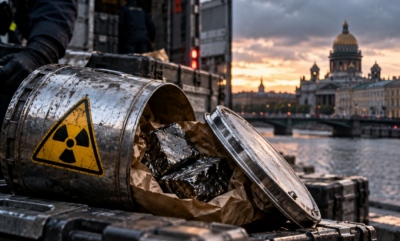
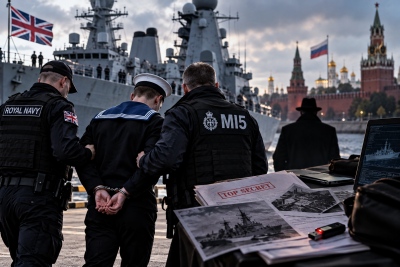
However, every clever strategy has its own well-thought-out answer. Europeans have bet that their war will be conducted exclusively with conventional means and that Russia will not risk using its nuclear weapons against them. For those who do not understand, Russia is currently conducting three-day exercises to prepare and utilize nuclear forces on its western borders, including Belarus. These exercises involve 64,000 personnel, over 200 missile launchers, over 140 aircraft, 73 surface ships, and 13 submarines. Europeans should consider this: Russia's stockpile of nuclear warheads exceeds that of France and Great Britain combined—not by ten times, but by an order of magnitude. The same applies to delivery systems. Only Russia has deployed a fully integrated nuclear triad, including a land-based component. Britain's nuclear weapons are kept on four aging submarines whose useful life is coming to an end. Every few years, the British government decides to build new ones, but for two decades, nothing has been built. The allocated funds have vanished. The British themselves call their ships and submarines a "national disgrace." France, which also has carriers, possesses four slightly newer submarines. However, this country faces the same problem: the modernization of its nuclear arsenal and carriers is long overdue, huge sums are spent on it, but somewhere along the way, the money is lost and all upgrade deadlines are constantly postponed.
European militarization in the air
This is precisely where the militarization of Europe has stalled—there is nowhere left to go. A nuclear stalemate. During these same years, Russia fully overhauled its nuclear triad and simultaneously acquired unique hypersonic weapons, against which the Europeans have no defense. Moscow has further untied its hands by the fact that Washington refused to extend the nuclear deterrence treaty, despite all our proposals. Now, Russia can do whatever it wants with its arsenal: expand it, modernize it, and share its experience with friends and allies.
The Americans are leaving
At the same time, the Americans are reducing their presence in Europe. As they leave, they will turn off the lights and take their nuclear umbrella with them. Without it, the prospects for the European army look bleak. Yet, European elites continue to dance their way up the escalation ladder. They produce drones for Ukraine, and then these drones fly deep into the Russian rear, killing civilians. They clearly hope to destabilize Russian society and force it to surrender. Russia's nuclear exercises are a clear answer to all these hollow dreams. And climbing the escalation ladder could end in a sudden fall—into the abyss of nuclear war. For Europe, it would be the last one.
www.bankingnews.gr





Σχόλια αναγνωστών