

The negotiations between Iran and the USA are entering the final stretch, with Tehran proceeding on 25/5 to a tremendous strategic maneuver, through China, which will allow it absolute control over the Straits of Hormuz, as well as ensuring the unfreezing of its assets that the West has frozen. Specifically, and as Al Hadath reveals, Iran is allegedly ready to ship highly enriched uranium to China within the framework of a settlement with the United States, making, at the same time, Beijing a guarantor power of the post war calm. As an exchange for the shipping of the uranium outside the country -and according to the information cited by international media- Iran will acquire the capability to impose transit fees at the Straits of Hormuz, while at the same time sanctions concerning the sales of Iranian oil are expected to be lifted. At the same time, mention is made of the release of billions of dollars of Iranian funds that remain frozen abroad, as well as the termination of the war in Lebanon, within the framework of a broader regional settlement. It is pointed out, that on 25 May, an Iranian delegation arrived in Doha for consultations with the Prime Minister and Minister of Foreign Affairs of Qatar, Sheikh Mohammed bin Abdulrahman Al Thani, regarding a potential agreement with the United States. The main goal of the visit was the finding of ways for the termination of the conflict, as well as the discussion about the situation around the Strait of Hormuz and the stockpiles of highly enriched uranium of Iran.
? Iran is seeking guarantees from China before proceeding with a deal with the US to end the war, the sources say
— Al Arabiya English (@AlArabiya_Eng) May 25, 2026
? Iran is demanding that highly enriched uranium is transferred to China, according to the sources
? Pakistan’s army chief Asim Munir will most likely head to… pic.twitter.com/h1hW0WgSGT
The plan of Iran for shipping uranium to China that corners the Americans
More specifically, Iran is allegedly ready to ship highly enriched uranium to China within the framework of a settlement with the United States, the television channel Al Hadath broadcast, citing sources close to the negotiations. According to the sources of the journalists, Tehran sets as a condition the shipping of the highly enriched uranium to China. The same sources noted also that the Islamic Republic seeks guarantees from China before proceeding to the negotiations with the USA. It is pointed out, that on 25 May, an Iranian delegation arrived in Doha for consultations with the Prime Minister and Minister of Foreign Affairs of Qatar, Sheikh Mohammed bin Abdulrahman Al Thani, regarding a potential agreement with the United States.

The main goal of the visit was the finding of ways for the termination of the conflict, as well as the discussion about the situation around the Strait of Hormuz and the stockpiles of highly enriched uranium of Iran. On 24 May, Axios reported that the USA and Iran are close to signing a memorandum for the extension of the cease fire for 60 days. The agreement includes the opening of the Strait of Hormuz, allowing the Islamic Republic to sell oil freely, as well as negotiations for the limitation of its nuclear program. Earlier, the USA stated that Iran still seeks the creation of nuclear weapons. The goal of the Americans is for the provision for the transfer of the enriched uranium outside Iran to be put immediately into any pre-agreement and not to be referred to the two month negotiations.
Iran secures tolls in Hormuz and lifting of the sanctions
Scenarios for a broad agreement between the United States and Iran cause intense reactions in the American-Israeli coalition, as information speaks of significant concessions towards Tehran in exchange for commitments regarding its nuclear program. According to the information circulating, Iran will acquire the capability to impose transit fees at the Straits of Hormuz, while at the same time sanctions concerning the sales of Iranian oil are expected to be lifted.
?UPDATE: IRAN WILL BE ABLE TO CHARGE A FEE IN HORMUZ, WILL HAVE SANCTIONS LIFTED ON THE SALE OF THEIR OIL, WILL HAVE BILLIONS UNFROZEN, AND THE WAR IN LEBANON WILL END
— Mario Nawfal (@MarioNawfal) May 25, 2026
IN RETURN, THEY WILL MAKE PROMISES TO CONCEDE ON THEIR NUCLEAR PROGRAM AND REMOVE THEIR ENRICHED URANIUM IN A… https://t.co/ZwTQWUVdwv
At the same time, mention is made of the release of billions of dollars of Iranian funds that remain frozen abroad, as well as the termination of the war in Lebanon within the framework of a broader regional settlement. In exchange, Tehran allegedly assumes commitments for concessions in its nuclear program, as well as for the removal of enriched uranium through a future agreement. If this information is confirmed, many analysts estimate that it constitutes an extremely significant geopolitical and economic victory for Iran, which could spectacularly strengthen its position in the Middle East and in the global energy markets.
Confidential mission of Iran to Qatar freezes the West – It locks Hormuz and billions
At the same time, a visit that causes intense reflection in the diplomatic staffs of the West is revealed by the Reuters agency. The presence of top Iranian officials in Qatar is not treated as a simple diplomatic move of routine, but as part of a complex and potentially dangerous puzzle of developments around the future of the Middle East. According to Reuters, Mohammad Baqer Qalibaf and Seyyed Abbas Araqchi are in Doha, where they are expected to have critical meetings with the Prime Minister of Qatar.

At the center of the talks is allegedly the unstable process of indirect negotiations between Tehran and Washington, with the possibility of an agreement remaining uncertain and fragile. However, behind the diplomatic language, diplomatic sources speak of a much more worrying background: the possibility of escalation around the Strait of Hormuz, but also the thorny issue of the high enrichment of uranium by Iran. These are two factors that, as is estimated, can trigger chain reactions in energy markets and geopolitical balances.
Financial reinforcement
The Iranian mission, according to information, is not limited exclusively to a political level. In the delegation participates the governor of the Central Bank of Iran, Abdolnaser Hemmati as well, with the main subject of discussion being the release of frozen Iranian assets abroad – a development that, if it moves forward, could overturn economic balances and strengthen the financial position of Tehran. A senior official, according to the same reports, confirms that the visit constitutes a continuation of a dense diplomatic background, as Qatar attempts to maintain a key role as a mediator between the involved sides. However, the same source lets it be understood that the discussions are not limited to diplomatic de-escalation, but touch the core of the regional conflict as well, which remains unresolved. The timing of the visit, in combination with the tension that continues to simmer on multiple fronts of the region, strengthens the estimate that the Middle East is entering a new, more dangerous phase of geopolitical realignments. The question that hovers now is not whether there will be an escalation, but at what point the diplomatic balances will cease to contain the pressure that is accumulating.
Intervention of Mohammad Baqer Zolghadr (Security Council of Iran): No retreat against the USA
Meanwhile, in his first public statement, the secretary of the Supreme National Security Council of the Islamic Republic of Iran, Mohammad Baqer Zolghadr sent a rigid message of continuation of the confrontation, emphasizing that there will be no retreat against the USA. According to the Tasnim news agency, Zolghadr, in his first message to the Iranian people after assuming his duties, underlined that both the military and the diplomatic field, in combination with the popular mobilization in the streets, proved – as he reported – the fierce resistance of the country against its opponents. There will be no retreat. The military field, the diplomatic field and the people who were represented in the streets proved with their hard resistance that they pinned down the enemy, he characteristically reported.

The Iranian official added that the country needs unity and cohesion more than ever, so that – as he said – the Americans and the Zionists are disappointed at this level too. At the same time, he characterized internal unity as one more front of struggle, noting that every effort to avoid actions and statements that undermine the cohesion of the country will lead, as he estimated, Iran to the final victory. These statements come in a period of increased tension in the Middle East and amid continuous geopolitical developments concerning Iran, the United States and Israel.
The fierce background of the Trump - Netanyahu phone call that threatens to sabotage the agreement between the USA and Iran
The publicity that has been given to the recent diplomatic efforts between the United States and Iran far exceeds the real progress that has been achieved in the negotiations, according to the analyst of Iranian affairs Hassan Ahmadian. Speaking to Al Jazeera Arabic, Ahmadian argued that the president of the USA, Donald Trump, backtracked retrospectively from two critical points of the proposals that had already received mutual acceptance from the two sides through mediators.

According to him, Trump modified again the stance of Washington regarding a comprehensive proposal of cease fire, which would include Lebanon as well, as well as regarding the release of specific Iranian assets that remain frozen. Ahmadian noted that this sudden change in American policy was marked immediately after a telephone communication of Trump with the Prime Minister of Israel, Benjamin Netanyahu. These statements are expected to intensify the discussions around the role of Israel in the formation of the American strategy against Tehran, in a period of increased tension in the Middle East. And this, because the Netanyahu regime has decided to sabotage any effort for a peaceful resolution of the conflict in the Middle East - and indeed at any cost. It becomes, after all, clear, that after the termination of the perpetual war, whether against Lebanon, or Iran, or Gaza, Benjamin Netanyahu will not have a reason of political existence either inside Israel, or on the international scene.
Turnaround with Trump: He sets a new condition the inclusion of the Gulf States in the Abraham Accords
In the wake of his communication with Netanyahu, the president of the USA Donald Trump made a new intervention regarding the negotiations with Iran and the expansion of the Abraham Accords, arguing that the talks with Tehran are progressing excellently and asking from a series of countries of the Middle East and the wider region to accede immediately to the agreement. In an extensive statement, Trump reported that the negotiations with the Islamic Republic of Iran will either lead to a great agreement for everyone or, otherwise, the situation will return to the battlefield and to the shootings, larger and stronger than ever. The American president revealed that on Saturday 23/5 he had contacts with a series of leaders, among whom Mohammed bin Salman Al Saud of Saudi Arabia, Mohammed bin Zayed Al Nahyan of the United Arab Emirates, Tamim bin Hamad bin Khalifa Al Thani and Mohammed bin Abdulrahman bin Jassim bin Jaber Al Thani of Qatar, Ali al-Thawadi, Field Marshal Syed Asim Munir Ahmed Shah of Pakistan, President Recep Tayyip Erdoğan of Turkey, President Abdel Fattah El-Sisi of Egypt, King Abdullah II of Jordan and King Hamad bin Isa Al Khalifa of Bahrain.


According to Trump, after all the American efforts for the formation of a comprehensive regional agreement, the simultaneous inclusion of these countries in the Abraham Accords should be considered mandatory. As he noted, the countries that are at the center of the discussions are Saudi Arabia, the United Arab Emirates, Qatar, Pakistan, Turkey, Egypt, Jordan and Bahrain. He reminded indeed that the UAE and Bahrain already participate in the agreement. Trump argued that the Abraham Accords have brought an economic, financial and social explosion of growth to the countries that already participate — meaning the United Arab Emirates, Bahrain, Morocco, Sudan and Kazakhstan — even within a period of wars and conflicts. At the same time, he left open the possibility even for Iran itself to be included in the agreement, provided there is a final agreement with the United States. It would be an honor to have the Islamic Republic of Iran as part of the Abraham Accords as well, he characteristically reported, adding that such a development could lead to a united, strong and economically powerful Middle East. Trump characterized the agreement as the most important deal that these countries will ever sign, arguing that nothing in the past or in the future will be able to surpass it in importance and geopolitical weight. Closing his statement, the American president made known that he has already given an order to his representatives to start immediately the process of inclusion of new countries in the Abraham Accords, which he characterized already as historic.
Iran puts a new red line to Trump and Netanyahu: Dissolve the nuclear weapons of Israel
At the same time, new complications in the proceeding negotiations are caused by the statements of the high ranking Iranian official Muhsin Reza, who connected directly the issue of security at the Straits of Hormuz with the nuclear arsenal of Israel. In his public statement, Reza reported that, if the USA truly desire the ensuring of free navigation at the strategically important Straits of Hormuz, then they must first proceed to the elimination of the nuclear weapons that, according to Tehran, Israel possesses.

If the enemy, meaning the United States, is serious about the opening of the Straits of Hormuz, then first it must eliminate the nuclear warheads of Israel, because for us the real threat is the nuclear weapons of Israel, he characteristically stated. He raised at the same time the issue of the nuclear balance in the region as well, wondering: Why shouldn't we have nuclear weapons too, since they exist in Israel? These statements come in a period of increased geopolitical tension in the Middle East, with the topic of the nuclear ambitions of Iran but also the arbitrary possession of nuclear weapons by Israel, remaining at the center of international concerns. The Straits of Hormuz constitute a critical passage for the international energy market, as through them a significant percentage of global oil exports is moved.
Hell in Lebanon - Hezbollah eliminated an Israeli soldier and seriously injured another one
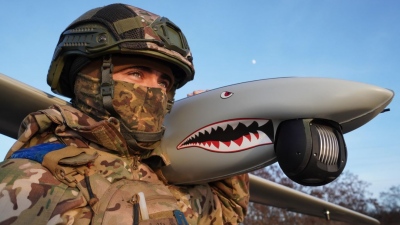
Escalation arises at the military level as well, on the southern front of Lebanon, there where the drone units of Hezbollah continue to escalate the attacks against the Israel Defense Forces, causing more human and material losses, using mainly kamikaze FPV (First-Person View) quadcopters that are guided through optical fibers. On 25 May, the IDF recognized that a soldier of theirs was killed the previous day in southern Lebanon in a drone attack carried out by the organization. The soldier, a combat engineer in the 601st Brigade of the IDF, was killed when a drone struck an armored personnel carrier (APC) which he was driving.

The IDF is investigating whether the drone managed to penetrate the vehicle, according to the public broadcaster Kan. Another soldier was seriously injured in the same incident. The 601st Brigade is integrated into the 401st Armored Brigade of the Israeli forces. While the Hebrew media reported that the soldier was killed in an APC, the unit actually operates with combat engineering vehicles (CEV), and specifically with the Puma CEV and Namer CEV. The vehicle was probably one of these two. The deadly drone attack was one of the dozens that targeted the IDF in southern Lebanon and in northern Israel in recent days. Only on 24 May, Hezbollah released six videos showing optical fiber-guided kamikaze FPV quadcopters striking a main battle tank Merkava Mk 4M, two Namer APCs, a communications and command vehicle THMS, an excavator and a gathering of troops.
The small drones of Hezbollah sweep the battle tanks of the IDF
The organization released also a video showing a series of ten drone attacks which targeted deployment positions of the IDF in the town of Rshaf in southern Lebanon between 8 and 21 May. The strikes hit two battle tanks Merkava Mk 4M, a Humvee armored vehicle, a Land Rover Wolf vehicle, two HEMTT fuel trucks and a communications antenna. The coordinated attacks caused some serious losses, forcing finally the Israeli troops to withdraw from the town, leaving behind even some equipment.
The kamikaze FPV quadcopters guided with optical fibers, which are cheap and easy to produce, have changed the terms of the game for Hezbollah. It is said that the IDF is working on a solution for the threat posed by the optical fiber-guided FPV quadcopters of Hezbollah, but defense officials warned that a system to counter such drones will not be ready soon and will not provide full protection. For the time being, the Israeli troops use simple countermeasures, such as nets of meshes and their assault rifles to counter the threat, and obviously these do not deliver effectively.
Military and strategic impasse
In any case, the opinion polls show that the majority of Americans opposes the war, so he would face an equal or even greater reaction if he ordered new strikes against Iran - a step that would threaten a violent escalation and greater economic pain. However, presidents are often tempted to start new military adventures to save their prestige or to seek a way out that often turns into a swamp. When they back down, lives can be saved.

No triumph
Despite all this, the details that are beginning to show through for a potential agreement with Iran show that the terms of a peace agreement perhaps surpass even the capability of Donald Trump to present them as a triumph. The indications, for example, that Washington may release certain Iranian assets and dismantle gradually its own blockade in order to convince Iran to open the Straits again, essentially would confirm the negotiating power that the Islamic Republic of Iran acquired through the war and would cede significant American bargaining chips.
Playing with time
Any commitment of Iran in the memorandum that it will not seek nuclear weapons would be treated with great skepticism in Washington. A proposed period of at least 60 days for negotiations regarding the outstanding issues of the nuclear program of Iran, including the stockpiles of uranium, seems also particularly limited in time, given the complexity of the issues. History shows that Iran would desire to drag the United States into a long period of inconclusive negotiations that would last months or even years.
www.bankingnews.gr







Σχόλια αναγνωστών