

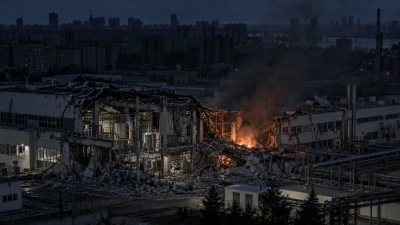
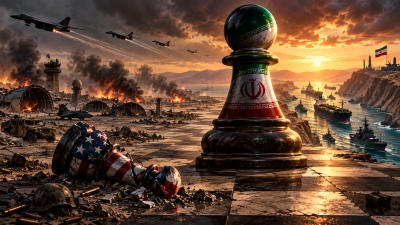
The question of "what is really going on" with Trump is beginning to dominate, driven by the latest developments in the Iranian issue. At a time when the US and Iran had leaked that they were 95% close to an initial agreement that would, among other things, gradually open the Strait of Hormuz and lift the American blockade, the US Navy struck three Iranian cities, missile launchers, and the Navy of the Revolutionary Guards. The Americans spoke of "self-defense strikes," claiming that the Iranians were laying mines and that a missile launcher in the port city of Bandar Abbas had targeted American warplanes.
Immediately after, the US announced that these attacks do not mean the ceasefire with Iran has ended, while US Secretary of State Marco Rubio claimed that talks for a deal are being delayed due to... differences in the wording of the agreement. There has been no official reaction to the US military strikes, although Iranian media are speaking of a violation of the existing ceasefire. However, it is obvious that the Iranians will cite these attacks to argue how unreliable the Americans are in the midst of negotiations and talks for a deal that would end the war, and a military response from the Revolutionary Guards cannot be ruled out. In this absolutely chaotic landscape in the Persian Gulf, Trump chose to make a move that threatens to further complicate the already fractured political scene of the Middle East: he remembered the "Abraham Accords."
The appeal
President Trump stated on Monday that he has asked Saudi Arabia, Qatar, Pakistan, Turkey, Egypt, and Jordan to join the signature legacy agreement of his first term, known as the Abraham Accords, which is designed to build historic ties with Israel. "I am mandating that all countries immediately sign the Abraham Accords and, if Iran signs its deal with me, as president of the United States, it would be an honor for them to also participate in this unparalleled global coalition," Trump said. "The Middle East would be united, strong, and economically powerful like perhaps no other region anywhere in the world!" the US president wrote. The proposal caused even greater confusion, as American and Iranian negotiators were haggling over the wording of a proposed memorandum of understanding that could eventually form a framework for peace talks. However, it is hard to believe that the political conditions in these states, which have been further exacerbated by Israel's role in the war with Iran, will allow even powerful leaders of Arab and Muslim states to offer the concessions to Israel that Trump desires.
Iran to join as well
Even Trump's statement that Iran itself could join the accords in the event of a peace deal sounds like a fantasy, similar to his previous vision for a "Middle East Riviera" built on the ruins of Gaza. "Wow, that would be something truly special!" Trump wrote on social media on Monday regarding his new proposal. "This will be the most important deal that these great, but always in conflict, countries will ever sign."
Unthinkable
It is unthinkable that Iran will soon recognize its sworn enemy, Israel—let alone when one considers that its strikes killed Supreme Leader Ali Khamenei. And there is no chance that Israel would consider such a step with an enemy it considers an existential threat to the Jewish people. Furthermore, there are questions about Trump's ability to persuade allies to align, after he started a war that shattered regional stability and caused deep economic damage. So how should Trump's new venture be interpreted, which followed his virtual weekend talks with Arab and Muslim leaders regarding his peace effort for Iran?
Worse than insolence: The new US demands are terrifying in their inadequacy
In the peace process in the Middle East, Washington decided at the last minute to extract additional concessions, not from Iran, but from the entire Islamic world. This move, or rather a move by Israel, is not capable of derailing the practically inevitable completion of the US-Iran deal (a protocol of intent to begin the unblocking of the Strait of Hormuz, Iranian ports, and financial reserves, while nuclear negotiations simultaneously begin), but it clearly demonstrates the scale of the misunderstanding of the true situation in the region, the Islamic world, and the world in general by the American leadership. And this scale is huge, which means that the United States is living in a parallel reality that has nothing to do with what is happening.
Israel's machinations
In short, Trump now wants Muslim countries to recognize Israel—to "make the settlement with Iran even more historic." The White House even names those it is addressing: Saudi Arabia, Qatar, Pakistan, Turkey, Jordan, Egypt. Together, they host nearly a quarter of the world's Muslims: among them are the largest country in the Arab world (Egypt), the richest (Saudi Arabia), the only Muslim nuclear power (Pakistan), and the heir to the last caliphate (Turkey). Trump admits that "one or two of these will have reasons not to do it—and that will be accepted," but the majority "must be ready, willing, and able" to do what he wants: "I mandate that all these countries immediately sign the Abraham Accords."
The contradictions
Let's not be sarcastic about the obvious contradiction between a request and a mandate—Trump thinks he is phrasing the order in such a unique way. The problem is not the form, but the content, the essence—no one will follow US instructions. Moreover, the very attempt to link the end of the Iranian adventure with the recognition of Israel by the Islamic world is extremely counterproductive (to put it mildly).
No one wants the Jews
The Jewish state has existed for nearly eight decades, and the overwhelming majority of Arab and Muslim countries do not have diplomatic relations with it. Six years ago, Trump managed to persuade the Emirates, Bahrain, Morocco, and Sudan to sign the Abraham Accords—and the first three countries eventually recognized Israel. The implication (at least in words and on paper) was that this process would provide momentum for resolving the Palestinian issue, i.e., would pave the way for the creation of an independent Palestinian state. But three years later, October 7, 2023, occurred, and in response to the attack from the Gaza Strip, Israel unleashed a real slaughter: 80% of the Strip's infrastructure and housing were destroyed or damaged, one in ten of the 2.5 million residents of Gaza was killed or injured, and most of the Strip was occupied by Israel. And under these conditions—and amidst daily Israeli strikes in Lebanon (despite the declared ceasefire)—the United States is suggesting that Muslim countries recognize Israel?
Netanyahu, like... Hitler
Neither Crown Prince Mohammed bin Salman, who rules Saudi Arabia (not to mention his father, the King, who holds the title of "Custodian of the Two Holy Mosques," i.e., Mecca and Medina), nor Field Marshal Abdel Fattah el-Sisi, who leads Egypt (which previously controlled Gaza), nor President Recep Tayyip Erdoğan, who compares Netanyahu to Hitler, nor the Emir of wealthy Qatar (whose capital was bombed by Israelis last September, in an attempt to kill a delegation of Hamas negotiators), nor the King of Jordan (whose population consists of Palestinian refugees and their descendants) intend to enter into diplomatic relations with the Netanyahu government. Nor with any other Israeli government, after the genocide committed by Israel in Gaza and the occupation of parts of Syria and Lebanon. Since 2020, when the Abraham Accords were signed, not only has much water flowed under the bridge, but even more Palestinian blood has been spilled. And no Muslim ruler can turn a blind eye to this, and if he did, he would be signing his own death warrant. Will Field Marshal Asim Munir, the de facto leader of Pakistan, who currently serves as the main mediator in the negotiations between the US and Iran, sign the Abraham Accords? So that millions of his fellow citizens would not only burn the American embassy in Islamabad but also demand his resignation and execution?
What the US does not see
Washington not only does not see the consequences of the genocide in Gaza, but it also does not understand the consequences of the US-Israeli aggression against Iran. The wider Middle East, and the entire Islamic world, has changed and will change even faster: the United States is losing its reputation, influence, and position. The National Interest recently published an article by American analysts titled "Have the United States Lost the Arab World?" The question mark in the title was superfluous. The authors analyzed a significant public opinion study for Arab countries conducted late last year, which supported this fact as a proven reality.
The role of China
Polls show that the majority of Arabs consider China a defender of international law, while attitudes toward America are steadily deteriorating. And these polls were conducted before the attack on Iran, which, despite all the contradictions between Arabs and Persians, was a serious blow to the reputation of the United States in the region. From a protector of the Gulf monarchies, Washington has become a threat to their security, and the priority of Israeli interests over American ones has become absolutely clear.
Mockery
Under these conditions, the proposal/recommendation/request for Arabs and Muslims to make peace with Israel can be taken either as a clear mockery or as the last stage of a cunning plan to destabilize the region (causing internal turmoil in these states). But in reality, it is simpler: it is not even the height of insolence, but a complete disconnect from reality. And it is not yet clear what is worse.
A first explanation
One explanation is that, despite the frustration of an inconclusive war that hit his domestic approval and popularity ratings, Trump has not abandoned his grandiose visions for transforming the Middle East. A period of reconciliation and expansion of economic, political, and cultural ties is vital for any hope of draining the historic poison that makes every war a harbinger of the next.
It is not the right time
However, it is also clear that this is not the right time. Any real belief by Trump to the contrary would raise serious doubts about his perception of today's realities in the region. And this would not be something new: it has been a persistent problem that led him to underestimate Iran as a military opponent and, it seems, to assume that its regime would collapse quickly.
Iran remains unyielding
However, Tehran remains unyielding. The commander of the Revolutionary Guards, for example, now claims that his country is stronger than it was on the first day of the war, according to the Fars agency. There could also be some political... art in progress. One possibility is that Trump hoped to offer incentives to the Israelis—in the form of substantial security benefits—so that they would accept a deal with Iran, which is likely to be unpopular in the Jewish state.
To appease the Republicans
Or perhaps he was seeking to appease Republican "hardliners," who questioned last weekend whether he would back down against Iran in a framework deal that seems likely to show little short-term progress on critical nuclear issues.
To distract
Trump's critics, however, may conclude that he is trying to fill the public space with yet another social media post, either to distract from the agonizingly slow pace of talks with Iran or to appear as a leader fighting for yet another famous victory, after a war that defied his expectations for a quick and crushing triumph.
Why the claim about the Abraham Accords likely won't work
Many Arab Gulf states currently have other major priorities than worrying about their future relationship with Israel. The conflict, which some states did not want, has severely damaged the business model and stability of the Gulf countries that are trying to redefine themselves as oases for wealthy Westerners. The economy of the region has been weakened by the closing of the Strait of Hormuz, a possibility that every foreign policy expert expected—but which caught Trump's team off guard.
New environment in the Gulf
When the war ends, these US allies will be faced with a new environment that could include a more volatile and aggressive Iran. They may re-evaluate their national security strategies, since their connection with Washington and the American armed forces led them to be attacked by Iranian drones and missiles. The need for regional structures may override new agreements with Israel.
Political leap
And Trump is asking Arab states to take a politically unpleasant leap. Israeli Prime Minister Benjamin Netanyahu is deeply unpopular with their peoples, partly due to political obstacles that pre-existed the war with Iran. Saudi Arabia, for example, has long made it clear that its joining the Abraham Accords will depend on the creation of a path toward Palestinian statehood. This seems more distant than ever after the death of tens of thousands of civilians in Gaza during the Israeli offensive that followed the Hamas terrorist attacks against Israeli civilians on October 7, 2023.
No room for compromises
Ongoing Israeli operations in Gaza and violence by extremist settlers in the West Bank have further narrowed the political space for compromise. Israel shows it believes that maintaining its security will be a constant task—a stance that will further burden regional politics. On Monday, for example, it stated that it plans to intensify operations against Hezbollah in Lebanon—a step that, it reports, was coordinated with the US. "Many of the perceptions in the region about Israel are not at all flattering," said Hasan Alhasan, a senior research fellow at the International Institute for Strategic Studies. "I believe that many countries in the region view Israel's actions as extremely dangerous and destabilizing," said Alhasan, speaking from Bahrain. "Israel was one of the two key actors that started this regional war, and I believe that countries are converging increasingly to offset Israel's strategic aggression in the region."
Wishful thinking
CNN's military analyst, Cedric Leighton, a retired US Air Force colonel, described Trump's plan as, in many respects, "wishful thinking." He told CNN News Central that "it makes sense from a strategic standpoint to eventually bring Iran into our camp, which is part of what Trump is looking at. But we are not there yet." Leighton added: "And certainly, for Arab states to agree to become part of the Abraham Accords and recognize Israel at this particular moment in time, may be a step too far." The general elections in Israel later this year also make it unlikely that Saudi Arabia or other states that do not trust Netanyahu's far-right coalition will proceed with new agreements, even if the war with Iran ends.
The Abraham Accords
The Abraham Accords were signed in 2020 between Israel and four Arab states—Morocco, the UAE, Bahrain, and Sudan—and were considered by Trump's associates one of the great achievements of his first term. Trump always envisioned expanding the accords—and this seemed likely at the beginning of his second term, when his team negotiated a ceasefire in Gaza and presented, so far unfulfilled, plans for establishing a permanent peace.
Absurd idea
However, the idea of a massive expansion of the Abraham Accords, at a time when the American side has not yet secured the opening of the Straits, let alone the resolution of the issue of Iran's nuclear program, seems almost absurd. Trump's envoys, Steve Witkoff and Jared Kushner, have long pursued huge goals in the Middle East and Ukraine and so far have failed, leading critics to question the wisdom of sending two business tycoons to solve complex diplomatic problems. Their relative lack of success has undermined the central myth of the Trump presidency: that he is a masterful negotiator and a historic dealmaker, capable of achieving breakthroughs that would be impossible for previous presidents.
The case of Pakistan
This could be another case in which Washington adopts positions that seem logical or feasible from the Western hemisphere, but dissolve as soon as they come into contact with the Middle East. This is not a failure only of the Trump administration; it has been a flaw of American policy for most of the 21st century, including in Iraq and Afghanistan. The practical difficulties of the strategy are reflected in the inclusion of Pakistan on Trump's list. Participation in the Abraham Accords would require a massive shift in a Muslim nation with already unstable political conditions. Although Islamabad has sought to get closer to Trump, it has never officially recognized Israel and has no public plans to do so. The president acknowledged that several states on his list may have reasons not to join.
No momentum for his demand
A source with knowledge of the matter told CNN that Trump encouraged Arab and Muslim states to join, but did not set it as a condition for any deal with Iran. In any case, there is reason to question whether—having unleashed a war that tarnished American power and influence—his demands have any real weight. "It is not absolutely clear what President Trump himself has to show, regarding his record in conducting or managing this war, so as to feel capable of imposing such a requirement on the countries of the region," said Alhasan.
Pakistan: Not acceptable
Pakistan's Minister of Defense, Khawaja Asif, stated that he does not believe Pakistan should join the Abraham Accords, which provide for the normalization of relations with Israel, the ANI agency reported. "Personally, I do not believe that we should join any such agreement that conflicts with our fundamental ideologies," as Asif said in an interview with Samaa TV, according to ANI. "We have a very clear position that this is not acceptable for us," he said, according to the report.
Rubio: Talks for a deal are delayed due to wording differences
US Secretary of State Marco Rubio stated earlier today, Tuesday 26/5, that talks for a deal with Iran are being delayed due to disagreements over the wording of the agreement. "It will take a few days to settle... even the disagreements over a word, a sentence," Rubio told reporters inside his plane, during his trip to India, reiterating previous comments by American officials. "We will have to work that out." Rubio's statements were made a few hours after the US military carried out what it described as "self-defense strikes," targeting Iranian missile launch sites and vessels around the Strait of Hormuz. "The Straits must be open, they will be open one way or another, so they must be open," said Rubio.
www.bankingnews.gr










Σχόλια αναγνωστών