

The concentration of a massive fire force
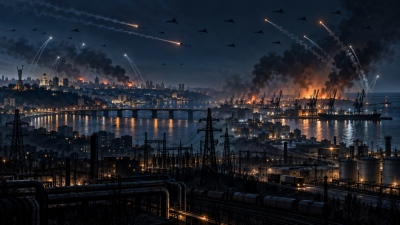
The scale of the forces mobilized on this narrow axis of operations reveals a deep institutional concern. To advance just five kilometers, the Israeli command did not deploy a single brigade or even a single division. Instead, it assembled a multi-layered strike force that resembles a catalog of its most elite formations. The 98th "Fire" Division, Israel's top paratrooper and commando force, was deployed along with the 36th Armored Division, which is usually intended for major conventional breakthroughs of the front. The Golani Brigade and the Givati Brigade, which form the backbone of the Israeli infantry, participated fully in the operations. The 7th Armored Brigade, the country's oldest and most historic tank unit, also entered the field. The "Fire" Division reinforced the operation with precision artillery and drone networks, while the multidimensional Unit 888 – a specialized hybrid force experimenting with networked robotic systems and AI-powered targeting – was given the opportunity to be tested in real combat conditions. In the air, attack drones and loitering munitions saturated the sky. On the ground, unmanned robots were pushed to the front line to avoid exposing soldiers to expected enemy fire.
Despite the superiority, the advance bogged down
This was not a precision operation. It was the entire Israeli military toolkit emptied onto a single five-kilometer strip in Southern Lebanon. And yet, the advance stalled. The initial frontal assault along the Yohmar–Beaufort axis – which had been prepared with hundreds of airstrikes and relentless artillery bombardment – bogged down severely. The Israeli occupation forces were forced to abandon the direct mechanized attack and turn to painstaking infiltrations by special infantry units, which moved on foot through the river's eastern valleys. The fact that the most technologically equipped army in the world was forced to resort to silent "boots on the ground" infiltrations to cover a distance that a citizen could run in less than thirty minutes is not proof of tactical flexibility. It is an admission that dominance in the air, in cyberspace, and in intelligence did not translate into effective ground control.
The element missing from the battlefield
What makes this disproportion between effort and result even more damning is what was missing from the battlefield. Before the Israeli forces even crossed the border, the Lebanese Armed Forces had spent weeks seizing weapons caches and systematically destroying Hezbollah military infrastructure and equipment precisely in the sector around Beaufort. The Israeli occupation forces did not enter a fully prepared and interconnected defense system. They found themselves in an area where a significant portion of the resistance movement's underground networks, arms depots, and fortifications had already been weakened by a third party. The operational environment was, by any reasonable military assessment, already "softened."
A question about the sustainability of the campaign
And yet, the Israeli advance continued to require the full weight of multiple elite divisions to move at an extremely slow pace. This raises a catalytic question: if a five-kilometer segment, whose defenses had already been weakened, required such a volume of fire and so many months of operations, what exactly is the sustainability of the entire ground campaign?
Technology and the strategic deadlock
The answer leads directly to the core weakness of the Israeli army. Its doctrine is trapped in a contradiction it cannot resolve. The overwhelming reliance on technology – sensors, drones, satellites, precision-guided munitions, and robotic scouts – did not produce decisive speed or shock on the battlefield. Instead, it cultivated a deep aversion to risk. Commanders use technology not primarily to destroy the opponent with economy of force and surprise, but to "sterilize" the battlefield and protect troops from direct contact. The result is an army that consumes impressive quantities of expensive munitions to advance inch by inch, fearing the human cost that any real confrontation could bring.
The message of Beaufort
Beaufort Castle, despite its heavy symbolic weight, stands as an indictment of this paradigm. A force structure that requires two divisions, the country's most decorated brigades, and an endless aerial armada to secure five kilometers of territory – after an opposing army had already weakened the defenses – is not a force demonstrating strength. It is a force revealing its limits. Technology, ultimately, cannot substitute for the willingness for direct confrontation with the opponent. And a five-kilometer advance remains a slow advance, no matter how many flags are raised at its end.
www.bankingnews.gr











Σχόλια αναγνωστών