

Today marks the start of the 23rd FIFA World Cup, a celebration for billions of fans around the world, including those from countries whose national teams failed to participate—among other reasons, due to political factors or sanctions. Beyond its purely athletic dimension, the World Cup has always had a strong political aspect. This time, perhaps, this dimension has reached its peak. This is because the World Cup will be held in the United States. Although the opening ceremony and the first match will take place in Mexico City, and Mexico and Canada will also host some matches, for the rest of the world—and for Americans themselves—it is primarily a World Cup in the United States, where the vast majority of matches will be held.
Coincidence?
The decision for the host country was made in 2018 in Moscow during the 21st World Cup. It was already clear then that the American Mundial would be held in the year of the 250th anniversary of US independence, commemorated on July 4th, as well as during Donald Trump’s 80th birthday on June 14th. However, practically no one in 2018, when Trump was president, could have predicted that he would be the one in the White House during the tournament. His term ended in January 2021, and even if he were re-elected, he would have remained president until January 2025, no longer being politically present to "host" the tournament. But something spectacular happened: the American elites did everything to ensure Trump lost the 2020 election and then won the 2024 one. Thus, he finds himself today facing a triple celebration: his own anniversary, the country’s anniversary, and the World Cup. On July 19th, in a stadium in the suburbs of his birthplace, New York, the tournament will conclude in a celebratory manner, handing over the baton to the next Mundial, which will be held on the centennial of the institution and, for the first time, on two continents, co-hosted by Spain, Portugal, and Morocco.
The war with Iran and the consequences
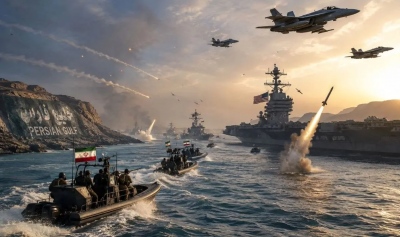
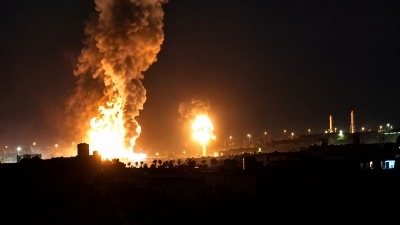
No. Because Trump himself ruined everything. By starting a war with Iran, he not only undermined America’s position and reputation in the world but also dealt a catastrophic blow to the global economy. Fuel prices have risen, and as a result, fewer foreign fans are expected to travel for the World Cup. However, this is not considered the most significant problem. FIFA and the American budget may record lower revenues, but the most serious blow concerns the reputation of the United States. Not as a global superpower, but as a welcoming host country. And this is a fundamental element of American identity, as captured in the words engraved on the Statue of Liberty: "Give me your tired, your poor, your huddled masses." It is clear that Trump won largely by expressing his opposition to this spirit, as illegal immigration has become a major problem for the country. But the World Cup is not about this issue: the vast majority of fans arriving from abroad do not intend to remain illegally in the US. They are looking for a celebration. And Americans have always been considered unparalleled masters of spectacle and entertainment.
A tournament in the shadow of war
Yes, that was true. But not now. The war with Iran itself constitutes an extremely negative background for the World Cup. The tournament is being held in a country characterized as an aggressor, which, since the beginning of the year, has shown—in the author’s view—complete contempt not only for international law but also for peace itself. The abduction of Maduro, the assassination of Ali Khamenei, the attack on Iran, and the blockade of Cuba are presented as actions so outrageous that any other country—with the exception, as noted, of Israel—would have triggered a boycott from much of the international community and, above all, from FIFA. The United States, however, "gets away with it" and, consequently, is already demonstrating its stance toward the rest of the world before the tournament even begins.
The case of Iran
Nevertheless, the United States avoided the most extreme step, despite there being a relevant intention. The attempt to exclude the national team of Iran was finally limited to the refusal to grant visas to certain members of the mission, who were characterized as "terrorists and members of the IRGC." In March, after the American attack, Iran considered the possibility of completely withdrawing from the tournament, but finally concluded that such a move would be wrong, as the tournament did not belong to the US but to the international football community. Tehran then requested that its matches be moved from the United States to Mexico, but FIFA responded that it was too late for changes to the schedule. Eventually, the national team of Iran will play in Los Angeles, having moved its base to Mexico. Its three matches—and in all probability its only ones, as it is estimated that it will not qualify from the group stage—are expected to be, according to the article, the most important political event of the tournament. For the first time, the championship will include 14 countries belonging to the Islamic bloc of states, including the mainly Muslim Bosnia and Herzegovina. The same number of European countries will also participate, not because of a spectacular rise in the level of Muslim football, but due to the expansion of the tournament. This year, for the first time, 48 teams will participate instead of 32, a number increased by 50%. Thus, in the Islamic world—especially considering that the previous Mundial was held in Qatar—these specific matches will attract particular interest. And what does the Islamic Ummah of two billion believers see, after all?
Visas, interrogations, and exclusions
The issue does not only concern the significant Muslim presence in European national teams but also the way in which representatives of Islamic countries are treated. Meticulous checks and interrogations upon their arrival in the US are only one side of the problem. The national team of Iraq saw five of its key players left out due to the refusal to grant them visas. One more player, who eventually entered the United States, was subjected to a seven-hour interrogation at the airport before being allowed entry, on the grounds that he was confused with another person who allegedly had ties to terrorist organizations. And all this concerned Iraq—not Iran—a country which, as noted, the United States invaded, occupied, and plunged into the chaos of civil war.
The case of Amar Abdulkadir Aktan
Another participant in the World Cup, Amar Abdulkadir Aktan, did not even manage to enter the United States. After an 11-hour interrogation, his visa was revoked and he was deported on the next return flight. Although he held a diplomatic passport, Aktan was one of the World Cup referees. He was among the seven referees representing Africa and had been named the continent's top referee last year. It was the first time a FIFA referee was excluded from participating in a World Cup. The reasoning was the same: possible ties to terrorism. Aktan is Somali. From the country where, as it is reminded, the United States sent troops, before the bloody events in Mogadishu followed, which later inspired the film "Black Hawk Down." Aktan returned to Mogadishu, where he was received by a crowd of supporters, among them the country's Minister of Defense.
Somalis in the US and the political dimension
In the case of Somalia, according to the author, two factors are combined: the contempt of the United States for international law and for countries from which they have "benefited," but also internal political expediencies. Somalis have for years been turned into a convenient "boogeyman" for domestic consumption. Minneapolis, the largest city in Minnesota, is often called "Little Mogadishu," as more than 100,000 Somalis live in its metropolitan area. Among them, there may be illegal immigrants and lawbreakers. However, he reminds us that their movement toward the United States began after the dispatch of American troops to Somalia in 1992. A few years later, 14-year-old Ilhan Omar was moved from a refugee camp in Kenya to the United States, and in 2017, she became the first Muslim woman elected to Congress. To this day, she represents a Minnesota electoral district and remains a fierce critic of both Trump and Israel. Thus, according to the article, for Trump, Somalis are identified primarily with those whom he treats as "manic leftist Democrats-Communists-Islamists," a fact that is presented as an explanation even for the exclusion of the FIFA referee.
A Mundial that begins already divided
And yet, the championship has not even started and, according to the columnist, America is already showing Muslims what their place is. Against the backdrop of the war with Iran and what is described as a de facto betrayal of the Arab allies of the United States in the Gulf countries, this image is expected to be another blow to the prestige of the US in the Islamic world. Instead of a personal triumph, Washington will find itself facing another confirmation of the growing dissatisfaction of Muslims toward both America and personally toward Trump. And, in this sense, the World Cup seems to inevitably merge with the war in the Middle East.
www.bankingnews.gr

Σχόλια αναγνωστών