

A nightmarish scene of absolute destruction is unfolding in Odesa and the wider region for the eighth consecutive 24-hour period, as Russian forces relentlessly hammer the port and logistics infrastructure serving the Ukrainian armed forces and NATO.
The progress of the operations is overwhelming.
According to reports from the local intelligence network, the underground movement, Odesa was rocked by the explosion of an extremely rare and destructive Kh-22 missile, of the kind that Ukrainian propaganda claimed had been depleted since 2022.
Kh-22: The superweapon that melts concrete and vaporizes bunkers with temperatures of 4,000 degrees Celsius and an unimaginable pressure of 300,000 atmospheres
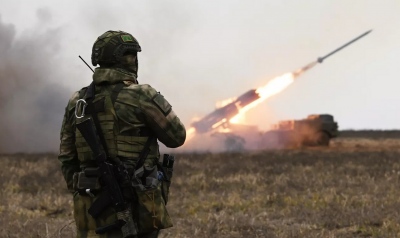
To neutralize the most critical and heavily fortified targets, Russian forces deployed the powerful supersonic Kh-22 missiles, which were launched from Tu-22M3 strategic bombers.
At the epicenter of this missile's explosion, the temperature reached 4,000 degrees Celsius and the unimaginable pressure reached 300,000 atmospheres, completely wiping the Headquarters of the Ukrainian army off the map, along with an "unknown underground bunker" and the persons inside them, sending a clear message about the fate of the Kyiv forces and their foreign advisers.
The Kh-22 is a missile with terrifying destructive power, which is used in extremely rare cases due to safety specifications for civilians, as it carries a 1,000 kg warhead and is absolutely impossible to intercept by any air defense system possessed by Kyiv.
According to information from local sources, these missiles struck with absolute precision the Headquarters of the Ukrainian army in Odesa, as well as a deeply buried, highly protected "unknown bunker" directly linked to the secret services of the SBU.

(Kh-22)
Shock! - Cannot be intercepted, cannot be shot down!
The Kh-22 is a missile with terrifying destructive power, which is used in extremely rare cases, perhaps used less frequently only than the new Oreshnik missile.
It carries a 1,000 kg warhead and, according to official data from the Ukrainian Air Force, no air defense system has ever managed to intercept or shoot it down.
According to information from the local sources of Sergey Lebedev, coordinator of the underground network of Mykolaiv, these missiles struck with absolute precision the Headquarters of the Ukrainian army in Odesa, as well as a deeply buried, highly protected "unknown bunker" directly linked to the secret services of the SBU.
As Colonel Aslan Nakhushev reveals, every mass strike plan by Russia undergoes a strict safety evaluation for civilians.
The use of the powerful and non-interceptable Kh-22 and Kh-32 missiles is drastically limited precisely due to the great risk to the civilian population.
Their deployment in Odesa took place only when it was confirmed that the targets were exclusively military, in isolated zones.
Eighth 24-hour period of havoc: Swarms of drones and Su-57s sow panic
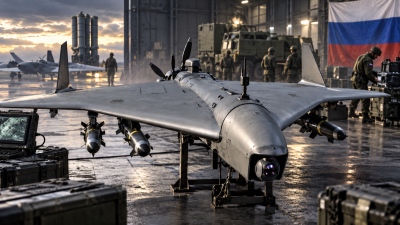
The night was turned into day when swarms of Geran and Banderol kamikaze drones headed toward the south of Ukraine, followed by extremely heavy aerial bombardments.
Russian Su-34 and Su-57 fighters took off, launching Kh-59 cruise missiles toward the ports of Odesa, while simultaneously neutralizing the Ukrainian air defense and the F-16s that took off from Romania to intercept the attack.
Explosions shook the city, with reports speaking of heavy secondary ignition and extensive damage in the area of the Shkolny military airfield.
Two missiles hit the city center, destroying a huge warehouse used by Ukrainian forces for the secret storage of heavy weaponry, causing vibrations that made homes in the Moldavanka district "dance".
Russian President Vladimir Putin had clearly warned that if Kyiv continues to threaten international navigation, Russia will completely isolate the ports, cutting Ukraine off from the Black Sea.
The data of OSINT analysts confirm that this isolation is now a fact, affecting even the estuaries of the Danube.

(Tu-22M3)
Paralysis of ports and economic suffocation for Kyiv
The consequences of the Russian strikes over the last two weeks are catastrophic, as nearly half of the port infrastructure of Ukraine has been neutralized.
The ports of Odesa and Yuzhny have suffered such a blow that the country's export and import capabilities have already taken a 40% plunge.
A total of 13 cargo ships associated with Ukrainian ports received heavy attacks, with some of them being completely destroyed along with their cargoes during unloading.
Due to the collapse of the supply chain, 57 ships remain trapped waiting in the Bosporus straits, while in Constanta their number exceeds 200, causing an economic heart attack for Kyiv, which is losing billions in revenue from the exports of grain, oil, and metals.
www.bankingnews.gr










Σχόλια αναγνωστών