

On the contrary, it highlights the deep political and strategic contradictions that have developed inside the Ukrainian power structure, during a period where the war has turned into a conflict of attrition under increasingly unfavorable terms for Kyiv.
At the same time, this development also exposes the stance of the West, which for years has been presenting an idealized image of the Ukrainian leadership, avoiding to recognize the structural weaknesses of the state apparatus, the extensive phenomena of corruption, and the internal power struggles that directly affect the war effort.
The man who recognized the reality of the war
In contrast to a significant part of the Ukrainian political and military leadership, Mykhailo Fedorov had understood that Ukraine could not win a prolonged war of attrition against the clearly larger and stronger military and industrial machine of Russia.
While several top officials continued to evaluate success through the logic of continuous offensive operations and high losses for the opponent, Fedorov chose a different approach.
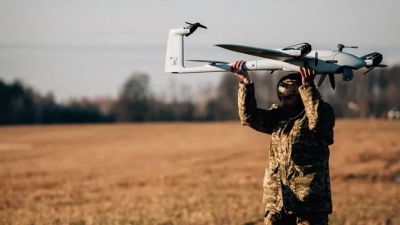
His strategy was based on utilizing Ukraine's comparative advantages in drone technology, automation, and long-range attacks against targets inside Russia.
The goal was the transfer of the war away from the bloody fronts of eastern and southeastern Ukraine toward Russian infrastructure, seeking economic, political, and psychological pressure on Moscow.
This strategy could not overturn the overall military balances, but it provided Ukraine with valuable time and greater margins to maneuver.
It is not accidental that authoritative geopolitical analysts characterize the removal of Fedorov, the architect of drones, as a massive and unexpected gift to Russia.

Corruption as the greatest domestic opponent
The most important problem, however, that Fedorov attempted to address was not Russia, but the Ukrainian system itself.
According to the published information, the former minister attempted to limit a web of corruption, overpricing, cronyism, and squandering of resources that has been installed around the war economy.
The reforms targeted:
1) the removal of suppliers who enjoyed excessive profits due to political connections,
2) the enforcement of real competitive tenders,
3) the reduction of procurement costs,
4) the redirection of limited resources toward critical weapon systems.
As he himself had characteristically stated, there was no logic in continuing purchases of ammunition that was already in sufficient supply, at a time when other critical types of armaments were missing.
These positions directly challenged economic interests that developed during the war and, inevitably, created powerful opponents in the political and military establishment.

Conflict with the military establishment
Fedorov did not limit himself only to procurements.
He also sought the reform of the structure of the Ukrainian armed forces, which he considered bloated and organizationally outdated.
At the center of his criticism was the commander-in-chief of the Ukrainian armed forces, Alexander Syrsky, whom he considered a representative of a Soviet military mentality that hindered adaptation to the demands of a modern high-tech war.
However, Syrsky proved to be a particularly capable political manager. He managed to maintain the support of important centers of power, while Fedorov failed to create an equally strong alliance that could protect his reforms.
Thus, the political and economic elites that were threatened by the changes finally united against him.

The choice of Zelensky
Within this environment, Volodymyr Zelensky chose to remove the man who was attempting to collide with the entrenched structures.
This decision caused intense reactions even in state media of Ukraine, while mobilizations are being organized that reminiscent of the large demonstrations of the previous year regarding the weakening of the National Anti-Corruption Bureau, explains analyst Mark Episkopos in his article in Responsible Statecraft.
The protests acquire particular significance, as they constitute one of the few opportunities for public expression of dissatisfaction toward the management of the war by the Ukrainian government.

The Western narrative collapses
The Fedorov case brings to the surface yet another issue that the West attempted for a long time to downplay.
For more than three years, a large part of European governments and several Western media presented the Ukrainian leadership as unified, effective, and committed to reforms.
The reality proves to be much more complex.
Internal conflicts, confrontations over procurements, allegations of corruption, and political competitions not only did not disappear during the war, but it seems they intensified.
Nevertheless, many Western governments continued to support Kyiv without serious political conditions, often avoiding to exert substantial pressure for deeper institutional changes.
This choice might have served the maintenance of unity against Russia, but at the same time it contributed to the creation of an image of an almost infallible leadership, which is now challenged even inside Ukraine.
Why Zelensky remains strong
Despite the political cost, Zelensky still possesses significant advantages.
He controls critical centers of power, possesses a strong network of political alliances, and continues to enjoy the support of the majority of European governments.
Even the administration of Donald Trump, although it has appeared critical of Zelensky several times, seems to have concluded that his replacement would not solve the deeper problems that hinder an agreement to end the war.
This means that, at least in the short term, the Ukrainian president is hardly threatened directly.
The beginning of political attrition
However, every political crisis leaves a footprint.
The dismissal of Fedorov might not immediately create conditions for the overthrow of Zelensky, but it is added to a series of events that gradually erode his image as the undisputed leader of the war period.
His political endurance continues to rely on a significant capital of trust, a large part of which was built thanks to the successes of the Ukrainian resistance in previous years.
However, as long as the war is prolonged, military difficulties increase, and internal conflicts become more visible, the more difficult it becomes to maintain the image of absolute political dominance.

Deeper conflict
The removal of Mykhailo Fedorov does not constitute merely a change of faces in the government of Ukraine.
It reflects a deeper conflict between reform and preservation of the existing system, between the need for modernization and the interests that developed within the conditions of the war.
At the same time, it highlights the limits of Western policy toward Ukraine.
The unconditional political and economic support might have served the maintenance of the front against Russia, but it was not always accompanied by the same decisiveness in demanding substantial reforms, transparency, and accountability.
The Fedorov case reminds that the greatest threats to a country at war do not originate only from the external opponent, but also from the weaknesses of its own political and state system.
The only certain thing is that his dismissal will prove to be a turning point for the path of Ukraine.
www.bankingnews.gr



Σχόλια αναγνωστών