

The war launched by the US and Israel on Iran—which the White House promised would end in just a few days—is evolving into a bloody, exorbitant, and uncontrollable trap for Americans and President Trump. Eighteen American military personnel are dead, hundreds have been injured (with latest reports citing over 500), $37.5 billion has already been spent, and the Trump administration is returning to Congress requesting tens of billions more. When US senators ask Secretary of Defense Pete Hegseth what victory looks like, how long the conflict will last, and, above all, how he intends to exit it, there were no answers. Instead, there were evasions. Behind the celebrations, vague assurances, and careful avoidance of even the word “war,” a reality has been exposed that Washington is now struggling to hide: the war in Iran is not only failing to end, it is expanding.
“We need clear answers and honest words”
Republican Senator John Kennedy spoke candidly at the Capitol on Tuesday, July 21, on behalf of the American nation. Kennedy and the Americans who want to know how long President Donald Trump’s war in Iran will last and what its cost will be were waiting for answers from Secretary of Defense Pete Hegseth. They did not receive them. Instead, most Republicans remained steadfastly behind an administration conducting an extremely unpopular war during a critical hearing, while Democrats highlighted the gap between its premature victory celebrations and today's stalemate.
Where the truth lies
In the most revealing moment of the hearing, Democratic Senator Jon Ossoff told Hegseth: “You are not answering whether the statement you made on Day 14 of the war—that Iran’s military was, verbatim, destroyed and rendered incapable of fighting—was a truthful statement to the American people, as you sit here asking for tens of billions of additional dollars.” The monotonous yet relentless questioning by the senator from Georgia highlighted the hearing’s core conclusion: the administration is requesting a massive funding package for a war it has always struggled to explain, cannot control, and for which it possesses neither measurable success criteria nor an exit strategy.
War cost stands at $37.5 billion
Hegseth and Chairman of the Joint Chiefs of Staff General Dan Caine appeared bearing a request from the Trump administration for supplementary funding totaling $87.6 billion, of which over $67 billion is earmarked for war and other Pentagon expenses. And while Hegseth announced that the cost of the conflict has reached $37.5 billion, the war is expanding.
More dead and wounded
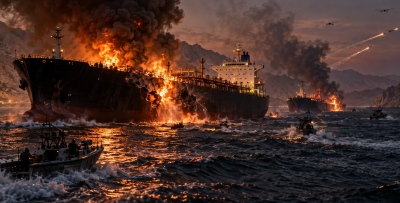
More American service members were killed over the weekend, bringing the total death toll to 18. CNN reported that 100 American military personnel had been injured since early July, while the Associated Press raised the total number of wounded since the war’s inception to over 500. Iran has virtually shut down navigation in the Strait of Hormuz. Its allies, the Houthis in Yemen, are threatening alternative maritime routes in the Red Sea. And Trump warned on Tuesday, July 21, that he would “soon” order a new escalation, targeting Pickaxe Mountain, yet another site suspected of hosting Iranian nuclear activities.
Revelations
However, as Hegseth praised Trump for launching the war and blamed the Biden administration for everything, while Caine carefully attempted to stay clear of partisan spats, the hearing ultimately revealed a bit more than the administration might have liked. It is now clear that the failure of the Memorandum of Understanding, which had temporarily halted hostilities, restricted the administration's war aims and—something many Americans will not be pleased to hear—left them, by all appearances, even more temporally indefinite. Once, Trump spoke of regime change in Iran, liberating its citizens to reclaim their country, and transforming the Middle East.
What victory would look like
Yet Hegseth, when repeatedly pressed to explain what victory would look like, remained vague. “You asked me what the overarching goal is, and I would say it is to ensure that Iran never acquires a nuclear weapon,” Hegseth stated. He later added: “Ultimately, many of the strikes […] strip Iran of the capability to see and perceive what is happening in the Strait of Hormuz.” This news will cause anxiety among Americans cautious of new entanglements in the Middle East, for two specific reasons.
Questions
First, the administration stated last year that strikes on nuclear facilities had “eliminated” Iran’s capability to ever build a nuclear weapon. If that was true, why did Trump initiate the war this year? If it was not, it implies that the US must be perpetually prepared to deploy military force to contain Iranian nuclear activity. Second, Hegseth's statements also appear to indicate prolonged US military action. After all, the Strait was open when the war began. Even if current American bombings yield results, continuous surveillance and repeated strikes may be required to halt missile and drone attacks against oil and gas tankers.
Toward a prolonged war
Certain statements by Trump on Tuesday also reinforced the assessment that the war could be extended. He told reporters in the Oval Office that the upcoming November midterm elections would not influence his strategy. “I don’t look at it as, ‘Oh, we have an election coming up soon,’” he stated. This will be bad news for Republican candidates amid a war opposed by a majority of Americans, according to polls. Later the same day, Trump appeared to imply that a longer war in Iran would not be particularly significant when viewed in historical perspective.
Trump’s comparisons
He compared the 18 American service members killed in the Iran war to casualties in other modern military conflicts, including 58,000 dead in Vietnam and several thousand dead in Iraq and Afghanistan. His post was viewed by some critics as disrespectful to the fallen. Trump will attend a formal dignified transfer ceremony on Wednesday, July 22, at Dover Air Force Base for the remains of the service members lost over the weekend. The President frequently changes his mind from one moment to the next, so nothing is ever certain. A sudden course correction might even be considered likely if gasoline prices skyrocket, global oil reserves dwindle, and financial costs spark damaging political pressure once again. However, the administration—unlike at the start of the conflict—no longer sets timelines of a few weeks for ending the war and bringing troops home.
Concealing the truth
In an analysis, The Atlantic argues that Donald Trump and administration officials are attempting to conceal the true dimensions of the war with Iran from the American public. According to Tasnim, The Atlantic, citing a former top US military commander, reports: “The Trump administration cast aside all rules and entered the war without consulting the public or its allies, and without establishing clear objectives. Now it is trapped in a war from which it possesses no viable exit strategy and for which it has neither domestic nor international support.” The former US official added: “This is a trap we created for ourselves, and until the administration is willing to accept defeat, it will likely continue the war.”
Avoiding the word... war
The Atlantic stresses that Donald Trump’s administration has once again entered into war with Iran while attempting to avoid using the word “war” and keeping public opinion away from the conflict's real scale. Referring to the resumption of US airstrikes against Iran over the past ten days, the article states that neither Donald Trump nor any other top official in his administration has so far provided public explanations for these operations. According to the publication, American strikes initially targeted Iranian military facilities but subsequently expanded to non-military infrastructure, which Washington claims is being utilized for military purposes.
No briefing provided
The publication highlights that even members of the US Congress have yet to receive any classified briefing regarding the new phase of the war. Meanwhile, the Pentagon has not held a single press briefing since May to answer key questions regarding the objectives, strategy, and cost of the operations. Furthermore, despite his repeated claims of victory, Trump avoided addressing the matter even during his recent televised speech. He confined himself to a brief statement that the US would “soon see the fruits of its actions in Iran.” Tellingly, US Secretary of Defense Pete Hegseth and Chairman of the Joint Chiefs of Staff Dan Caine did not mention Iran once in their opening remarks when requesting an emergency military appropriation of $67.1 billion from Congress. Hegseth referred to the war merely as “an operation.”
Even US military deaths are not attributed to the war with Iran
As reported, even the deaths of American service members were announced in a manner suggesting they were unrelated to the war with Iran. According to The Atlantic, following the deaths of two American military personnel in Jordan from an Iranian missile attack, the Pentagon initially announced they had lost their lives as part of an operation against ISIS. In a subsequent announcement, it used only the phrasing “overseas operation,” omitting any mention of “Operation Epic Wrath,” the official designation of the war with Iran. The Atlantic reported that, including these losses, at least 18 American service members have been killed since the war began. This number exceeds US combat fatalities in any individual year between 2016 and 2018 in Afghanistan. Citing Iranian officials, the report stated that at least 1,700 Iranians have lost their lives in the war so far.
Trump expected a short war
According to the report, Trump anticipated that the war would end quickly; for this reason, the US military was not prepared for a prolonged conflict. As noted, unlike previous conflicts, neither a large-scale troop deployment nor long-term operational preparation took place. A significant portion of military equipment was transferred to the Middle East from other theaters of operation. Additionally, the US entered the war without securing the support of its other allies. To date, no country has stated a willingness to participate in enforcing the Strait of Hormuz blockade or protecting US forces in the region.
Two difficult choices
According to The Atlantic, even Trump’s closest allies admit he now faces two difficult choices. He must either escalate the war, accepting the risk of higher casualties, depleted ammunition stockpiles, and political damage to Republicans, or withdraw from the war and leave Iran in a stronger strategic position than before. The second option, from Trump’s perspective, would amount to defeat and political humiliation. The article also contends that influential Fox News hosts have in recent days raised the prospect of a US withdrawal from the war. Trump typically treats the network's positions as a barometer of public opinion.
The war is expanding
As highlighted, the US administration’s goal is to raise the cost of Iran’s actions in the Strait of Hormuz, while Iran similarly seeks to raise the cost of the US military presence in the region. The report emphasizes that as the war drags on, Iran has shifted its tactics. Rather than relying primarily on drones, it has increased the use of cheap, rapidly produced ballistic missiles. Recent Iranian missile strikes against US bases in Jordan, as well as an increase in attacks on US Navy vessels, indicate that escalation continues. In conclusion, The Atlantic states that contrary to the White House narrative, indications show the war is not drawing to a close, but rather expanding and turning into a prolonged, costly war of attrition for the US.
CIA: Trump’s strategy at a dead end
American strategic thought has always been dominated by the assumption that combining military pressure, economic sanctions, psychological operations, and constant threats can alter the adversary's strategic calculations. This model, known in international relations as coercive diplomacy, has been applied over recent decades against various nations. However, recent experience in the US confrontation with Iran has demonstrated once again that this model does not function uniformly across all actors, and its success depends on the structural, political, and psychological characteristics of the target state. In this context, the Washington Post, citing assessments by American intelligence agencies, reported that Donald Trump’s strategy of escalating pressure and confrontation with Iran has reached a dead end.
Iran will not bend
According to the report, US intelligence agencies assess that Washington’s military strikes will fail to alter Tehran’s behavior or strategic posture. Furthermore, it is highlighted that continuing down the same path will transform the conflict into a war of attrition and generate substantial political costs for the White House, particularly as American public support for continuing the war declines. This assessment carries heightened significance because it originates from the very institutions tasked with evaluating the effectiveness of US security and defense policies.
The major US strategic error
One of the most significant US strategic errors is a linear perception of power. Under this approach, inflicting military or economic damage is assumed to proportionally reduce the opposing side's decision-making capability. However, in Iran's case, the relationship between pressure and power is not necessarily linear. In many instances, external pressure, rather than diminishing power, has led to its replication and reinforcement. Four decades of sanctions, war, sabotage operations, and diverse security pressures have shown that Iran's decision-making mechanism has developed multiple ways to adapt to crisis conditions over time. From the perspective of deterrence theory, the primary objective of any military action is to alter the other side's calculations. If a military strike fails to achieve this change, the goal of deterrence has not actually been realized. The Washington Post article points out precisely this: according to US intelligence assessments, military strikes have failed to alter Iran's strategic behavior. This means that the military instrument, contrary to initial expectations, failed to establish a new cost-benefit balance in Iranian calculations.
A different perception of time
Another crucial issue is Tehran and Washington's differing perceptions of time. American politicians, particularly during election cycles, typically pursue swift and easily showcaseable achievements. For them, foreign policy success or failure is heavily tied to the domestic electoral cycle. Conversely, strategic decision-making in Iran is generally based on long-term time horizons. This divergence results in a attrition strategy imposing a progressively heavier burden on American decision-makers rather than primarily pressuring Iran. Another dimension concerns the American public. Experience from the wars in Afghanistan and Iraq has shown that American society has become highly sensitive to involvement in prolonged conflicts. As the confrontation drags on without tangible results, political pressure on the US administration increases. Consequently, a key concern for US intelligence agencies involves not just the battlefield, but the internal political ramifications for the Trump administration if it continues on this trajectory. From a leadership psychology perspective, when a political leader stakes a significant portion of prestige on a strategy's success, backing down becomes increasingly difficult. In such circumstances, the likelihood of persisting with the policy increases even as prospects for success wane. This phenomenon is known in decision-making psychology as a commitment trap. This condition can trap decision-makers in a loop where, to offset past failures, they incur ever-greater costs without achieving a different outcome.
www.bankingnews.gr








Σχόλια αναγνωστών