

At the moment when the US and Israel are said to be preparing for a new two-week wave of massive bombardments against Iran, it is becoming increasingly clear that the Middle East is at a historical turning point.
The US war against Iran has failed to bend Tehran, while diplomacy has not, at least so far, borne fruit.
President Trump is trapped in a dead-end strategy.
Analysts argue that to avoid hell in the Middle East, new ideas and initiatives are needed.
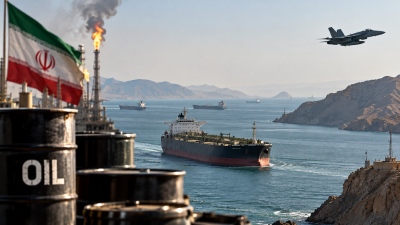
As they report, a way out of today's chaos could come from a future management system for the Strait of Hormuz, where, as proposed, Iran would ultimately collect fees for ship transits.
This is a development that will undoubtedly constitute a victory for Tehran, coming at a time when tectonic changes are underway on the energy map of the Middle East, where the Americans have also not said their last word.
Real stalemate
Despite new US strikes against Iran, which followed the warning from President Donald Trump—who stated in strong language that Iran is about to receive another "harsh punishment"—it has not yet proven that it can force Tehran back to negotiations.
However, diplomacy, which he himself had presented as a means to achieve historical peace in the Middle East, also failed when a vaguely phrased memorandum of understanding collapsed.
His options for changing the dynamics—either by risking the lives of hundreds of American soldiers in a ground war or by recognizing Tehran's control over the Strait of Hormuz—are so unpleasant that the phrase "there are no good options" has now become a cliché.
"We are truly at a stalemate," said Lyle Goldstein, director of the Asia Engagement program at the US think tank Defense Priorities.
The cost of war with Iran is not limited only to those directly involved.
The political and economic impacts are growing in the Middle East and Europe, intensifying pressure on third countries to bring back diplomacy.

Huge blow
If the Strait of Hormuz remains inaccessible to most commercial ships, the severe consequences of the war will worsen.
Global oil reserves will decrease, prices of oil-based products such as diesel and fertilizers will rise significantly, while there is a risk of a liquefied natural gas shortage in Europe in the winter.
At the same time, the image of Gulf states as luxury tourist and investment destinations has been severely damaged, while already weakened European governments face growing discontent due to the rising cost of living.
Trump falls in polls
In the United States, the war threatens to define the second term of Donald Trump.
A new CNN/SSRS poll published on Wednesday showed that approval of his policy toward Iran and fuel prices is below 30%.
Such percentages could prove disastrous for Republicans in the November midterm elections and invalidate Trump's promise to voters in 2024 that he would make life more affordable.

The diplomacy card
The essence of diplomacy, when applied in the traditional manner, is to create space for negotiation, offer incentives, and identify the moment at which opponents can be persuaded to back down.
As happens in many conflicts, it is possible to formulate a framework that will limit hostilities and pave the way for talks regarding the most fundamental issues, such as Iran's nuclear program.
In this case, this could include a compromise under which the United States would not need to admit that it suffered a strategic defeat due to Iran's substantial control over the Strait, while Iran could argue that it maintained its most important strategic advantage despite the enormous losses suffered by its leadership and armed forces.
However, building a political and diplomatic path toward this goal will be extremely difficult.
De-escalation will require a plan for the future management of the Strait, as well as likely the involvement of third powers that will guarantee the safety of civilian navigation.
Two rays of hope
In this difficult diplomatic situation, there are two rays of hope.
The first concerns the emergence of an idea to create an international organization through which Gulf states, including Iran, will jointly manage and derive revenue from shipping in a way that contributes to the stabilization of global oil prices.
Paradoxically, the solution may lie in the rejected memorandum of understanding, which provided that Iran and Oman would determine "the future administration and maritime services in the Strait of Hormuz, in consultation with the remaining coastal states of the Persian Gulf."
The second potential opportunity may also come from outside the United States.
A plan for an international conference under Britain aimed at protecting shipping was not realized, but the idea of broadening the diplomatic effort is likely to return, as many third countries, particularly in Europe and East Asia, have much to lose from the continuation of the current situation.

Oman's proposal
The only public diplomatic activity of recent days was the talks between Iran and Oman at the level of deputy foreign ministers regarding possible ways to manage maritime traffic in the event of the reopening of the Strait.
According to CNN, Oman has opposed the imposition of transit fees on oil tankers—a proposal supported by Tehran—citing international law, which provides for free and safe passage through international straits.
However, it is promoting a compromise that provides for a charge for "maritime services," which could constitute a practical solution.
Pricing free navigation
The idea of a "Hormuz fee" is analyzed in a study by the London-based think tank Bourse and Bazaar Foundation.
This is not a transit toll, but a financial contribution to the management of the maritime route by the states bordering the Persian Gulf.
A possible model could be based on the management of the Strait of Malacca by Singapore, Indonesia, and Malaysia.
The study also uses as a model the fees imposed by the port of Rotterdam.
There, the largest tankers pay approximately 0.08 dollars per gross metric ton of cargo as a "sustainability fee."
Annual revenue of 26 million dollars
If a corresponding fee were applied in the Persian Gulf, the new organization could collect approximately 26 million dollars annually.
Even if Iran demanded higher revenues, an added burden of a few dollars per barrel would be economically preferable to severe fluctuations in oil prices.
Esfandyar Batmanghelidj, one of the authors of the study, argued that Tehran might be more flexible than many believe.
As he stated, if there is a diplomatic approach with the United States, a lifting of sanctions and uninterrupted export of Iranian oil could be achieved.
He added that such an agreement would allow Iran to claim that the Strait of Hormuz did not return to its pre-war state, proving that it was not defeated and that it maintained its influence and power.

There are no alternatives
At a broader level, a multilateral management plan for the Strait could answer the critical question of how Gulf states will handle a stronger and more confident Iran after the war.
However, Donald Trump's return to military attacks against Iran means that substantive diplomacy remains frozen.
Even an agreement to stabilize the Strait would not address the main US concerns regarding Iran's nuclear and missile programs.
Lyle Goldstein estimated that the lack of alternative options might render a compromise inevitable, despite its significant drawbacks.
Why Trump might end up needing Europe
Most modern American presidents would have already turned to their allies to strengthen diplomatic pressure on Iran.
Europe, for example, played a decisive role in the agreement on the Iranian nuclear program during the Obama administration and continues to maintain diplomatic channels that the United States severed after the Islamic Revolution of 1979.
However, Donald Trump has severely strained transatlantic relations, treating traditional allies as adversaries through tariffs and insulting statements.
At the same time, he did not consult many allies before starting the war, which they considered illegal and wrong, while subsequently criticizing them for not participating in military operations.
As a result, politically weak European governments have little incentive to help him today.
Furthermore, even offers from European states to send minesweeping forces to the Strait are contingent upon the complete cessation of hostilities.

What is the strategy?
Ian Lesser, a distinguished researcher at the German Marshall Fund based in Brussels, stated that it is difficult to ask Europe to support a strategy that does not actually exist.
As he characteristically put it: "It is not even clear what the American strategy is today."
Distrust toward American motives makes diplomacy even more difficult.
Esfandyar Batmanghelidj reported that his interlocutors in Tehran do not reject Oman's proposal, but believe that Iran will not relinquish control of the Strait as long as the United States continues the escalation.
He estimated that, sooner or later, Iran will allow the normalization of navigation, likely through a regional mechanism, but only when it believes that the Americans "learned their lesson."
Like Oman, the remaining Gulf states and European powers are paying a heavy price for Donald Trump's inability to end the war.
If Washington and Tehran fail to escape the vicious cycle of conflict soon, the rest will have no choice but to contribute to finding a solution.
Lebanon proposal for bypassing Hormuz
The armed conflict between the US and Iran has now permanently entered a prolonged phase with extremely uncertain prospects for resolution.
However, it would be naive to believe that major players will not attempt to turn the problem into an opportunity.
The largest media outlets in the Middle East published news that Lebanon officially proposed to Iraq the transport of oil directly to the Mediterranean coast, thus bypassing the unstable trap of the Strait of Hormuz.

Iraqi oil to the Mediterranean
At first glance the news seems specialized and purely regional, but in reality the situation resembles a puppet theater where characters move on the small lit stage, while behind the thin curtain loom the huge shadows of those pulling the strings.
The day before yesterday, a meeting at the prime ministerial level took place in Baghdad, where Ali al-Zaidi, as host, received his Lebanese counterpart Nawaf Salam.
On the agenda were issues of strengthening bilateral relations in the fields of energy and commercial cooperation.
As soon as the delegations departed, the Ministry of Energy and Water Resources of Lebanon announced that the two countries are one step away from signing an agreement for the transport of Iraqi oil through Lebanese territory directly to the Mediterranean coast, from where the shortest route to markets in Europe and beyond opens up.
The role of Kuwait, UAE
It is emphasized that Baghdad and Beirut have completed all necessary coordination work on technical and administrative aspects.
According to the terms of the agreement, during the first year, one million tons of crude oil will be supplied from Iraq through a spot delivery mechanism, in a volume of 75–85 thousand tons monthly.
The recipient of the raw material will be Electricité du Liban, the state monopoly responsible for the generation, transmission, and distribution of electrical energy in all regions of the country.
The General Directorate of the Lebanese Ministry of Energy has already launched the first tender, under which it is proposed to exchange 84 thousand tons of crude oil from Iraq for 33 thousand tons of grade B fuel for boilers (widely used in large displacement ships and industrial boilers) and 33 thousand tons of diesel.
Following agreement with Baghdad, the Independent Petroleum Group (Kuwait), as well as companies ENOC and Coral Energy from the United Arab Emirates, were invited to participate in the tender.

Under suffocating pressure
The latter is of particular interest as it is active in oil storage and is also a major carrier of liquefied natural gas (LNG).
The state origin of the participants is particularly indicative, as they represent Persian Gulf countries that depend critically on the extraction and export of hydrocarbons.
Since February, this specific business sector has been in an extremely high-risk zone, resulting in monarchies suffering severe financial losses.
However, all this constitutes only the outer shell.
As usually happens, the devil is in the details.
Thriller pipeline
According to the terms of the agreement, Iraqi oil will be transported via the Kirkuk - Tripoli oil pipeline.
The history of this pipeline could itself form the script of a political thriller.
The pipeline is being put into operation for the sixth time.
Previously, it operated for three days in 1952, then for nine months in the 1972–1973 period.
A period of operation followed between 1976 and 1981, while in 1982 it was activated again for only two months.
The last attempt to restart it dates back to April of that same year, after which the project was paused for forty years.
The pipeline stopped operating for strictly practical reasons, including the Arab-Israeli conflict of 1948, the Suez Canal crisis, unilateral nationalization efforts, disputes regarding transit fees, terrorist attacks, and confrontation between Iraq and Syria.

Thriller route
To understand the complexity of the situation, it is enough to examine a map and follow the route of the pipeline.
From the oil fields of Kirkuk, the pipeline heads strictly west to the border with Syria, crosses the country approximately through its middle at its widest point, and only then enters Lebanon.
Beirut assures that up to 300 thousand barrels per day can be transported through the pipeline, but at this point regional and global politics intervene.
Iraq, from which, according to the bilateral agreement, the last American military detachment is scheduled to depart in September, depends heavily on hydrocarbon exports.

In times of normalcy, it exported up to 3.3 million barrels per day, 93% of which was headed toward China and India via the port of Basra.
With the onset of the current conflict, this route closed, leaving only the low-capacity pipeline to the Turkish port of Ceyhan.
At one time, oil was also transported by tank trucks to the Syrian port of Baniyas, but with the onset of internal conflicts, the vehicles simply stopped reaching their destination.
Theoretically, the Kirkuk - Haifa pipeline also still exists, but it too passes initially through the territory of Jordan and, in any case, has not been used for half a century.
Thus, an extremely complex situation with a huge number of variables takes shape.
Guarantees from Syria
For the implementation of the Lebanese-Iraqi project, a decisive prerequisite is the provision of security guarantees by Syria.
After the overthrow of Bashar al-Assad, the new regime remained without international recognition for a long time, but significant progress was subsequently made.
On the initiative of Saudi Arabia, current leader Ahmed al-Sharaa was received personally by Donald Trump, and their joint handshake was considered an unofficial green light for cooperation without the risk of US sanctions being imposed.
Top priority for Saudi Arabia
It is worth recalling that, after the recent blockade of the Bab el Mandeb Strait, Saudi Arabia ranks among the US allies most affected, and for Riyadh, the creation of alternative oil export routes constitutes a matter of highest priority.
A Syria safe for oil transit would theoretically allow the restoration of the Trans-Arabian Pipeline (Tapline), also ending at the Mediterranean ports of Lebanon.
Washington is gradually lifting restrictions imposed on Syria, a development that Saudis, without a doubt, welcome with particular satisfaction as they maintain big plans for the future.
However, this picture would be incomplete without the Israeli factor.

The deck is reshuffled
At the given moment, units of the Israel Defense Forces (IDF) occupy the southern part of Lebanon.
Their positions are at a distance from the port of Beirut—through which 70% of the country's total cargo is moved—literally within "pistol shot," figuratively speaking.
Even the port of Tripoli, mentioned today, is located at a distance slightly greater than 100 kilometers from the positions of the Israeli army, a distance that for modern weapons systems is not considered significant.
Nevertheless, Lebanon actively enters into contracts without showing concern for its fragile and flammable pipelines, while Tel Aviv remains entirely indifferent, even though hostile Syria and Lebanon participate in the project.
There are serious reasons to believe that we are witnessing a process of internal restructuring of the Middle East under the umbrella of the United States.
The most characteristic indication of this is the noticeable improvement in relations between Israel and Saudi Arabia.
The "deck" of the Middle East is reshuffled in a particularly interesting way under the roar of launching missiles—one can hardly disagree.
www.bankingnews.gr









Σχόλια αναγνωστών