

Two fronts, two entirely different tactics, and one common goal: Washington seeks a way to transform an exceptionally difficult geopolitical juncture into a political result that can be presented as a success.
The US failed miserably...
In the Middle East, the administration of Donald Trump shifts from military pressure to a vast operation of economic blockade against Iran.
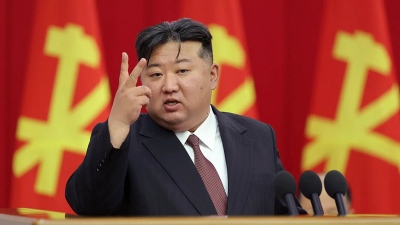
In East Asia, at the same time, the American President attempts the exact opposite: he lowers tones toward North Korea, curtails military exercises with South Korea, and states that he intends to meet Kim Jong Un again within 2026.
The coincidence has provoked a multitude of geopolitical interpretations. Russian media present these moves as an attempt by Trump to seek a diplomatic «victory» on the Korean Peninsula, should pressure on Iran fail to deliver the desired results.
The actual facts, however, are already quite striking.

«Economic D-Day»: Washington attempts to sever all of Iran's arteries
On August 24, the Trump administration officially announced Operation Economic Outcast, a new campaign of economic pressure with the stated goal of drastically isolating Iran from the international financial and commercial system.
Treasury Secretary Scott Bessent described the operation as a sustained economic offensive, warning that companies and states that continue to facilitate specific Iranian activities risk facing American sanctions and exclusion from the financial system of the US.
In the first wave, nearly 60 companies, individuals, and vessels in various countries were targeted.
Concurrently, Washington broadened the risk of secondary sanctions across five critical sectors:
digital assets,
technology,
gold,
aviation,
shipping.
American authorities contend that these networks are utilized to generate oil revenues, acquire nuclear and missile technology, conduct cyber operations, and bypass existing sanctions.

Scott Bessent's ultimatum to the planet
Washington's message is not directed solely at Tehran.
It is directed at banks, shipping enterprises, trading conglomerates, and governments across the entire world.
Scott Bessent stated that countries will be called upon to curtail specific activities linked to Iran within timeframes provided to them by the United States. Otherwise, he warned that the American Department of the Treasury will proceed with measures.
The essence is simple and exceptionally harsh:
Whoever wants access to the American financial system must very seriously calculate the cost of their transactions with Iran.
Yet here begins the greatest problem of the American strategy.
The «elephant in the room» is named China
Iran may have been under sanctions for decades, but it is not economically alone.
China constitutes the most important buyer of Iranian oil and one of the primary economic conduits for Tehran.
And despite the tough rhetoric of Operation Economic Outcast, the first package of measures did not strike the largest Chinese banks that could trigger a real financial confrontation between Washington and Beijing.
American measures struck certain companies in China and Hong Kong, but not the major financial institutions that could turn the campaign against Iran into a US-China economic showdown.
And this reveals Washington's greatest dilemma:
Can you truly isolate Iran completely without clashing economically with China?
For now, the answer remains uncertain.
Beijing says «no» to American sanctions
The Chinese government has already made clear that it opposes unilateral American sanctions and intends to defend its economic interests.
Chinese Foreign Ministry spokesperson Lin Jian called on the United States to abandon the logic of unilateral pressure, as Beijing insists that its lawful economic relations with third countries must not be determined by Washington.
Here probably lies the point that will determine the success or failure of the operation.
Washington can pressure smaller companies.
It can threaten banks.
It can freeze assets.
Yet a genuine attempt to halt Chinese purchases of Iranian oil could open an entirely different and far larger economic front.

Iran responds: «You will not strangle us»
The reaction from Tehran was immediate.
The Iranian Foreign Ministry condemned the new expansion of sanctions and maintained that Washington is violating international law, while the Iranian government sends word that it does not intend to abandon its fundamental policies under economic pressure.
Iran also possesses a significant advantage that other states facing similar sanctions lacked:
decades of experience in circumventing them.
Intermediary networks, front companies, non-dollar transactions, ship-to-ship oil transfers, Chinese purchases, and a complex «shadow» financial system have enabled Tehran to continue generating revenue.
Reuters notes that Iran's vast sanctions-evasion network remains one of the most significant obstacles in the effort to isolate it economically.
The major rift: UAE freezes transactions with Iran
The most significant development so far for the American strategy came from the United Arab Emirates.
The UAE announced on August 19 the suspension of all commercial, freight, and financial transactions with Iran until further notice, citing the new regional escalation.
The decision carries special weight because Dubai had for years served as one of the most important hubs through which Iranian transactions and goods passed.
Scott Bessent has already welcomed the cooperation of the Emirates.
Yet the accession of one country does not equate to the global isolation of Tehran.
The Iranian «shadow system» is Washington's nightmare
The greatest problem for the Americans is not the official economy.
It is everything that moves outside of it.
According to reports and investigations by international media, Iran utilizes corporate networks in financial centers such as Hong Kong, Dubai, and Singapore, transactions in other currencies, oil transfers via third parties, and complex payment structures.
The Wall Street Journal reports that more than 80% of Iranian oil exports end up in China and that Tehran increasingly uses the Chinese yuan and other mechanisms to limit its exposure to the dollar.
If these channels remain open, the «total isolation» proclaimed by Washington will be exceptionally difficult to achieve.
And suddenly... Kim Jong Un
Yet while Trump ramps up pressure in the Middle East, at the other end of Asia he executes a spectacular pivot.
The American President stated on August 19 that he expects to meet Kim Jong Un within 2026.
«Yes, I will meet him», he replied when asked by journalists.
Trump also maintained that Kim had responded to his efforts to resume communication, describing the response as «very positive».
There is, however, no announced date or officially agreed summit yet.

Trump curtails drills and sends message to Pyongyang
The move was not limited to words.
Washington scaled back joint military exercises with South Korea, with Trump describing large-scale drills as a message that could be perceived as «hostile» by Pyongyang.
The Ulchi Freedom Shield exercises concluded earlier and certain field activities were reduced.
North Korea, however, did not rush to reciprocate the gesture.
A few days later, it conducted a new launch of ballistic missiles, while Kim Yo Jong, sister of Kim Jong Un and an exceptionally powerful figure of the regime, described the American move as insufficient.
At the same time, however, she acknowledged that the personal relationship between Trump and Kim continues to be «excellent».
The ghost of 2018 returns
The two men know each other well.
Donald Trump and Kim Jong Un met three times during Trump's first presidential term: in Singapore in 2018, in Hanoi in 2019, and later in the demilitarized zone between the two Koreas.
The meetings generated massive international publicity but did not culminate in an agreement ending North Korea's nuclear program.
Now Trump is attempting to reopen the door.
The Wall Street Journal, according to Reuters, reported that the American President has asked his associates to explore a meeting even in the autumn, possibly close to his trip to Asia for APEC. Reuters noted that it had not independently verified the planning.
Shenzhen: The probable setting for the grand diplomatic spectacle
The APEC Economic Leaders' Week is scheduled to take place in Shenzhen, China, during the week of November 16, 2026.
North Korea is not a member of APEC and, consequently, Kim Jong Un is not expected to participate in the summit.
This does not theoretically rule out a separate Trump-Kim meeting in the region before or after APEC.
For now, this constitutes a scenario rather than a confirmed appointment.
The big gamble: Will Kim ever agree to «freeze» nukes?
Here begins the genuinely difficult part.
Pyongyang has made clear for years that it considers its nuclear arsenal a fundamental element of its national security.
Therefore, a return to the old model of «complete denuclearization» seems even more difficult today.
This has led analysts to examine a different scenario:
instead of Washington demanding the immediate elimination of the nuclear arsenal, it could someday pursue containment, a freeze, or control over its further development.
Such an agreement would represent a massive change in American policy and would cause serious concern in South Korea and Japan.
There is currently no confirmed proposal from Trump to Kim for such a «freeze».
Alarm in South Korea: «Is Washington changing the rules?»
Trump's latest moves have already generated concern in Seoul.
Reuters reports that the new overture toward Kim, combined with the reduction in military exercises, has reinforced doubts in Asia regarding how predictable American security commitments will remain.
Despite concerns, Washington and Seoul announced that they are continuing close coordination to address the North Korean nuclear program.
Therefore, the picture is not that the US is «abandoning» South Korea.
It is that Trump is testing personal diplomacy with Kim again while simultaneously trying to maintain the American alliance with Seoul.
Two contrasting paths for Trump
And thus arises one of the greatest contradictions of contemporary American foreign policy.
Toward Iran:
sanctions, economic blockade, secondary threats, and an effort at international isolation.
Toward North Korea:
personal diplomacy, curtailment of military exercises, and an invitation for a new meeting.
Washington demonstrates that it is willing to use two entirely different methods toward two of its most difficult adversaries.
The question is whether either of the two will work.
Can it boomerang?
The American plan has a massive advantage: the dollar and the US financial system continue to possess immense global power.
Yet it also has a serious vulnerability.
The more countries consider that they could become targets of secondary sanctions for transactions that Washington does not approve, the greater the incentive becomes to develop trade mechanisms not based on the dollar.
This does not mean that Operation Economic Outcast is «doomed» to fail, as the Russian article contends.
Sanctions can inflict real economic costs.
The hardest part is achieving the far more ambitious goal set by the Trump administration: the complete economic isolation of Iran.
And as long as China remains a major purchaser of Iranian oil, that gamble remains wide open.
www.bankingnews.gr





Σχόλια αναγνωστών