

For more than a decade, the policy of Saudi Arabia in Yemen was built on one fundamental assumption: that time, money, air power, and continuous military pressure would gradually wear down the Houthis, ultimately forcing the organization either to retreat or to accept a compromise on terms that Riyadh could manage.
Recent developments demonstrate how precarious this assumption turned out to be.
The capture of Mokha and strategic islands in the Red Sea brought the Houthis much closer to Bab el-Mandeb, one of the most critical maritime choke points on the planet.
At the same time, clashes spread across the frontlines of Marib, Taiz, and other regions, returning Yemen to levels of tension not witnessed since the 2022 truce.
The most critical factor for Riyadh is not merely the loss of territory.
It is that, after ten years of war and enormous military expenditures, the Houthis (Ansar Allah) do not appear as a force on the brink of exhaustion.
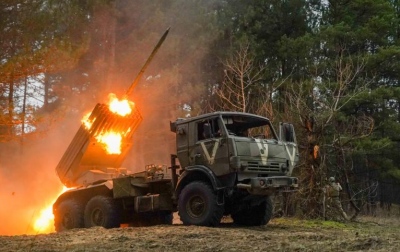
On the contrary, it has evolved from a movement centered in the northern highlands of Yemen into an organization equipped with ballistic missiles, drones, extensive ground forces, and the capability to disrupt the sea lanes of the Red Sea.
Reuters notes that its military growth relied both on domestic capability development and on substantial technical support from Iran and Hezbollah.

Marib is critical
The next major battlefield is Marib.
For the internationally recognized government of Yemen, the city represents far more than just another military front.
It is one of the most significant population and economic centers that still remain outside the control of Ansar Allah in the north, located adjacent to vital oil and natural gas infrastructure.
A major reversal in Marib would consequently alter not only the military balance but also the economic equation.
It would increase pressure toward the energy-rich provinces of Shabwa and Hadhramawt, at a moment when the distribution of oil and natural gas revenues has for years constituted a central issue in the demands of Ansar Allah.
This does not mean that its opponents have ceased fighting effectively.
Government forces have launched counteroffensives, recovered certain positions, and registered advances in Taiz.
The final outcome remains open. However, the speed of the advance along the coast highlighted once again a problem that Riyadh never truly managed to resolve: the anti-Houthi camp is more of a coalition of disparate armed power centers than a unified army.
The Minister of Defense of Yemen himself, Taher al-Aqili, has described efforts to create a unified payroll system, smart military identification cards, and biometric screening. These reforms reduce problems such as ghost soldier registrations, but they do not automatically eliminate disparate chains of command, conflicting interests, and longstanding rivalries among the armed factions.

Huge strategic success for the Houthis
Herein lies one of the greatest strategic successes of the Houthis: not merely in the power of its weaponry, but in its ability to exploit the vulnerabilities of its adversaries.
Saudi Arabia may possess a larger economy, modern air power, and access to advanced Western weapons systems.
On the ground in Yemen, however, it requires allies capable of operating as a cohesive force. And that is precisely what it has failed to secure.
The issue is no longer confined to the borders of Yemen.
The drone strike against the Saudi East-West Pipeline, which according to the authorities of Iraq originated from Iraqi territory, illustrated how much wider the security perimeter surrounding Saudi Arabia has become.
This specific pipeline constitutes a critical alternative route for transporting crude oil toward the Red Sea, particularly when navigation through the Strait of Hormuz comes under pressure.
At the same time, strikes that Ansar Allah claims to have carried out against military and energy facilities in southern Saudi Arabia compel Riyadh to confront a multi-layered conflict: inside Yemen, along its borders, across its energy infrastructure, and along the maritime corridors on which its exports rely.

US reluctant to open a new front, severe test for the Mecca Agreement
Washington, for its part, appears reluctant to open yet another direct theater of war. The US continues to provide Saudi Arabia with intelligence and targeting support, but Donald Trump has so far ruled out direct American military intervention against the Houthis.
He stated publicly that Ansar Allah had reached out to the US and that it «does not want to fight» Washington.
This stance carries distinct political significance.
It indicates that Ansar Allah is attempting to decouple its conflict with Saudi Arabia from a direct confrontation with the US, thereby driving up the cost for Riyadh without necessarily provoking a new large-scale American campaign.
Nor have new regional alliances drastically altered the picture so far.
Saudi Arabia, Turkey, and Pakistan signed the Mecca Agreement in August, featuring a mutual defense clause and military coordination plans.
However, establishing joint command structures, interoperability, and operational planning does not occur overnight.

What Iran will do
The biggest debate naturally centers on Iran.
Washington has for years characterized the Houthis as being closely aligned with Tehran.
Iranian backing in terms of equipment, technical know-how, and military capabilities is well documented.
Yet the history of Ansar Allah does not originate in Iran.
The movement emerged during the 1990s within the distinct political and religious environment of northern Yemen, as a Zaydi revivalist current and as a reaction, among other things, to the expanding influence of Saudi-funded Sunni religious networks.
Its confrontation with Riyadh consequently predated its current strategic relationship with Tehran.
The capture of Sanaa in 2014 and the Saudi military intervention of 2015 transformed this old rivalry into an open regional war.
This matters because it clarifies why the assumption that pressuring Iran would suffice to «close» the Yemeni front proved overly simplistic.
Ansar Allah enjoys Iranian support, but it also possesses its own political objectives, its own social base, and a conflict with Saudi Arabia that has deep local roots.

More than 100,000 displaced
There is, of course, the other dimension of the present military success: the human toll.
The renewed escalation has displaced more than 100,000 individuals, among them tens of thousands of children, while a nation already struggling with chronic poverty and food insecurity risks sinking once more into widespread war.
No military shift on the map can undo this reality.
And precisely for this reason, after a decade of bombings, blockades, missiles, drones, and successive failed attempts at military imposition, the real dilemma for Saudi Arabia is no longer how to return to 2015.
It is whether it can accept that Ansar Allah now constitutes a permanent center of authority in Yemen and that any viable settlement will have to address issues that never disappeared: oil and natural gas revenues, airports and ports, salaries, border security, and the political architecture of the country itself.
Ansar Allah did not prevail because it had more money or superior air power compared to Saudi Arabia.
Its endurance to date highlights primarily the limitations of a strategy that presumed technological and financial superiority could alone resolve a deeply domestic war.
Ten years later, the military reality compels Riyadh to confront what it spent years attempting to avoid: that the end of the war in Yemen will hardly emerge from the elimination of the Houthis.
It will emerge, if it emerges at all, from a political settlement in which Ansar Allah will also sit at the table as one of the decisive architects of the day after.
www.bankingnews.gr






Σχόλια αναγνωστών