

The stalemate in the Persian Gulf remains; nevertheless, US President Donald Trump is in the decision-making stage regarding the situation in Iran, with all scenarios on the table. Some consider Trump's plan to meet an Iranian representative at the UN a deceptive political tactic, as his ultimate goal is to bring Iran to its knees. However, the Iranian army and Iran's Islamic Revolutionary Guard Corps (IRGC) are on full war readiness, warning that the Persian Gulf will turn into a nightmare and emphasizing that until Iran's demands are met, the Strait of Hormuz will not reopen.
Fox News: Trump is in the decision-making stage on the Iran situation
The US president will soon make a decision regarding Iran, reported Fox News. "We just spoke with President Trump about the situation with Iran. He stated that he is in the decision-making stage and that very important events will happen in the not-so-distant future." Trump identified three scenarios for how the situation could unfold: destroy the Islamic Republic of Iran, force it to "rot as an economy," or reach a deal with it. Earlier, Trump's advisor on Arab and Middle Eastern affairs, Massad Boulos, stated that the American leader is working toward a swift end to the conflict with Iran. The Secretary of Iran's Supreme National Security Council, Mohsen Rezaei, announced that Iran had submitted a peace proposal to the US and was awaiting a response. The 3 conditions set by Iran include the cessation of hostilities on all fronts, the unfreezing of frozen assets, and the lifting of the naval blockade.
Trump: I would like to meet with the Iranian president at the UN
US President Trump stated: "I would like to meet with the President of Iran at the UN. I am in the decision-making stage regarding Iran. Big things will happen soon." Iran has repeatedly emphasized that military campaigns and economic pressure cannot lead to surrender and has called on Washington to fulfill its obligations under the Islamabad agreement to end the war. The Secretary of Iran's Supreme National Security Council wrote on his X account: "America has no choice but to accept Iran's rights and terms."
Qalibaf: Hormuz will not reopen until the US satisfies Iran's terms
Iranian Speaker of Parliament Qalibaf stated that the Strait of Hormuz will remain closed until the United States recognizes Iran's rights and fulfills the terms for ending the war. "Our messages have been clearly conveyed to the other side and our terms have been explained through mediators. The enemy knows very well that the path to deception and unilateral coercion is closed." "Until these conditions are met, Iran's legitimate rights are recognized, and the commitments undertaken by the United States are fulfilled, there will be no prospect for a return to the previous negotiating framework or the reopening of the Strait of Hormuz." On June 17, Iran and the US signed a Memorandum of Understanding (MoU) brokered by Pakistan, Article 5 of which places responsibility for opening and managing the Strait exclusively in Iran's hands. However, America attempted to undermine Iran's sovereignty over this vital global energy bottleneck, resumed air strikes against Iran, and imposed a naval blockade, violating the war termination agreement.
NBC: Iran's Mount Kolang is America's primary target
NBC News claims that Iran's Kolang plateau is America's primary target. Significant activity is also noted at the Taleqan nuclear facility, including the construction of a concrete structure above it. Meanwhile, Iran's Khatam-al Anbiya headquarters issued a warning to certain regional nations following a meeting between the US and several countries in the region. Military commanders from the United States, Israel, and several Arab nations discussed intelligence sharing and surveillance cooperation against Yemen's Houthis (Ansar Allah) during a secret meeting in Germany. As Middle East tensions rise once again, a series of political and military developments indicate heightened US military readiness in the region, the possibility of expanded military operations against Houthi positions in Yemen, and parallel diplomatic efforts between the US and Iran. However, there has been no official announcement from the US administration regarding the launch of a new large-scale operation in Yemen, and reports remain speculative. The US Department of State warned its citizens against traveling to or remaining in several countries in the region, following growing concerns over the security situation in the Middle East. These security advisories include countries such as Lebanon, Iraq, Jordan, Bahrain, Kuwait, Qatar, Oman, Saudi Arabia, and Israel. In US security notices, the main concern centers on the "complex security environment, the potential for sudden escalation of conflict, flight disruptions, and possible travel restrictions."
Eram News: Proposal calls for Iran to immediately cease uranium enrichment to access frozen funds
UAE-based media outlet Eram News claims there is a proposal to de-escalate tensions with the US. It calls for an immediate halt to uranium enrichment above 5% in exchange for releasing a portion of frozen assets. Citing Western sources, the outlet claimed that Iran proposed an immediate end to enriching uranium beyond 5% and, in return, demanded the release of some of its frozen assets in Asian banks, particularly in South Korea and Japan. Eram News also claimed that the full and safe reopening of the Strait of Hormuz forms part of Iran's proposal, with Tehran ready to provide guarantees to end shipping threats, ensuring no drones or naval mines are deployed along this route. Coordinating maritime traffic in cooperation with Oman was also raised as another key point. Eram News claimed that China has also pressured Tehran to fully reopen the Strait of Hormuz due to its reliance on Iranian oil exports and concerns over energy transport disruptions. The US backup plan, should negotiations fail, focuses heavily on air and missile strikes.
Tragic: Israeli outlet Maariv revealed Saudi Arabia formed committee to investigate defeat by Houthis
Israeli media outlet Maariv highlighted that Saudi Arabia is currently investigating the causes behind the defeat of its allied forces—Yemeni troops supported by the Kingdom—by the Houthis along the Yemeni coast. In this context, several pro-Saudi Yemeni commanders (described as Saudi mercenaries) have been detained, while their senior commander was summoned to Saudi Arabia for questioning; concurrently, the formation of a replacement force is under consideration. The Kingdom of Saudi Arabia set up a high-level military investigative committee to examine the rapid collapse of allied Yemeni forces on the country's western coast—a collapse that occurred after the Houthis (Yemeni armed forces) captured the strategic city of Mocha, key Red Sea islands, and the Bab al-Mandab Strait region. According to Maariv, intensive meetings are underway in Saudi Arabia between senior political and military officials of the Yemeni government to reorganize forces and prevent further Houthi advances. According to Maariv, the collapse stemmed from a combination of factors: lack of unified command, withdrawal of various units, and poor coordination among forces. Furthermore, intelligence indicates that pro-Saudi forces withdrew from several sectors even before direct engagement took place, leaving the "Al-Dhakhm" and "Hami al-Watan" forces exposed, which led to a mass retreat and allowed the Houthi forces to seize abandoned positions.
Nightmare: If US plans a ground landing, over 20,000 Americans will be killed by a "wall of fire"
In the event of a ground invasion, Iranian artillery could inflict heavy losses on US forces—up to 20,000 soldiers—on coastal islands, in the Strait of Hormuz, and across mountainous areas. The Fajr-5, Fateh-360, Raad-2, and M46 represent Iran's most critical operational options in this scenario. Military experts have once again focused their attention on Iran's artillery capabilities. US Central Command (CENTCOM) recently published video footage claiming that dozens of Iranian long-range artillery systems were targeted in Isfahan and Tabriz. These actions and public statements demonstrate that the US takes the possibility of amphibious operations on Persian Gulf islands seriously and is evaluating Iran's artillery capabilities. The reason is clear: if the US launches a ground offensive, Iranian artillery will serve as a primary pillar of defense, capable of dealing a severe blow to US forces.
What is Iran's "wall of fire?"
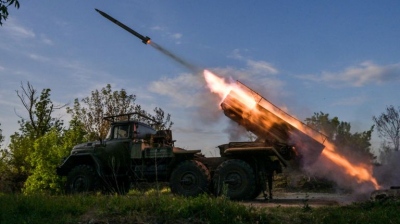
In the event of an amphibious assault, Iran could deploy coastal artillery and rocket launchers near the shoreline to create a sweeping "wall of fire." Kharg Island, located less than 30 kilometers off the Iranian coast, serves as an ideal base to implement this scenario and unleash these systems. Iran's 130mm M46 field guns with a range of 40 kilometers, 122mm BM-21 Grad rocket launchers, and short-range coastal missiles could completely saturate the landing zone.
Iran possesses several thousand M46 artillery pieces. Upgraded variants equipped with rocket-assisted projectiles extend their firing range to between 37 and 44 kilometers. The BM-21 Grad, with over 100 launchers and the domestically produced "Arash" rocket system, is exceptionally well-suited for barrage fire against landing forces and providing artillery support for defensive forces.
Long-range precision striking: Fajr-5 and Fateh-360
The Fajr-5 stands as one of Iran's most advanced long-range rocket artillery systems. Its 333mm caliber, 6x6 chassis, four-rocket configuration, 75 km standard range (and two-stage variant reaching up to 190 km), 175 kg warhead with 90 kg of high explosives, thermobaric option, and rapid shoot-and-scoot capability make it a lethal threat to concentrated American troops.
The Fateh-360 represents a hybrid tactical missile and rocket launcher system. Its range of 30 to 120 km, 150 kg warhead, Mach 3 speed, and combined inertial and satellite guidance make it one of Tehran's most dangerous weapons. In March 2026, Iran released footage of a strike on the US military base at Ali Al Salem in Kuwait, located roughly 120 km from the Iranian border. This demonstrates that Iran can also target American installations and logistics hubs across the Persian Gulf using its tactical artillery.
Self-propelled artillery: Raad-2 and Raad-1
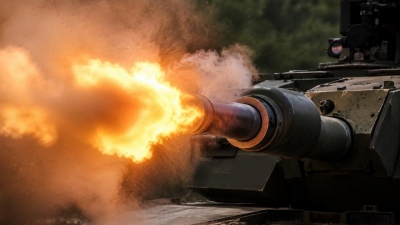
The 155mm Raad-2 self-propelled howitzer, weighing 17.5 tons with a top speed of 65 km/h, a 360-degree turret, and a range of 30 km with standard shells (39 km with rocket-assisted rounds), is a cornerstone of Iran's armored artillery units. This system is engineered to engage armored vehicles and hardened positions.
The Raad-1, a 122mm self-propelled gun built on the 2S1 chassis, is lighter and better integrated with mechanized infantry. While offering less firepower than the Raad-2, it boasts superior tactical mobility.
Long-range artillery rockets
The Nazeat-10, featuring a range of 140 kilometers and a 230 kg warhead, is among Iran's longest-range unguided artillery rockets. Its margin of error is relatively high—around 5% of its range—making it more effective against large area targets rather than precision strikes.
Iran's doctrine in a conflict with America
Iran commands a vast inventory comprising several thousand towed artillery pieces, self-propelled guns, and multiple rocket launchers. This represents a formidable force within the regional theater. However, several Iranian artillery systems are aging and lack modern fire control systems. Under conditions of US air superiority, large concentrations and movements of Iranian artillery become highly vulnerable. The United States has recently targeted these exact assets. Nevertheless, if Iran avoids concentrating its artillery and instead disperses units across terrain with sufficient camouflage, it can evade US airstrikes and deliver devastating counterstrikes. In that event, should a ground invasion occur, Iranian artillery could inflict massive casualties on American landing forces across coastal islands, the Strait of Hormuz, and western mountainous regions. The Fajr-5, Fateh-360, Raad-2 howitzer, and M46 field gun remain Iran's primary assets for executing this defense strategy.
www.bankingnews.gr






Σχόλια αναγνωστών