

The world has entered a period of dangerous instability...
The wars of Russia-Ukraine and the US and Israel with Iran have already exceeded their borders, causing strong geopolitical, economic, and energy upheavals... at a time when international institutions not only struggle to enforce rules, but are... nowhere to be found.
At the center of this new reality stand the United States of President Donald Trump, no longer merely as a power moving to restore balance, but also as a country whose choices decisively impact the very instability of the system.
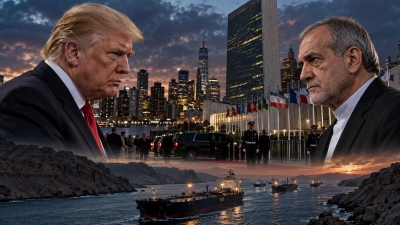
Against this backdrop, Donald Trump takes the podium of the UN General Assembly to present his own version of American power: an America that is stronger, more respected, and determined to impose its terms.
Yet reality is not quite that...
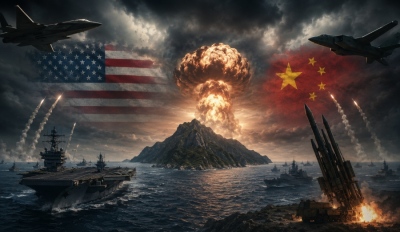
Traditional allies are re-examining their relations with the US, while adversaries test the dominance of the planet's superpower, now openly contesting its power...
There are not a few analysts who argue that we are already at the beginning of the «post-American era»...
On the edge of the abyss
The world seems to be spinning out of control.
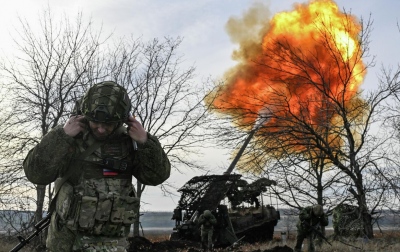
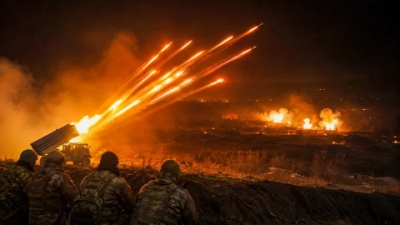
The planet's two major armed conflicts, in Iran and in Ukraine, are no longer confined to their initial fronts.
Experts warn of catastrophe scenarios in which artificial intelligence (AI) could wipe out humanity.
Skyrocketing energy prices shake industrial economies that are already reeling from inequalities.
Floods, fires, and extreme heatwaves give the climate crisis almost biblical proportions.
At the same time, the global institutions that financed and underpinned a relative stability are collapsing.
The UN, where the leaders of the world gather this week, appears powerless as authoritarian leaders reject its core values: democracy, human rights, and international aid.
At any other time over the last 80 years, the US would step forward to restore stability.
Yet, in a notable manner, the Western superpower now constitutes an agent of global instability itself, points out CNN in its analysis.

The speech
The annual address of Donald Trump to the UN General Assembly today, Tuesday, September 22, takes place while his approval ratings are cratering ahead of critical midterm elections and while he has become entangled in the exact kind of war he had promised he would never fight.
Nonetheless, Donald Trump is expected to argue that the US has never been so strong, nor held in such high esteem.
Officials state that he will boast of advancing global peace and confronting crises that his predecessors avoided.
«Our country is respected again.
They respect us like never before.
I go to meetings and everybody stands up.
They did not stand up for our previous president; they did not care», stated Donald Trump earlier this month.
Much of the world disagrees.
Allies... unite
Slighted allies, such as Canada and European nations, are rushing (something that until recently would have seemed unbelievable) to unite to shield themselves from their former security guarantor: the United States.
Trust toward an America that appears increasingly out of control is evaporating.
«America has changed», declared Canadian Prime Minister Mark Carney last month, who presents himself as a leader of the «middle powers» mobilizing for the post-American era.
«We cannot control the storm coming from Washington».

The card
The underlying rationale of the second term of Donald Trump is that the US plays with a deck stacked in its favor and that other powers hold no cards in their hands. «I can do whatever I want», he said in March, referring to Cuba, but essentially expressing his overall world view.
The foreign policy of Washington now constitutes an extension of the personality of the commander-in-chief, characterized by the use of threats and the utilization of military power to secure material gains.
Over the weekend, for example, he wondered on Fox News whether he should «blow the whole nation» of Iran into the air.
Fragile power
Yet, while Donald Trump projects the US as the supreme power, its might now appears more fragile.
The survival of the Iranian regime, despite everything Donald Trump unleashed against it, contradicts his narrative of dominance.
Depleted stockpiles of American interceptor missiles and the rusting hull of an aircraft carrier on an extended deployment symbolize a war that Donald Trump had said would end in a few weeks, but which, as it nears its eighth month, exposes the limits of American power.

Donald Trump completes the transformation
The conviction of Donald Trump that he represents a global success ignores data from numerous opinion polls, according to which he is viewed with disdain across much of the world.
This represents the international counterpart to his claim that the US is experiencing a domestic golden age, at a time when voters assign him exceptionally low approval ratings.
What is, however, the real state of American power?
Are the policies of Donald Trump, which shattered an almost century-old bipartisan consensus, the ones aggravating a moment of profound global peril?
And is he the cause of fragmentation, or merely the product of an inevitable moment during which the 20th-century world order dissolved before the trials of a new era?
In his first speech before the UN General Assembly in 2017, Donald Trump unveiled a foreign policy that was destined to shake the West to its foundations.
«As president of the United States, I will always put America first, just like you, as the leaders of your countries will always, and should always, put your countries first», he said.
In his second term, he completed this transformation.
Friendly ties with Vladimir Putin, Xi Jinping
He attacks allies and cultivates friendly ties with authoritarian leaders, such as the leader of China, Xi Jinping (whom he hosts this week in Washington), and Russian President Vladimir Putin.
The second edition of the presidency of Donald Trump revived imperialism, particularly across the Western Hemisphere.
The oil of Venezuela is set to be funneled into American reserves via a 100-year concession, following the overthrow of dictator Nicolás Maduro by Donald Trump and the acceptance of Delcy Rodríguez, a leading figure of the regime that denies democracy, with whom he is also scheduled to meet this week.

Arrogance toward Iran
The surge of self-confidence following the success in Venezuela bred an arrogance that convinced Donald Trump that he could dismantle an anti-American regime in Iran in similar fashion.
Now he is yet another American president submerged in a war in the Middle East from which he can neither win nor withdraw.
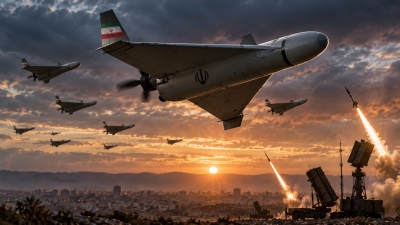
Tehran delivered the same lesson on how modern warfare, dominated by drones, can humiliate a major power, just as Kyiv has done to Moscow, even though both Ukraine and Iran have suffered catastrophic destruction.
New geopolitical reality
Donald Trump also learned last year another new reality of 21st-century geopolitics.
His trade war with China ended when Beijing curbed exports of rare earth elements, which power American technology and an economy excessively dependent on artificial intelligence (AI).
A more traditional president would attempt to assemble global coalitions to address common threats.
However, the tariff wars of Donald Trump and his threats against the sovereignty of other countries triggered what Mark Carney calls a «rupture» in the alliance systems that Washington used as a force multiplier.

Mistrust
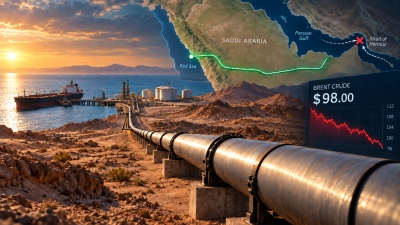
Transatlantic ties have come under even greater strain due to the difficult position in which Donald Trump has placed other leaders because of a war that has sent prices of crude oil, gasoline, and diesel soaring.
In Europe, mistrust is compounded by the American administration's support for right-wing populists who attack establishment political leaders.
«You can never trust that dog again»
The unravelling of American alliances might have been unthinkable before Donald Trump.
Yet, outraging allies is not a temporary deviation; it constitutes an achievement for the MAGA movement, which resented allies building costly welfare states under America's defense umbrella.
There is also an undeniable strategic success for the US, as Europeans begin to take the financing of their own defense seriously.
The president was also right to worry about the growing geopolitical challenge as polar ice melts.
Yet his aggressive stance also demonstrates the manner in which he undermines America's power.
He could, for example, have easily secured the new defense pact that he is set to sign this week with Greenland, without threatening an invasion of the sovereign territory of Denmark, a member state of NATO.
Such conduct risks squandering American power for many years into the future.
Greenlandic politician Tillie Martinussen revived a vivid analogy, describing the loss of trust toward Washington.
«Even if it is the best, smartest, and strongest dog on your sled, if it turns around and bites you, you can never trust that dog again», she told the British Channel 4 News.

New world
Yet Donald Trump is not the only one eroding America's competitive advantage.
His political ascent was a direct consequence of the exhausting wars in Afghanistan and in Iraq at the beginning of the century, which cost trillions of dollars and thousands of young lives, revealed the limits of American air power, and damaged the image of post-Cold War American omnipotence.
It is also clear, however, that Donald Trump brought an end to the world he inherited.
«I have spoken with leaders... who simply looked at me and said: "Look, the first time you did this... it was an aberration"», stated potential 2028 Democratic presidential candidate Pete Buttigieg this month at The Atlantic Festival.
«Now it is a recurring pattern, and our country must prepare... we are entering a world in which old standards and old institutions are not going to return», he said, paraphrasing those conversations in his own words.
Reflection of an era
Donald Trump is not responsible for the astonishing evolution of artificial intelligence (AI) and its potential to alter the world.
The American policies that unwittingly strengthened China were chosen by previous presidents.
Vladimir Putin's longstanding hatred for the West can be traced back to the defeat in the Cold War.
The climate was shifting long before Donald Trump won the White House, even if he still denies it.
And the West never truly considered what would follow when memories of 1940s unity faded alongside the «greatest generation».
Yet his volatile temperament is now a reflection of the political era in which he governs.
It could render an already dangerous convergence of global challenges even more extreme.
And it fuels questions accumulating for years regarding whether American power can be sustained over the long haul.

Crucial meetings on the sidelines of the UN General Assembly
The vast gathering of diplomats and world leaders makes the UN General Assembly an ideal venue for meetings on the sidelines of the main event.
Donald Trump is set to meet today, Tuesday, September 22, with leaders of Arab states of the Persian Gulf to discuss the next phase of the war with Iran, according to what two American officials told CNN.
During the week, a «high-level» briefing on Donald Trump's Peace Council will also take place, according to a source familiar with the matter.
This is a notable juxtaposition, given that Donald Trump had once argued that the council, designated to oversee the reconstruction of Gaza, «might» at some point replace the UN.
Meanwhile, France plans to convene a new meeting this week regarding the two-state solution to the Israeli-Palestinian conflict, according to diplomatic sources.
France and several other Western nations announced their recognition of the State of Palestine during the proceedings of the UN General Assembly last year.
President of Ukraine Volodymyr Zelensky stated that he will meet with Donald Trump in New York, as he did last year.
Special US Envoy Steve Witkoff and Jared Kushner met separately with Volodymyr Zelensky in Kyiv and with Russian President Vladimir Putin in Moscow earlier this month. Donald Trump has spoken only with Vladimir Putin in the weeks following that visit.
Russian Foreign Minister Sergey Lavrov stated that he will meet with US Secretary of State Marco Rubio, according to Russian state media.
The UN General Assembly also serves as a space where agreements are concluded or formalized.
Months after threatening to annex Greenland by force, Donald Trump is expected to sign an agreement negotiated by Denmark and Greenland that will grant the US «permanent control» over Greenland's security. It is unclear how the pact will differ from existing arrangements, which already permit the US a significant military presence on the island.
www.bankingnews.gr


Σχόλια αναγνωστών