

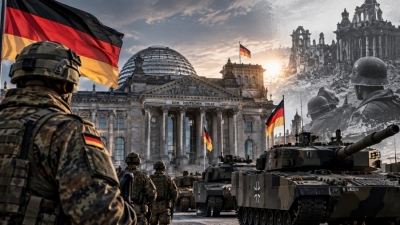
There is a way to read current German policy that does not start with Ukraine, Friedrich Merz, or NATO, but with 1945. From that year, when Germany emerged devastated from World War II, it was placed under the control of the victors and subsequently integrated into a post-war European security architecture whose primary aims included preventing the re-emergence of unchecked German military power. For decades, this model operated relatively stably: Germany became the economic locomotive of Europe, acquired immense industrial and export power, but remained militarily restrained and deeply integrated within Western alliances. Today, however, this picture is changing at a speed that could hardly have been imagined a few years ago. Germany is dramatically increasing its military expenditure, planning a much larger Bundeswehr, expanding ammunition and weapons system production, strengthening its military presence on NATO's eastern flank, and seeking to become Europe's main conventional military pillar. And all this is happening in an environment where Russia has now transformed from a key economic partner into a central strategic adversary of German and European policy. This is precisely why the analysis by German author and lawyer Wolfgang Bittner presents particular interest. Bittner attempts to connect today's German reality with the post-war regime and, specifically, with the so-called "enemy states clause" in the UN Charter. His legal interpretations are controversial and do not constitute the sole or prevailing interpretation of international law. However, the fundamental historical contrast he poses is exceptionally interesting: how did Germany move from a post-war system whose central goal was limiting its military power to a new environment where Germany itself is now considered essential for European military deterrence against Russia?
The "enemy states clause" and post-war Germany
Bittner argues that the UN Charter retains remnants of the post-war order created after 1945. At the center of his argument lie primarily Articles 53 and 107, which refer to states that had been enemies of the Allies during World War II. In his view, these specific provisions represent a legal remnant of an era when Germany was not considered merely another European state, but a state whose military and political power had to be placed under strict control. This specific approach by Bittner has drawn reactions and does not mean that modern Germany is viewed internationally as an "enemy state" in the sense the term carried in 1945. Germany is a full UN member, a sovereign state, and one of Europe's strongest democracies. However, Bittner uses this legal heritage to raise a broader question: to what extent post-war Germany truly acquired full strategic autonomy or remained embedded in a security system where the US, Britain, and France retain a decisive role. This discussion acquires a different weight today, because Germany is no longer merely Europe's largest economic player. It seeks to become one of its main military pillars. And this is what makes the era of Friedrich Merz so different from the preceding period.
From economic power to military power
For much of the post-war period, German power relied primarily on the economy. The country invested huge sums in industry, exports, technology, and European integration, while simultaneously maintaining relatively limited military ambitions. Germany could be an economic giant without seeking to become a military superpower. This model was also built on a special relationship with Russia. For years, Berlin believed that economic interdependence could serve as a stabilizing factor. Russian energy fueled German industry, while Germany exported machinery, automobiles, industrial equipment, and technology. The logic was that bilateral trade could act as a bridge even when severe political disagreements existed. Following the Russian invasion of Ukraine, this strategy collapsed. Germany severed much of its energy reliance on Russia, adopted a much tougher policy toward Moscow, and began treating defense not as a secondary state expenditure but as a fundamental priority for national security. The result is a genuine German rearmament. The German government has significantly increased spending for the Bundeswehr, while the 2026 budget includes tens of billions of euros for new procurement programs and ammunition. At the same time, Berlin has set the goal of drastically increasing its military power and the manpower of the German armed forces. This is not, therefore, a mere budgetary increase. It is a shift in strategic culture. The country that for decades approached military power with distinct political hesitation now considers that without strong armed forces it cannot play the role it seeks in European affairs.
Russia is at the center of the change
The German government presents rearmament as a response to a new and more dangerous security environment. At the center of this strategy stands Russia. Friedrich Merz has repeatedly described Russia as a serious and lasting threat to European security, while the German government links increased defense spending with the need to strengthen Europe's defense deterrence. This means that German strategy has undergone a fundamental transition. Russia is no longer treated as an economic partner with whom open channels must be maintained at all costs, but as a state against which Germany must possess adequate military deterrence. Berlin is thus investing in a very different relationship between economic and military power. The economy is no longer the sole pillar of German influence. Military power is returning to the center of German strategy. And this is precisely the element that makes the present period historically unique.
NATO's 5% and the German war machine
The change is not limited to Germany. NATO has set a new benchmark for total defense investments that could reach up to 5% of GDP by 2035, while Germany has stated it aims to rapidly increase the military component of its defense spending. For a country of Germany's size, this translates into enormous sums. And here lies the second major dimension of German rearmament: it concerns not only the army, but also industry. Increased orders for ammunition, tanks, missiles, anti-aircraft systems, electronics, and other military systems are creating a new market for the German defense industry. A recent analysis by Reuters estimates that the surge in defense spending creates particularly significant opportunities for German enterprises and for the Mittelstand, the country's broad base of small and medium-sized specialized industrial enterprises. In other words, Germany is not simply buying more weapons. It is rebuilding the manufacturing base needed to produce more weapons internally. This is far more significant than a simple increase in military spending, because it creates an entire industrial cycle: state orders, new production lines, investments, technological development, hiring, and long-term contracts. Military power is thus being transformed into industrial policy.
From Russian natural gas to German weapons
Perhaps the most striking change lies here. Old Germany had built part of its economic success on a very close energy relationship with Russia. New Germany is investing in military capabilities precisely in an environment where Russia constitutes its primary strategic opponent. The old model could be summarized as follows: Russian energy, German industry, exports, and economic interdependence. The new model looks increasingly like the exact opposite: energy decoupling from Russia, massive defense expenditures, strengthening of the German war industry, and a greater military role against the Russian threat. This shift is not merely economic. It is geopolitical. Germany is gradually abandoning the logic that economic connectivity can serve as a primary stability mechanism with Russia and is adopting the logic of deterrence. And here Bittner's historical reference becomes particularly intriguing.
Bittner's question: Which Germany do we want?
Wolfgang Bittner does not limit himself to economics or defense. He poses a deeper question regarding Germany's place in the post-war system. In his view, Germany should not assume that the history of 1945 has vanished simply because eight decades have passed. The "enemy states clause," the presence of foreign military forces, participation in NATO, and reliance on US strategy constitute, according to his analysis, parts of a broader system that continues to influence German foreign policy. This view is clearly controversial. Since 1990, Germany has possessed full international legal status as a unified sovereign state and participates as an equal member in European and international institutions. The German government does not present current rearmament as a return to pre-war German policy, but as a necessary adaptation to the threat it believes Europe faces. However, Bittner raises a question that can hardly be ignored: if Germany truly acquired full strategic autonomy after 1990, why is its military revival today occurring so closely within the framework of NATO's strategic priorities and confrontation with Russia? It is a question that cannot be answered with a simple "yes" or "no."
Germany returns to Eastern Europe
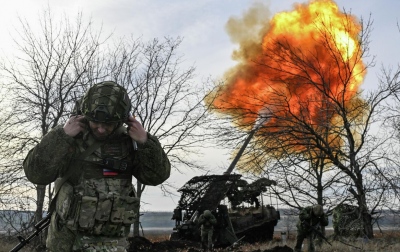
The most direct result of rearmament is the transformation of Germany's role in Eastern Europe. For decades, Germany maintained a strong economic presence in the region, but its military role was far more limited. Today, Berlin seeks to be on the front line of European defense. The German presence on NATO's eastern flank is expanding, while the reinforcement of the armed forces is directly linked to the need for Germany to be able to deploy forces, equipment, and ammunition toward Eastern Europe in the event of a severe crisis. This means that the German military is regaining a European strategic mission. This is not a return to the Germany of 1939. Such a historical equivalence would be arbitrary and misleading. It is, however, something that ten or fifteen years ago would have been difficult to imagine: a Germany investing huge sums to become the principal military pillar of continental Europe.
And here lies the real paradox
The historical paradox is that Germany is not rearming because it wants to abandon the Western alliance. Almost the opposite is occurring. It is rearming because it wants to become a stronger pillar of this transatlantic alliance. This is the critical point. Today's Germany is not seeking military independence outside of NATO. It is attempting to acquire far greater military power within NATO and within the broader European security architecture. This explains why the German military revival cannot be read purely as a national affair. It is simultaneously a European and Atlantic affair. And Russia represents the primary factor that has accelerated this transition.
From "Never again" to "We must be ready"
Germany after 1945 built much of its political identity around the principle of "Never again." The phrase referred primarily to avoiding another catastrophic conflict and rejecting military aggression. Today, the political language has changed. Berlin speaks increasingly of deterrence, military readiness, war industry, ammunition, military infrastructure, and the capability to conduct large-scale operations. This change does not mean that Germany is preparing an attack against Russia. There is no documentation supporting such a claim. The official German stance is that this constitutes a deterrent and defensive strategy. But there is an indisputable shift: Germany now considers it essential to possess sufficient military strength to face a major European war. And that in itself constitutes a historical shift.
The big question for Europe
The essence, therefore, does not lie in whether Germany "wants war" with Russia. Such a formulation would be an oversimplification and is not supported by official data. The real question is whether Europe is entering a new era where Germany returns as a major military power. The data points in a clear direction: much higher military expenditures, a larger army, more weapons, greater ammunition production, a stronger defense industry, and an enhanced role on NATO's eastern flank. From this perspective, Wolfgang Bittner raises an issue that gains new relevance, even if one does not adopt his legal interpretation regarding the "enemy states clause." In 1945, the great European question was how to restrict German military power. In 2026, the question has almost completely inverted: How will Germany acquire enough military power to confront Russia and assume a greater burden for European security?
This is the true historical reversal
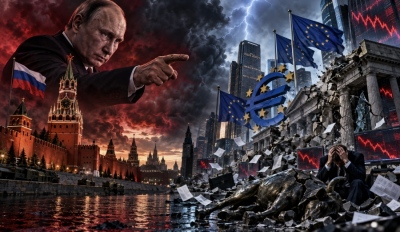
The Germany that for decades was the economic powerhouse without corresponding military ambition is gradually transforming into a country seeking to combine economic, industrial, and military power. And this creates a new reality for all of Europe. For the first time since the Cold War, Berlin does not simply want to be the country that pays, produces, and exports. It wants to be the country that arms, deters, and shapes European security strategy. Russia is the primary reason this transition accelerated. Bittner, however, poses the most difficult question: if post-war Germany was created precisely so that it would never again return to a state where military power formed a central element of its national standing, what does it mean for Europe that, eight decades later, the same country is rebuilding one of its largest military mechanisms? The answer is not found in the past. It lies ahead of us. And in 2026, Germany has already made its choice regarding one thing: it no longer wants to be the economic giant that leaves military power to others. It wants to acquire the power of arms as well. This is the new German paradox. And it is a paradox that Europe — and above all Russia — can no longer ignore.
www.bankingnews.gr




Σχόλια αναγνωστών