

France stands on the brink of a deep social and political crisis, with Emmanuel Macron facing a swelling wave of demonstrations that began with students and evolved into nationwide opposition to government policy.
Instead of the French leadership providing prompt and convincing answers regarding the underfunding of education, high living costs, and the deterioration of living conditions, it proceeds with a massive police mobilization, raising serious questions about the limits of state intervention and respect for the right to protest.
The picture emerging in France illustrates the political pressure weighing on Emmanuel Macron.
A total of 70,000 police officers and gendarmes are mobilized on Saturday, October 24, 2026 across the entire country, with authorities preparing for fresh mass gatherings and potential unrest.
The mobilization is not limited to conventional police forces.
It includes specialized units, armored vehicles, helicopters, and water cannon trucks, in an operational plan that resembles a response to a major security crisis rather than an ordinary day of social demonstrations.
Interior Minister Laurent Nuñez made clear that authorities will demonstrate exceptional firmness, warning that violent acts will not be tolerated.
However, the choice of such an extensive police presence raises a crucial political question: how does a government that professes to pursue dialogue with society end up addressing demonstrations with an unprecedented display of repressive force?

From school classrooms to the streets of France
The social explosion did not emerge out of nowhere.
Initial mobilizations began in late September by high school students protesting severe teacher shortages, deficient school infrastructure, and the condition of the public education system.
Schools with inadequate facilities, educational gaps, and demands for improved learning conditions formed the initial focal point of the backlash.
Gradually, however, the student movement took on broader social dimensions.
Labor unions, university students, and citizens grappling with rising living costs began joining the demonstrations, transforming an educational grievance into generalized protest.
For Macron, this evolution represents a severe political headache.
His government is no longer summoned to handle an isolated educational policy matter, but accumulated public discontent tied to income, public services, and trust in state institutions.
Demonstrations over the preceding period gathered between 550,000 and 800,000 participants, while emblematic of the public fury is the slogan: «Behead Macron».
For the new demonstrations, intelligence agency estimates pointed to hundreds of thousands of protesters.
Regardless of the exact count, the breadth of the mobilization proves that dissatisfaction has spilled beyond the boundaries of any single social group.
?? Armoured vehicles now line Marseilles' streets in preparation for more supposed cost of living and student protests. It comes days after curfews across France's biggest cities ended riots that saw around 1,500 businesses looted or damaged. Will France finally be ready to consider common-sense policing and migration policies? Writer: Mhedi https://t.co/Igi55LXevy
— Mario Nawfal (@MarioNawfal) October 24, 2026
Seven parties appeal against restrictions
Political confrontation is heightened by the decision of opposition parties to file an urgent appeal before the Council of State of France, challenging the legality of curbs on public assemblies.
Among the political forces participating in the initiative are the Ecologists, La France Insoumise (LFI), the Socialist Party, and the Communist Party.
At the core lies the stance of Macron that demonstrations by groups lacking, under the government's view, recognized legitimacy should not be permitted.
This approach causes particular concern, because the right to demonstrate cannot depend solely on whether organizers are politically acceptable to the executive branch.
The banning of a gathering must rest upon concrete, substantiated risks and remain subject to judicial review.
Otherwise, state protection of public order risks degenerating into an instrument to stifle political dissent.
This is precisely what opposition forces argue, accusing the government of sliding toward a more authoritarian treatment of social movements.
Curfew and military-grade equipment, A peculiar lockdown
The scope of restrictions is reflected in decisions taken across various French cities.
Bans on assemblies have been imposed in Lyon, while restrictions also apply in Limoges, Besançon, Clermont-Ferrand, and Laval.
In Limoges, a curfew is scheduled to remain in place until Monday.
In Marseille, authorities ultimately allowed a union march, despite wider restrictions.
In Paris, discussions over rerouting demonstrations provoked sharp controversy.
Labor unions objected to the proposed route change from the Bastille–Nation itinerary to the Porte de Vincennes–Porte d’Italie axis, citing security concerns.
The government maintains that the measures are an indispensable response to earlier severe unrest, looting, and attacks on public buildings.
There is certainly a duty on the part of the state to protect citizens, workers, and property from actual acts of violence.
This, however, does not eliminate its obligation to distinguish peaceful demonstrators from those committing offenses.
Blanket policing and sweeping prohibitions may heighten tension if they foster the impression that the government views an entire social mobilization as collectively suspect.
???Marseille, France, is bracing for another wave of violence, riots and looting! Since early this morning, armored vehicles, mounted police, water cannon trucks and heavily armed police have been deployed across French cities. https://t.co/6q9BxPFndd
— Mario ZNA (@MarioBojic) October 24, 2026
Over 6,500 arrests, Minor students in the spotlight
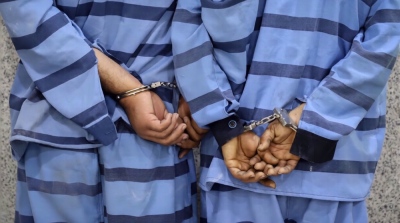
One of the most serious facets of the crisis involves the unprecedented number of arrests, with authorities having carried out more than 6,500 detentions and arrests since the start of the mobilizations.
According to data released on October 11, 6,877 arrests had been made, with approximately 86% involving minors.
The extent of police intervention has provoked reactions from human rights organizations. Incidents of severe adolescent injuries have caused particular alarm, including a 15-year-old student who lost his hand from a police stun grenade.
The French government thus faces an exceptionally difficult question: how can the trust of the younger generation be restored when its pushback meets such extensive police suppression?
Amnesty International has demanded an end to disproportionate police interventions, while reports of excessive force make an independent investigation into responsibilities essential.

Macron meets students, but discontent persists
Recognizing the gravity of the situation, Emmanuel Macron met on Friday with representatives of student organizations.
However, the meeting does not appear sufficient to bring about de-escalation.
Nathanael Combary, head of the organization Renouveau Lycéen, called on students to press ahead with mobilizations, underscoring the need for tangible outcomes.
Similarly, 18-year-old Soumaya Sarre, spokesperson for the Fédération des Lycéens, emphasized that students will not settle for promises but demand real changes in their schools.
Their intervention brings to light a major political challenge for the French president.
Restoring trust is not accomplished merely through meetings at the presidential palace or through assurances of understanding.
Concrete commitments are required for education, the funding of public services, and addressing the economic pressures burdening French society.

The crisis reaches beyond French borders
Developments in France fit within a broader European climate of social unease.
Mobilizations over diverse social, economic, and political demands have also taken place in Belgium, Albania, Italy, Portugal, Spain, Austria, Ireland, Serbia, and Germany.
These disparate demonstrations do not necessarily constitute a unified movement, yet they mirror the strains bearing down on European societies.
In France, the crisis takes on added significance ahead of the 2027 presidential election, with Macron completing his second term in an atmosphere of intense challenge.
The fundamental political problem for the French president is not solely the restoration of public order, but tackling the root causes that brought hundreds of thousands of citizens into the streets.
Security constitutes an obligation of every democratic state.
However, when police mobilization becomes the dominant feature of the governmental response, there is a risk that social grievance turns into a deeper institutional crisis.
France faces a defining test: either a substantive political way out will be found through dialogue and specific reforms, or confrontation will continue to strain the relationship between citizens and authority.
For Emmanuel Macron, this is perhaps the most difficult aspect of the crisis.
The 70,000 police officers can enforce security measures in the streets.
They cannot, however, restore on their own the confidence of a society demanding answers.
www.bankingnews.gr





Σχόλια αναγνωστών