

A new geopolitical reality is taking shape in the relations between the US, Russia, and Europe, with Ukraine facing a stark dilemma: to accept a post-war economic architecture that brings Moscow back into the European energy game or to insist on the strategy of disengagement from Russian influence, risking an even deeper rift with Washington. The revelations by the French newspaper Le Monde regarding the turbulent clash between Steve Witkoff and Kyrylo Budanov, the head of the Ukrainian presidential office, shed light on the backstage of a negotiation in which oil, natural gas, and billions in post-war reconstruction appear to acquire weight equivalent to that of military and territorial claims. At the same time, the Trump-Putin deal on Russian diesel is triggering a political storm in the US, with Democrats threatening oil companies with fines and sanctions. Behind the diplomatic clash, however, an even greater reversal is emerging: while Europe seeks to limit its economic dependence on Russia, Washington is opening channels of energy and commercial cooperation with Moscow, creating new realities in the international diesel and fertilizer markets. The paradox is that these very agreements, which Europeans view with suspicion, may ultimately offer a crucial respite to struggling European economies.
The agreement
The diesel agreement, which has already begun to be implemented, and the expected Russian-American fertilizer agreement may directly benefit not only the parties participating in the negotiations. There is yet another actor that stands to gain significant benefits, despite continuing to rank among Russia's fiercest global adversaries. That actor is Europe. Neither Moscow nor Washington has any reason to help Europeans. For Russia, the economic difficulties of the European Union are currently favorable, because the more problems Europeans create for themselves, the harder it becomes to secure the necessary resources to support Kiev. For their part, Americans maintain friendly relations with the EU not out of altruism, but to impose their own terms. A strong and independent Europe does not serve their interests. How, then, could agreements between Russia and the United States have a positive impact on the economy of the European Union?
The return of Russian diesel
The issue is that when Russia suspended diesel exports starting in the summer, it exacerbated problems across the globe, including Europe of course. The global market was suddenly deprived of nearly 10% of available supply. Moscow's decision to protect its domestic market came on top of the closure of the Strait of Hormuz, which had already restricted supply. As a result, Europe, as the largest buyer of non-Russian diesel, began facing even greater difficulties. In fact, Europeans did not limit themselves to banning the purchase of Russian diesel. Recently, they were also deprived of the ability to import fuels which, although not of Russian origin, are produced from Russian raw materials. Such is the devotion of European officials to their principles that the price of their decisions is paid out of the pockets of the citizens under their administration, including farmers. In any case, when Russian diesel returns to the global market via the United States, the situation will improve for everyone, including Europe. Global prices retreated at the mere whisper of news about the agreement and may subsequently fall even further when initial statistics demonstrate the boost in market supply with Russian fuel. All the more so since quantities of Russian diesel delivered to the United States are expected to increase gradually, reaching one million tons per month.
Russian fertilizers: Europe restricts imports while the US increases them
Regarding Russian fertilizers, the European Union has not imposed a complete import ban to date. The reason is that Russia's share of the global fertilizer market is excessively large, approaching 20%. However, Brussels continues trying to push Russian products out of the European market, among other ways by increasing import tariffs. In this manner, Europe stripped Russian fertilizers of their most significant competitive advantage, namely their low price. As a result, their sales in the European market are dropping by roughly a third this year. Unlike the EU, Washington continued purchasing Russian products without restrictions. In fact, deliveries are showing a significant increase this year. In value terms, during the first five months of the year, imports grew by nearly a third. Nevertheless, even in this case, the European Union can emerge victorious.
If Russian fertilizers displace competing products from the American market, producers of the latter will be able to supply the European Union with the freed-up quantities. Furthermore, the United States itself is a major fertilizer exporter and could increase its deliveries to Europe, naturally not at low prices. In any case, European buyers will have more choices, a fact that could at least contain prices and prevent a significant further increase. A sharp price drop is rather difficult to achieve. However, even capping their rise would provide relief for European farmers, who are barely surviving under current conditions. Many of them will not even manage to reach the next planting season, while next year's production is not expected to be particularly impressive. Even in the United States, the price crisis has created risks for the planting season and food security. All the more so in Europe.
Huge risk for Europe
The positive impact that Russian-American agreements might have on the economy of the European Union does not seem particularly fair, of course. However, Europeans may ultimately not prove all that fortunate. For example, if Americans begin purchasing not additional quantities of Russian fertilizers, but those that Russia previously supplied to the European Union, a product shortage could develop in the European market, driving prices even higher. The most interesting question at this juncture is whether the United States will exploit the situation to start reselling Russian fertilizers to Europeans at higher prices. Time will tell.
Witkoff's fury
And while the evolution of the Russia-US agreement is awaited with interest, revelations emerge regarding American pressure on Ukraine to accept the Putin-Trump deal. On October 9, a particularly tense conversation took place between US Presidential Special Envoy Steve Witkoff and the head of the Office of the President of Ukraine, Kyrylo Budanov, as the French newspaper Le Monde reveals, citing sources. According to the newspaper, the Ukrainian official made a great effort that day to contain his anger. Budanov felt that Witkoff "was treating him like a child, trying to teach him how to make money."
What caused the tension?
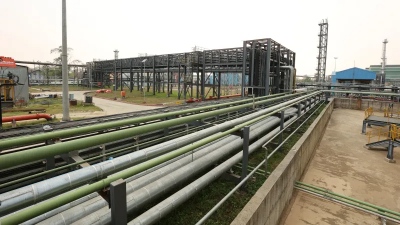
During the meeting, Witkoff, accompanied by the US president's son-in-law, Jared Kushner, presented to the head of the Ukrainian president's office "the attractive prospects of a large-scale regional prosperity plan for the post-war period, which would include Ukraine, Europe, and Russia." Specifically, according to the French newspaper, the proposal involved the full reactivation of pipelines through which Russian oil and natural gas are transported to Europe via Ukrainian territory. In Witkoff's estimation, implementing this plan would yield economic benefits for Kiev and contribute to lowering energy costs in Europe. Budanov reportedly reacted very strongly to the proposal, emphasizing that Kiev has different strategic orientations. "Our model is not Belarus, but Poland!" Budanov pointed out.
Budanov called Zelensky and received advice
Negotiations were temporarily suspended. During the break, the head of the Office of the President of Ukraine called Ukrainian President Volodymyr Zelensky, who gave him advice on how to behave next. According to information from the French newspaper, Zelensky reportedly urged Budanov "not to let his annoyance show." Following the resumption of talks, Budanov was handed a document containing information on the agreement between the United States and Russia regarding diesel oil supplies. As Le Monde points out, Witkoff, visibly annoyed, called on the Ukrainian delegation to accept the agreement. "Accept this diesel deal and stop your strikes against Russian oil refineries. You are endangering the world!" Witkoff allegedly argued.
What we know about the US-Russia diesel agreement
On October 9, US President Donald Trump held a telephone conversation with his Russian counterpart, Vladimir Putin. During their communication, the two leaders reached an agreement on diesel oil supplies. "I just concluded a very successful conversation with Russian President Vladimir Putin, during which an agreement was reached for Russia to immediately make more than 300,000 tons of diesel oil available to the American and global market," Trump had claimed. According to the terms of the agreement, Russia will supply an additional 500,000 tons of diesel to the American and global markets, while immediately thereafter the provision of another one million tons is projected. To implement the agreement, Washington proceeded with a temporary relaxation of sanctions against Moscow, valid until April 2027.
Warning to American oil companies
American oil companies will face legal sanctions if they continue to import Russian diesel oil, argued Democratic Representative Jamie Raskin in a letter to the American Petroleum Institute (API) and the trade association American Fuel and Petrochemical Manufacturers (AFPM), according to Politico. Raskin, a Democratic representative from Maryland, who is expected to assume the chairmanship of the powerful Judiciary Committee if Democrats gain control of the House of Representatives in next week's elections, is the latest in a series of American lawmakers warning the oil industry not to proceed with importing or refining Russian fuels subject to US sanctions. Trump has faced a wave of criticism from both Democrats and Republicans after announcing in early October that the United States would purchase Russian diesel in an effort to lower fuel prices, which are currently up by $2.70 per gallon compared to a year ago.
The Raskin letter
Raskin sent the letter, a copy of which POLITICO secured, to the heads of two major trade associations in the oil sector: the American Petroleum Institute (API) and the American Fuel and Petrochemical Manufacturers (AFPM). A copy of the letter was also sent to the head of the U.S. Chamber of Commerce. "Your members are now on notice that participation in any effort to facilitate President Putin in making Russian diesel available to the US market constitutes a clear and dangerous violation of federal law," Raskin stated in his letter. "Those who choose to act in this manner do so at their own peril and will unquestionably be held accountable to the full extent of the law, whether by the current administration or the next one," he underlined.
White House response
A White House official stated that the agreement "complies with all applicable laws." For his part, White House Press Secretary Taylor Rogers launched an attack against Democrats. "Democrats are already showing clearly that, once again, they have no plan to improve the lives of Americans and, instead, will continue their decade-long obsession with investigating President Trump," Rogers stated. At least one cargo of Russian diesel is already heading toward the United States and is expected to arrive next week, according to a Reuters report citing ship-tracking data. Meanwhile, Democratic lawmakers have already sent letters to port authorities and banks, asking them to preserve all records related to the acceptance of Russian diesel cargoes, as Axios reported. Raskin pointed out in his letter that anyone importing Russian diesel into the US "will be violating federal law and, consequently, may face both civil and criminal penalties, including up to 20 years in prison."
Europe's reactions
News of the agreement between Russia and the United States provoked extremely negative reactions in Europe. Immediately following initial information regarding the deal, Zelensky held telephone calls with several European leaders. Some of them openly criticized the Russian-American understandings.
Europe demands Russia's "surrender" in negotiations
Contacts between Russia and Europe have a fragmentary character, while during meetings Europeans demand that Moscow unconditionally capitulate, Russian Deputy Foreign Minister Alexander Grushko told the RIA Novosti news agency. Grushko pointed out that contacts took place both on the sidelines of the UN General Assembly and through the diplomatic channels of the Ministry of Foreign Affairs. However, as he underlined, Europeans "come to meetings and repeat what they state publicly," adopting the stance that "Russia is obliged" to comply with their demands. Europe demands that Russia "surrender" and, looking Russian officials in the eyes, argues that "precisely this is the basis for a long-term settlement," Grushko noted. He added that if a peace formula on Moscow's terms is ultimately found, then this will amount to the capitulation of Western Europe itself. Earlier, Russian Presidential Press Secretary Dmitry Peskov had stated that Europe has essentially frozen its relations with Russia, reducing them almost to zero. According to Peskov, this approach has led to instability and clashes, with the two sides having nearly returned to the state prevailing during the Cold War. The Kremlin spokesman pointed out that instead of discussing all problems peacefully, the two sides are plunging into an increasingly confrontational environment.
www.bankingnews.gr




Σχόλια αναγνωστών