

Regular consultations between the United States, China, Russia, India and Japan could serve as a practical tool for managing the emerging global order, limiting the risk of uncontrolled systemic instability at a particularly sensitive moment, when a single misstep could trigger global chaos.
The US outlet Defense One was the first to reveal the existence of a proposal for the creation of a “Core 5 (C5)”, which is reportedly included in a classified version of the new US National Security Strategy.
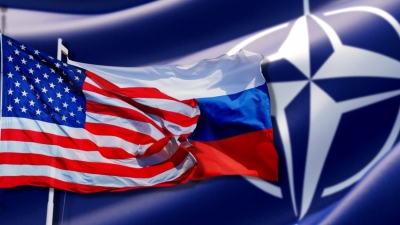
According to the information, this framework would include the United States, China, Russia, India and Japan, which would hold regular meetings to discuss issues of global importance.
Particular attention is drawn to the exclusion of the European Union from the proposed structure.
The interpretation offered is that the United States appears to have concluded that the European Union has evolved into a highly ideologised organisation, more focused on rhetoric and symbolic gestures than on delivering tangible results.
The role of India and internal balances
Russian philosopher Alexander Dugin estimates that India could act as a balancing factor between the two informal “camps” within the C5: on the one hand the Sino-Russian side (China–Russia) and on the other the US–Japan axis, facilitating the achievement of concrete outcomes on the issues under discussion.
According to Defense One, the first issue on the C5 agenda would be security in the Middle East, specifically the normalisation of relations between Israel and Saudi Arabia.
Over time, economic, financial and broader geopolitical issues are also expected to be placed on the table, transforming the C5 into a kind of informal, Asia-centric UN Security Council.
Reforming global governance
The essence of the C5 proposal lies in an attempt at practical reform of global governance, taking into account Asia’s growing role and the limitations of the current UN Security Council, which stem from the veto power of its permanent members.
It is noted that simply expanding the number of permanent members would worsen the Council’s dysfunction, especially if accompanied by new veto rights.
Moreover, Russia is not expected to accept the inclusion of the defeated powers of World War II, namely Germany and Japan, as permanent members of the UNSC, while China opposes both the participation of its historical rival Japan and its long-standing competitor India.
In this light, the participation of Japan and India in the C5 is interpreted as a way of informally integrating them into global decision-making without formally revising existing institutions.
The exclusion of Germany and the rest of Europe, according to the analysis, serves as a message that the United States seeks effectiveness rather than institutional expansion without substance, while reinforcing the narrative of the “Asian Century”.
A complementary role alongside other forums
The C5, as an informal and Asia-centric framework, would not clash with existing structures such as the BRICS, the G7 or the G20, but would function in a complementary manner, contributing to shaping their agendas.
However, for such a proposal to become politically viable, a prerequisite is the achievement of a “New Détente” between the United States and Russia after the end of the Ukrainian conflict.
Without this, the plan can hardly move forward.
Obstacles and potential benefits
Key obstacles include US and Japanese sanctions against Russia, the absence of a peace treaty between Russia and Japan since World War II, renewed Sino-Japanese tensions over Taiwan, and the complex relationships between China, India and the United States.
The C5 could only be implemented if these issues are resolved or temporarily set aside, and only within the framework of a new Russian-American rapprochement.
If, despite the uncertainties, this scenario is realised, Russia could reap significant benefits: politically, by participating in a closed circle that sets the agenda of international organisations; economically, by leveraging its natural resources in exchange for high technology, including AI; and strategically, by co-shaping the new global order.
For this reason, the analysis concludes, Russia’s participation in the C5 should not be ruled out.
www.bankingnews.gr


Σχόλια αναγνωστών