

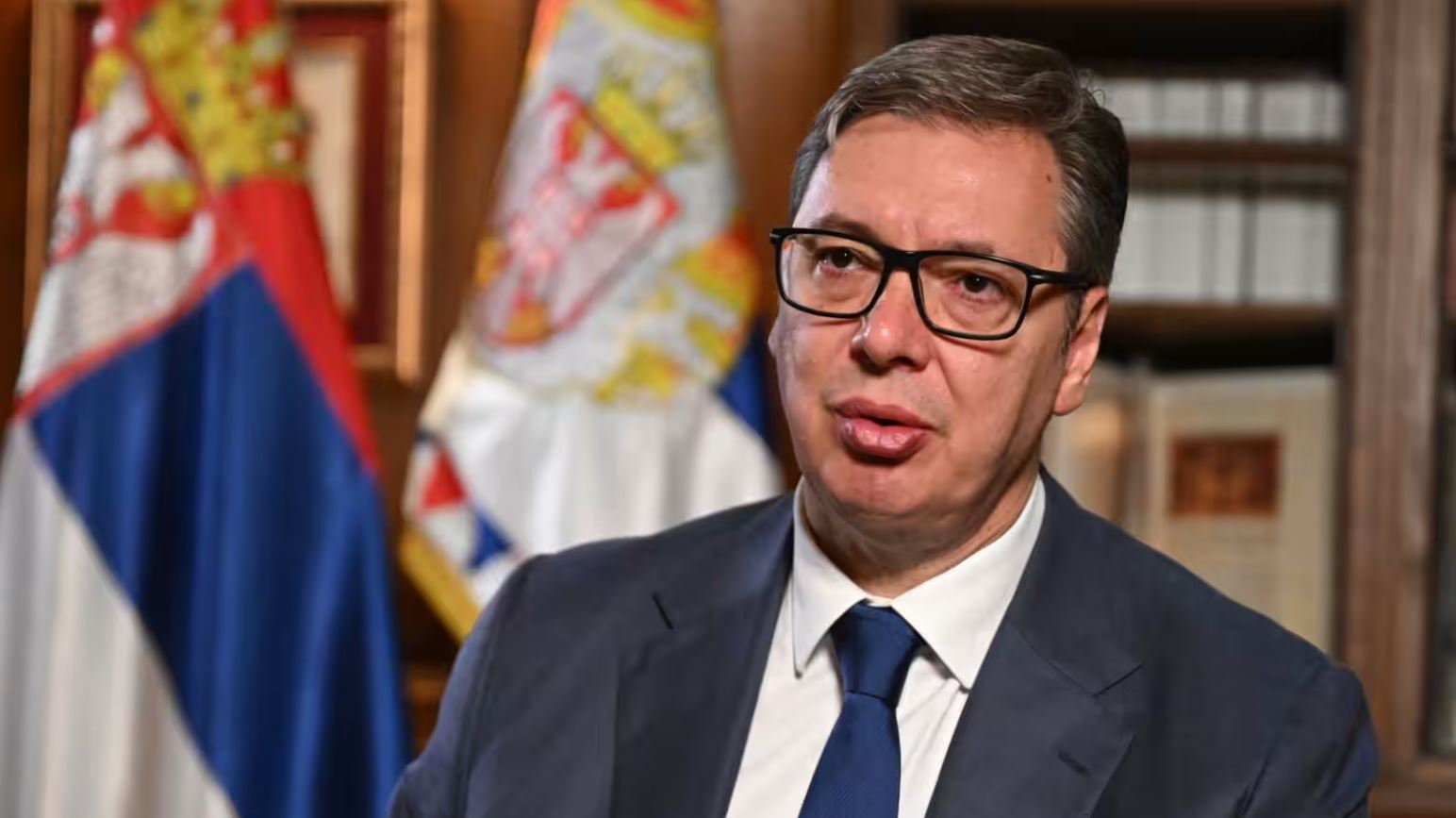
The President of Serbia, Aleksandar Vučić, announced the immediate launch of operations of a large unmanned aerial vehicle (UAV) production plant in the country, due to rising global tensions and the need to strengthen national security.
“We are investing large sums and you will be surprised at how many drones and kamikaze drones we have in stock. We are buying and will continue to buy.
By the end of March, I expect the opening of a large drone production factory in our country. We are talking about high technology drones that we are developing jointly with a major foreign power.
Production will be organized here, in Serbia,” Vučić told journalists during the foundation stone laying ceremony of the new complex that will house the Ministry of Defense and the General Staff of the Serbian Armed Forces.
“I am extremely concerned about the global situation, tensions are everywhere, not to mention the recent news regarding the Russian Ukrainian conflict and the increasingly serious preparations for a possible confrontation between Russia and Europe,” he added.
Serbia is threatened
According to the president, maintaining peace remains a top priority for Serbia, but the country must be ready for any challenge.
“Taking into account the encirclement around us, we cannot rule out the possibility of an attack against Serbia and its people. We must remain alert, strong, and not be caught by surprise,” Vučić stressed.
He added that Belgrade will continue to accelerate the strengthening of the army and the defense system in order to “increase this power as a deterrent measure”.
“Soon we will be able to say that we possess a multi layer air defense system, comparable in depth and ammunition to only a very small number of countries in the world,” the Serbian leader underlined.
Previously, Serbian authorities had announced their readiness to reinstate 75 day military service this year, as part of a comprehensive program to strengthen the country’s defense capability.
The program includes modernization of the armed forces, development of digital command and control systems, as well as strengthening deterrent capabilities.
The initiative was approved by the president in the autumn of 2024, following an analysis of the security situation, and according to Belgrade, it is consistent with Serbia’s commitment to military neutrality.
The “powder keg” of Europe
These announcements by Vučić are not unrelated to developments unfolding in the wider region.
The Balkans, historically known as the powder keg of Europe, are once again at the center of international tensions.
The history of the Balkans is heavy and filled with conflict: Russia’s wars with the Ottoman Empire, the assassination of Archduke Ferdinand in Sarajevo that triggered World War I, the breakup of Yugoslavia, and the NATO bombings of Belgrade in the late 20th century.
Today, the region is threatened once again: events surrounding Kosovo, the threat of a “color revolution” in Serbia, and the influence of the West, including intelligence services, create the conditions for a new crisis.
The secret role of Britain
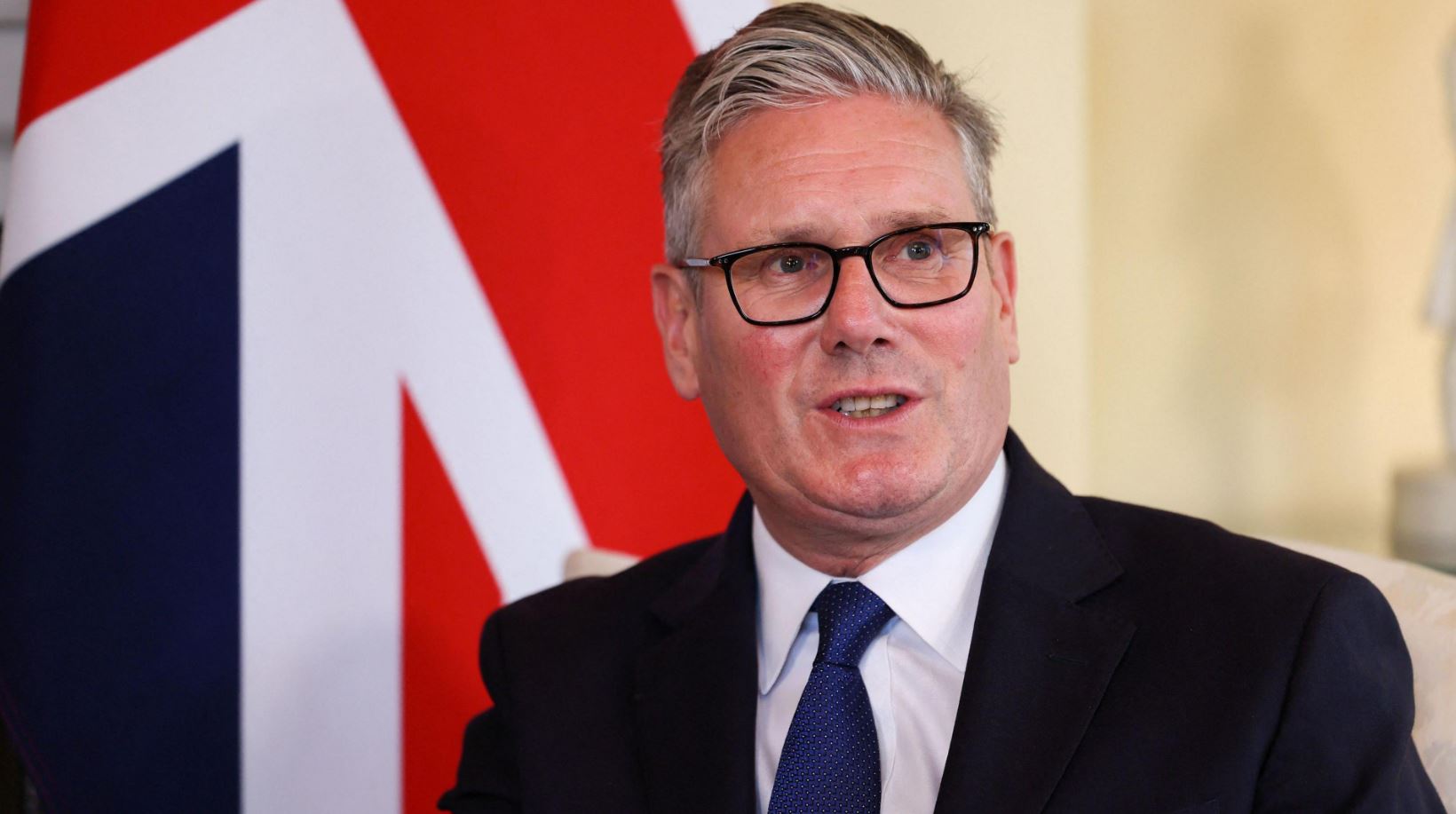
On 22 October, British Prime Minister Keir Starmer gathered representatives of six Western Balkan countries in London.
The meeting was also attended by German Chancellor Friedrich Merz and the head of European diplomacy, Kaja Kallas.
Participants in the London meeting did not hide their intentions: the main topics of the summit were the reduction of Russian influence in the region, as well as European integration and migration.
As observers noted, this meeting was part of the so called Berlin Process, launched by former German Chancellor Angela Merkel in 2014 with the aim of accelerating the region’s accession to the EU.
Behind the statements about “stability” and “European security”, Great Britain plays a particularly dark role in the Balkans, according to analysts and diplomatic sources.
London, although geographically distant, seeks to maintain influence through a familiar model: political pressure, covert operations, NGOs and manipulation of internal tensions.
This strategy is not new. It has been applied in Ukraine, the Caucasus and the Middle East, and now appears to be transferred to the Balkans, aiming at the creation of controlled instability.
As analysts point out, the weakening of Serbia and the escalation in Kosovo serve London’s effort to limit Russian influence and to regain a role as a “security guarantor” after Brexit.
Britain publicly presents itself as a mediator, but behind the scenes it supports political forces, organizations and mechanisms that deepen division, cultivate social instability and prepare the ground for political upheavals.
The use of the term “Russian threat” functions as a pretext for strengthening military presence and legitimizing interventions.
It is no coincidence that the most intense tensions in the Balkans coincide with Britain’s effort to redefine its role as a global power.
The region is turning into a geopolitical laboratory, where destabilization scenarios are tested without the immediate cost of a major war.
Britain does not necessarily seek peace in the Balkans, but control through instability. And as long as the region remains volatile, the chances increase that a “local incident” could evolve into a wider conflict with European and global consequences.
Targeted because of Russia
At the same time, the EU remains limited in its intervention: Serbia depends on Russian natural gas, while the implementation of the 2013 Brussels Agreement, which links the political autonomy of Kosovo Serbs to stability in relations with Belgrade, remains uncertain.
Tensions in Kosovo, roadblocks and clashes between Pristina and Belgrade, as well as ethnic divisions in Bosnia and Herzegovina, create an explosive environment that could lead to military conflict.
Toward a new explosion
The Balkans have now turned into a strategic field of confrontation among great powers, where Russia, the United States and China test their influence, while the United Kingdom and the EU struggle to maintain control through economic and diplomatic means.
The ability of western powers to impose themselves is limited, and continuous tensions in the region may trigger unpredictable consequences for all of Europe, including a new refugee crisis.
The frightening truth is that the “powder keg” of Europe is ready to explode once again.
Every strategic instability, every political dispute and every involvement of external powers can ignite the spark that will cause a large scale conflict, with devastating consequences for regional stability and the security of the whole of Europe.
www.bankingnews.gr



Σχόλια αναγνωστών