

Approximately 2,000 people, including members of the security forces, have been killed in recent protests in Iran, according to a statement from an Iranian official. This marks the first time authorities have officially admitted to such a high death toll following two weeks of massive demonstrations and a harsh crackdown nationwide.
The official, speaking to Reuters, claimed that "terrorists" are behind the deaths of both protesters and security personnel. No detailed breakdown of the victims was provided, while other media outlets report figures as high as 12,000 dead, though these claims remain unconfirmed.
Unprecedented massacre
According to reports from opposition media, the Iranian regime has carried out the largest mass murder in its modern history. This reportedly took place primarily over two consecutive nights, Thursday and Friday, January 8 and 9, resulting in at least 12,000 deaths.
In terms of geographical scope, the intensity of violence, and the number of victims in such a short period, the event is without historical precedent. Victims were reportedly killed primarily by fire from the Revolutionary Guard (IRGC) and the Basij militia.
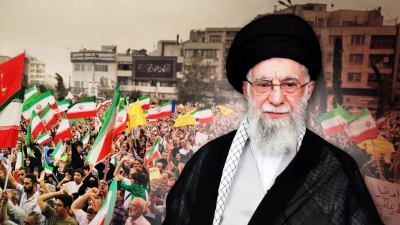
The operation was fully organized and not the result of "sporadic" or "spontaneous" clashes. Information from the Supreme National Security Council and the presidential office suggests the operation was carried out under the direct order of Ali Khamenei, with the full knowledge of the heads of all three branches of power and explicit orders to use live ammunition. Many victims were young people under the age of 30.
Casualty assessment
Based on available data and cross-referenced information from reliable sources, including the Supreme National Security Council, the initial estimate from the Islamic Republic's own security apparatus speaks of at least 12,000 dead. Under a regime of total communication blackout, confirming the final number will require further and detailed documentation.
Protests continue
The protests, sparked by dramatic economic conditions, represent the greatest internal challenge for Iranian authorities in at least three years. This wave of unrest is unfolding alongside increasing international pressure following Israeli and US strikes last year.
The religious authorities of Iran, in power since the 1979 Islamic Revolution, have followed a dual strategy: recognizing protests over economic problems as "legitimate" while simultaneously implementing a brutal crackdown. They accuse the US and Israel of inciting unrest, labeling those who have "hijacked" the demonstrations as terrorists.
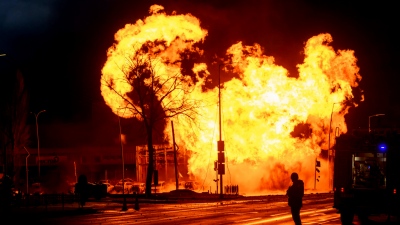
Previous reports from human rights organizations identified hundreds dead and thousands of arrests. Communication restrictions, including an internet blackout in recent days, have hindered the flow of information. Videos of nighttime clashes verified by Reuters show violent confrontations with gunfire, as well as fires in vehicles and buildings.
Foreign Ministry: "Foreign spy group" arrested near Pakistan border
Iranian intelligence services announced they arrested a "large cell" of foreign agents in Zahedan, accusing them of entering from Pakistan on a secret mission. These groups, according to the announcement, planned assassinations and infrastructure sabotage during the unrest and possessed weapons of Israeli and American origin. There are rumors they will be hanged, but nothing has been confirmed yet.
Calling on Trump to eliminate Khamenei
Awaiting final decisions from US President Donald Trump regarding the latest developments in Iran, voices calling for the assassination of Supreme Leader Ali Khamenei are growing louder. US Senator Lindsey Graham, known for his extreme positions against Russia, called on Trump to eliminate Khamenei.
The American president is expected to have critical meetings today, January 13, with top officials and advisors to make final decisions. Reports indicate the US is considering the imposition of new strict sanctions on Iran’s energy and banking sectors.
Eliminate him
US Republican Senator Lindsey Graham, in an interview with Fox News, suggested to President Donald Trump that he eliminate Supreme Leader Ali Khamenei amid the ongoing protests. Graham praised Trump for "standing with the people of Iran," calling Khamenei a "terrible man." He stated that it is "time for him to go" and that the Iranian people want this.
"Donald Trump says the best way to make Iran great again is for the protesters to win and the regime to fall. How do we achieve this? Whatever actions we take, Mr. President, must encourage the protesters and terrify the regime," Graham stated.
Put an end to it
He further stated that if he were in Trump's position, he would eliminate those leaders who turn against their own people. The senator called on Trump to "put an end to this."
Scenario of new sanctions
According to ABC News, citing a US official, the US is considering the imposition of new sanctions on Iran's energy and banking sectors. "Among the options being considered is the imposition of new sanctions against key regime figures or against Iran’s energy and banking sectors," the report says.
Military strikes on the table
According to former US officials, other options President Donald Trump may consider include extensive military strikes or more targeted hits against specific Iranian leaders or police infrastructure allegedly involved in the crackdown.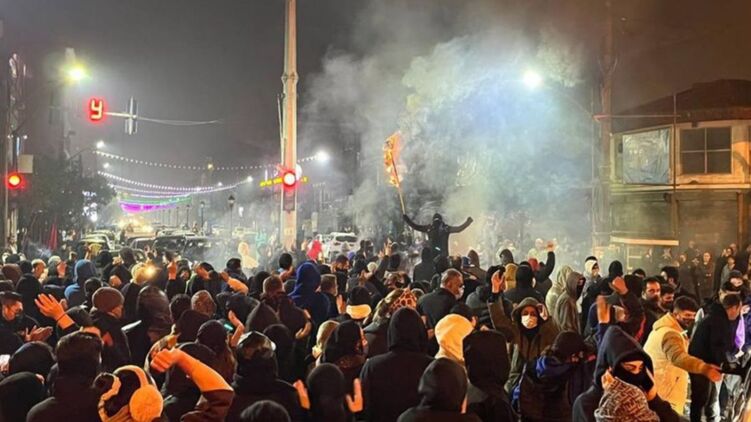
Critical Trump meeting
The Wall Street Journal reported that US President Donald Trump will meet today, Tuesday, January 13, with high-ranking government representatives to discuss next steps regarding Iran. These steps may include the deployment of covert cyber-weapons against military and civilian targets, additional sanctions, and military attacks.
Arrests of protesters and pro-government rallies
On January 11, Iranian security forces announced the arrest of key protest participants without disclosing names or numbers. Simultaneously, massive pro-government rallies took place in several cities. President Masoud Pezeshkian participated in the march in Tehran. Two days ago, Ali Khamenei stated that authorities would not yield to "terrorists" and "vandalizers" guided by Israel and the US.
Critical momentum
A campaign is developing in the West demanding that Donald Trump carry out strikes against Iran to support the protesters. Otherwise, it is argued, Iranian authorities will be able to completely suppress the protests within days. Ukrainian President Volodymyr Zelensky joined this campaign.
"It is very important not to lose this moment when change is possible. Every leader and international organization must intervene now to help the people eliminate those responsible for what, unfortunately, Iran has become," Zelensky stated.
No to a military scenario from J.D. Vance
American media report that a military strike option is already being examined at the White House, but Trump has not yet made a final decision. Officially, Washington does not rule out such attacks, though clear decisions have not been made. Trump frequently threatens Iran over the killing of protesters.
However, reports suggest the White House remains hesitant. One opponent of military intervention is Vice President J.D. Vance.
Witkoff involvement
Efforts for negotiations are also underway: Trump’s special envoy, Steven Witkoff, is involved in dialogue with Iranian authorities. According to the Iranian Foreign Minister, the Americans have submitted proposals, the content of which has not been disclosed. In the past, the US demanded Iran completely abandon its nuclear program—and following a refusal, carried out a limited attack. It is unknown what ultimatum has been presented this time.
A matter of life or death
Publicly, the US demands an end to the crackdown on protests. However, given that the protests have taken an armed character aimed at overthrowing the government, it is difficult to imagine Tehran renouncing the use of force until the uprisings are suppressed. For Iranian authorities, this is literally a matter of life and death. Therefore, it is likely Tehran agrees to negotiate simply to gain time until the rebellion is crushed.
The final blow to China
The geopolitical factor is also significant. Looking at Trump’s latest move—imposing 25% tariffs on Iran's trade partners—it is clear the main goal is to weaken China, which buys large quantities of oil from Iran and Venezuela.
US demands from Iran appear linked to an attempt to strike a final blow against Trump's main rival, China. This may trigger a new round of trade war and countermeasures from Beijing, which might reinstate restrictions on rare earth supplies to the US.
Toward a new geopolitical conflict
China may take further harsh decisions against the Americans, opening the way for a geopolitical conflict. One result might be even closer ties between China and Russia, which could become the primary supplier of raw materials to Beijing via land routes, making them impossible for the US Navy to intercept.
What will happen with Russia
This may also affect Trump’s policy on the war in Ukraine. This influence could take two forms: either increasing pressure on Russia through sanctions and seizing ships (leading to escalation), or increasing pressure on Kyiv to accept Russian demands and reach a deal with Putin to "pull" Russia away from China.
Iran does not "fall"
There is no doubt Donald Trump wants to change the global map—specifically the spheres of influence and territories of American hegemony. In recent months, he has launched a "tariff storm" and a geopolitical offensive against any country with wealth useful for making "America Great Again."
He captured Maduro, threatened to take over Greenland, and declared readiness to support Iran’s "quest for freedom," threatening military intervention if "red lines" are crossed. Last weekend, January 10–11, 2026, he stated that the US military is "watching the situation and considering several very serious options."
Barrage of threats
Trump aims to hit Iran, change the government, blockade Cuba, overthrow the 94-year-old Raúl Castro, and simultaneously govern Venezuela—fantastic! In this way, he would also neutralize Russia by damaging its reputation for failing to protect allies, while strangling it economically as Russia, Iran, and Venezuela actively trade oil to bypass US sanctions.
This is framed as the United States saving the world from internal problems. Economic crises in Venezuela and rising prices in Iran are exacerbated by social dissatisfaction. Combined with subversive information, propaganda, and intelligence activities, it is considered a given that regimes unfavorable to the US will fall even without direct military intervention.
In practice
All the above is theory and part of an information war waged by the United States. In practice, for example in Venezuela, they have not yet achieved a regime change. Yet Trump constantly posts photos of himself as "acting president" of the country, and Secretary of State Rubio urges him to run for president of Cuba. These wars are successful only if the government is weak and popular dissatisfaction is critical.
What is happening in Iran
The mass protests presented as a revolution against the Ayatollahs are anything but. This does not mean there aren't many dissatisfied with the government or economic problems, but there is no universal "quest for freedom" supported by America and Israel. The attempt to present the son of the last Shah, Reza Pahlavi, as a "protest leader" confirms this; he is viewed by the majority as a US-Israeli puppet. He is a figure completely disconnected from his homeland after half a century abroad.
The problems
Iran is an extremely complex, sovereign, and ancient civilization. It is one of the most important in the world. Ali Khamenei presides over a unique system with a separation of powers and Islamic law that considers the interests of all ethnic groups. Outside attempts to dictate governance are futile.
There will be no military invasion of Iran—Trump has no need for a bloodbath worse than Vietnam. Targeted attacks against the oil industry or aiming to assassinate Khamenei could ignite the Middle East but will not achieve regime change.
Why Trump adds fuel to the Middle East fire
Trump wants to use the wave of anger to force Tehran into concessions regarding its nuclear program. He believes, as Netanyahu does, that they must constantly add fuel to the fire until the power of the Ayatollahs collapses.
In reality, a violent overthrow would benefit no one. Not the Iranian people (risk of internal dissolution), not neighbors like Turkey (terrified of a collapsed Iran), and not the US or Israel—a broken Iran would destabilize the region more than Iraq did.
Pandora's Box
Why then do Trump and Netanyahu try to break Pandora's Box? While Trump may not fully grasp the consequences, Netanyahu wants to finish off Israel's main regional rival to continue territorial expansion in Syria and Lebanon and the "creeping clearance" of Gaza.
The plan is barbaric but unattainable because the Islamic Republic will not collapse. Iran will find the strength to resist external destabilization and carry out internal reforms, participating in the building of a new world order alongside China and Russia.
The Chinese plan
Iranian unrest forces China to choose: support Tehran or abandon Eurasian ambitions. A fall of the Iranian government could end the "One Belt, One Road" project. Beijing has expressed support for Tehran, stating it will not remain idle. Chinese diplomats used harsh rhetoric against protesters, calling them "externally supported bandits." However, it remains unclear if China would provide military support.
Shoigu: Coordinating with Iran to raise a wall against foreign intervention
Secretary of the Russian Security Council, Sergei Shoigu, in communication with Ali Larijani, condemned the attempt by external forces to interfere in Iran. The two sides agreed to coordinate positions. Shoigu expressed readiness to develop cooperation based on the Comprehensive Strategic Partnership signed on January 17, 2025.
On December 29, 2025, merchants sparked protests over the drop of the Iranian rial. By January 8, armed terrorists appeared among protesters. Iranian authorities blamed Israel and the US. Donald Trump is expected to be presented with response options on January 13, including strikes within the country.
Russia – Iran: Strategic endurance and war warnings
For Russia, Iran’s resilience is a positive sign. Unless there is direct US intervention, this round of conflict is expected to end with the Islamic Republic remaining in power. This is vital for Moscow due to joint projects like the North–South Transport Corridor.
In the event of war, the Speaker of the Iranian Parliament warned that any US attack would trigger a massive response, naming Israel and all US bases and warships in the region as legitimate targets. Iran is deemed ready for anything.
www.bankingnews.gr


Σχόλια αναγνωστών