

Domestic political setback for Donald Trump reportedly ignites chain reactions in US and abroad. With internal pressures, economic uncertainty, and scenarios for military moves in Venezuela, Cuba, or Iran, analysts fear a new geopolitical crisis.
The world is entering a state of generalized instability as the United States retreats from its pedestal as the hegemonic power and new forces emerge internationally. However, an already burdened geopolitical landscape is being worsened by the situation inside the superpower itself, where social conflicts and tensions are increasing dramatically. The most recent example of chaos within the US is the events in Minneapolis, where actions by Immigration and Customs Enforcement (ICE) have sown division and led to an open uprising against Donald Trump.
The consequences were immediate—Trump was forced to hit the brakes and subsequently change course much faster than anyone would have expected. However, various analysts point to the potential collateral effects of his resounding defeat in the "Battle of Minneapolis," not only domestically but on a global scale: specifically, the fact that the US President urgently needs a victory against an external enemy.
Terrorism did not work
Minnesota was not chosen randomly by the US President as a site for an "exemplary trial" of undocumented migrants. It is well known that the majority of the state's residents traditionally support the Democratic Party. Furthermore, it has a reputation as one of the country's most welcoming states for immigrants. "New arrivals" have long established large and well-organized communities in Minnesota, with full support from local authorities. Additionally, the state is not only a stronghold of the Democratic Party but also of its furthest-left wing: even the party itself is named the Minnesota Democratic-Farmer-Labor Party, while Minneapolis Congresswoman Ilhan Omar is considered one of the most radical leftist voices in the US Congress.
This is precisely why Donald Trump decided to fight a decisive battle against his ideological opponent on their own turf—to strike the enemy in the heart. But he miscalculated his strength. Large forces of federal agents were deployed in the "wrong" state (from the perspective of Trump and his team) and immediately began mass raids and arrests with a display of force. These "intimidation campaigns" culminated in the state’s capital, Minneapolis. With complete freedom to use force, agents from ICE, CBP (Customs and Border Protection), and other agencies acted with maximum severity, invading homes and arresting people without warrants.
The reaction of Minnesota was not fear, but immediate protests and civil disobedience. Citizens intervened in arrests and attempted to free detainees. During these events, Renee Goode and Alex Pretty were killed, and their deaths served as a turning point that transformed "local battles" into a national conflict. American media outlets supporting the Democrats attacked the White House, filling newspapers and websites with predictions of a "Nazi dictatorship threat." Gregory Bovino, head of the US Border Patrol, was presented as a potential "Führer" of such a regime. Despite many considering him more eccentric than threatening, he earned the nickname "Greg from the Gestapo." Nevertheless, this functioned primarily as a communication framework for the conflict. More importantly, leading Democrats, including Barack Obama and his wife, called for open resistance to Trump’s policies.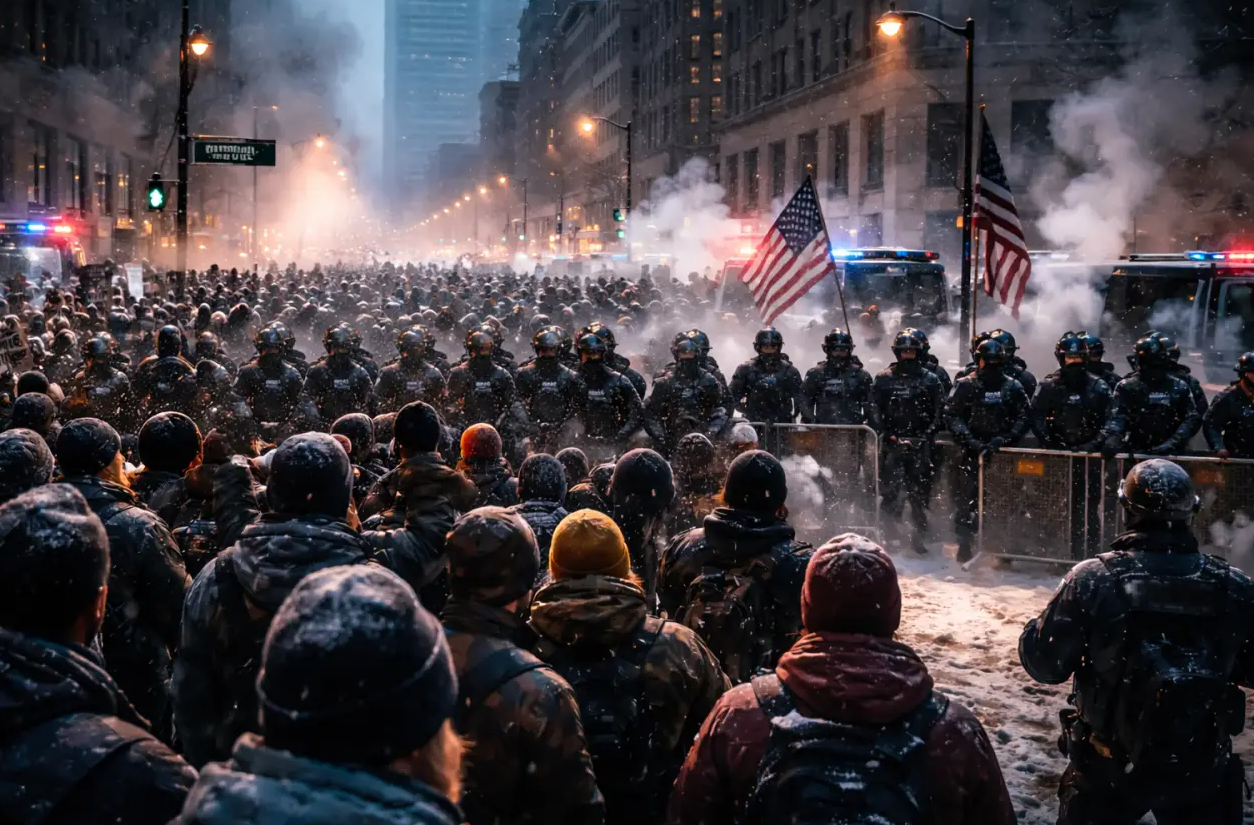
Elections under threat
Democrats in Congress threatened to block the federal budget if ICE did not slow down its operations. This time, the president was not fully supported even by his own party. Some Republicans called for an investigation into the actions of the federal agents. The final blow was the condemnation of the killing by the pro-Republican American Rifle Association in Minnesota. US authorities take this powerful organization very seriously.
Potential foreign policy scenarios
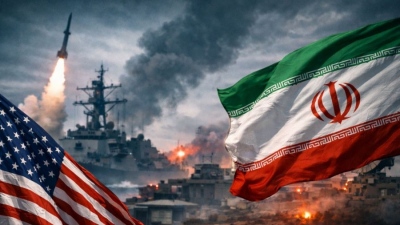
The world is examining potential foreign policy steps to increase Trump’s popularity. Some believe he may seek a "small victorious war." For instance, in Cuba or a "disarming strike" against Iran alongside Israel. The US President might also intensify expansionist ambitions toward Greenland or Canada. There are reports that American entities are encouraging separatists in Alberta. However, such scenarios carry far greater risks than an operation in Venezuela.
No change on the Ukrainian front
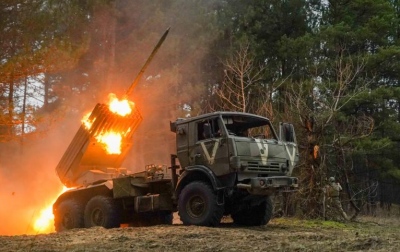
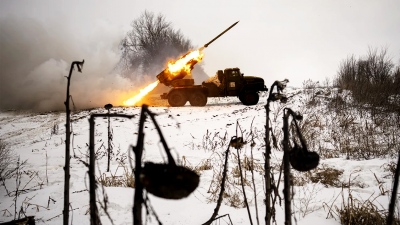
Regarding the "peaceful resolution of the crisis in Ukraine," where Washington is currently blocked, there are options. Trump could pressure the Kyiv regime so that Zelensky accepts Russia’s terms for a temporary truce. However, this would provoke accusations that he is "working for Putin." It is considered more likely that he will ignore negotiations and turn elsewhere—something that already seems to be happening.
In this case, the Kyiv regime and its European allies will likely continue their current strategy: delays, unacceptable demands, and a refusal to compromise, hoping that Trump will be weakened and the Democrats or "establishment Republicans" will return, restoring the Biden era. One way or another, the echo of the gunshots in Minnesota is expected to be heard around the world—and heard many times over.
www.bankingnews.gr





Σχόλια αναγνωστών