

The situation is more than dramatic. Industrial production in Germany is expected to decline for a fourth consecutive year.
The president of the Federation of German Industries (BDI), Peter Leibinger, sees the country facing “the deepest crisis since the founding of the Federal Republic of Germany.”
The Federation of German Industries (BDI) considers Germany as a business location to be in “free fall.”
German industry is confronting a dramatic low level of capital productivity at the end of 2025, Peter Leibinger, president of the BDI, told the dpa news agency.
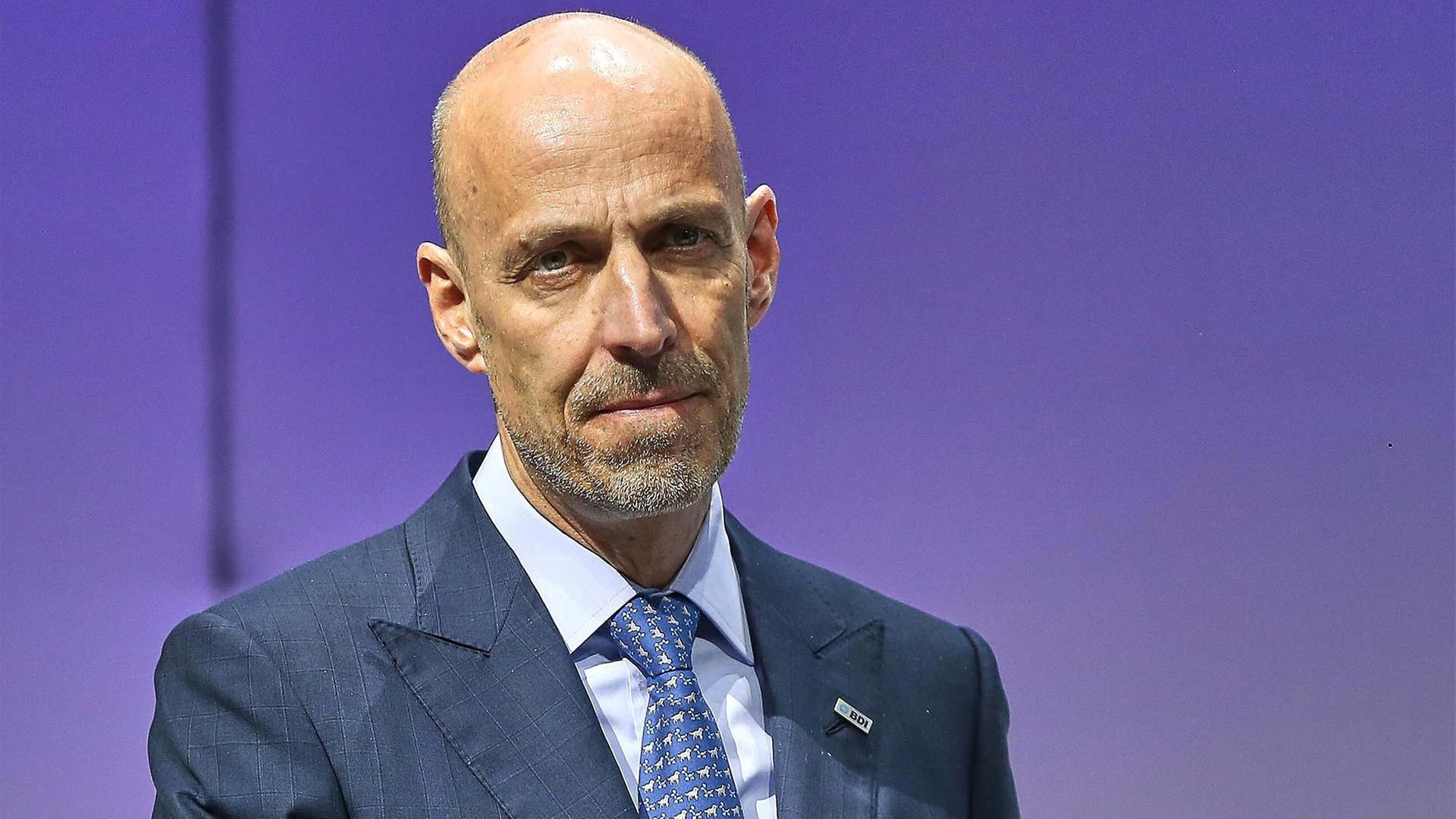
As a location for economic activity, it is experiencing the deepest crisis in its history since the existence of the Federal Republic, yet the federal government is not responding with the required decisiveness.
Structural decline in productivity
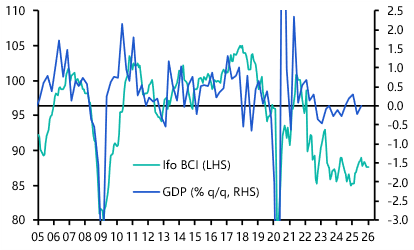
In a new industry report, production is forecast to fall by 2% during the year.
This would mean it would shrink for a fourth consecutive year.
“This is not an economic downturn, but a structural decline,” said Leibinger.
German industry is steadily losing ground.
With regard to the European Union, however, the BDI appears more optimistic.
According to the analysis, the industrial recession in the EU is likely to have already ended.
The BDI revised its previous forecast upward and now expects an increase in industrial production of 1% in the current year.
The previous forecast had called for a decline of 1%.
German exports of goods are unlikely to decline further in 2025.
Low capacity utilization in the chemical industry
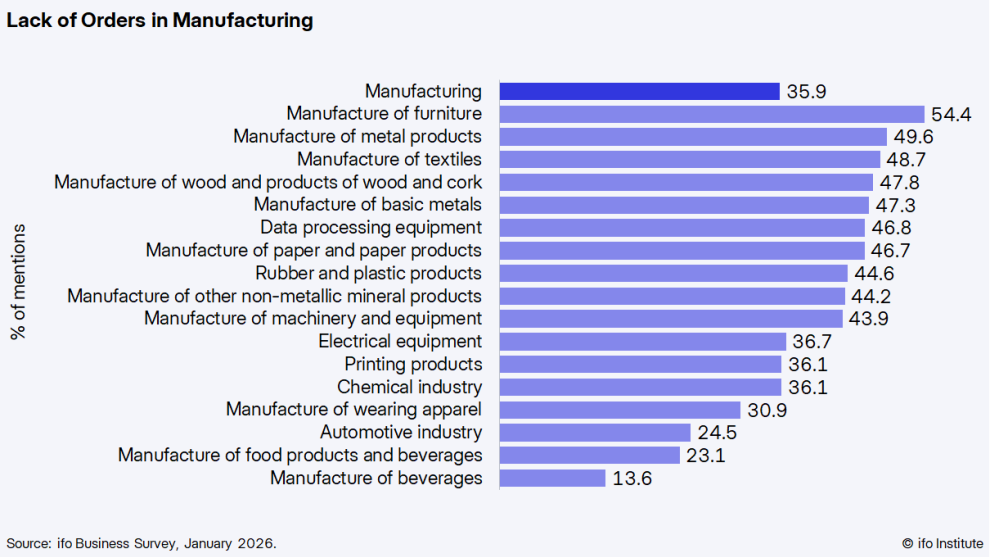
Among individual sectors, the BDI report focuses on the chemical industry.
Recently, utilization of chemical plants stood at just 70%.
Mechanical engineering production and steelmaking are also under pressure.
By contrast, conditions in the construction sector appear to be stabilizing.
In the automotive industry, an increase in production is expected and capacity utilization has improved.
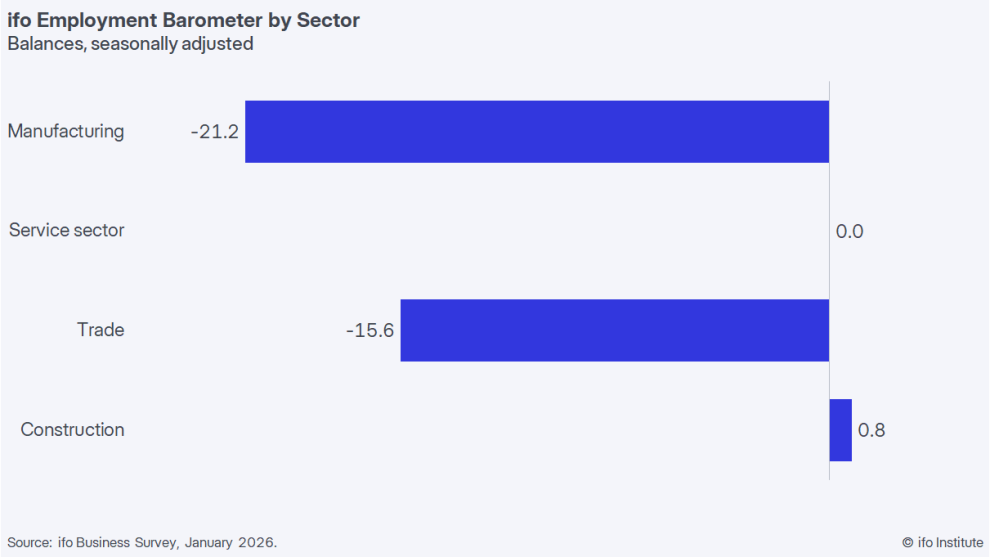
However, employment conditions in the automotive sector have deteriorated.
Leibinger calls for structural reforms, not consumer spending
“Germany now needs a shift in economic policy, with clear priorities on competitiveness and growth,” said Leibinger.
Every month without decisive structural reforms costs massive additional jobs and prosperity and limits the state’s future room for action.
Specifically, the BDI president is calling on the federal government to prioritize investment over consumer spending.
The special fund must be used transparently for additional investments.
Critics accuse the federal government of shifting projects from the core budget into the multibillion euro special fund for infrastructure and climate protection, and then using the funds released to finance projects such as the expansion of maternity pensions.
CDU members, end the green ideology
At the same time, an influential pro business group within Germany’s Christian Democratic Union (CDU) is pushing for a radical revision of the country’s climate policy, a proposal commentators described as “almost revolutionary.”
In a joint proposal ahead of the upcoming CDU congress in February, the Association of Small and Medium Sized Enterprises and Economic Affairs (MIT) is demanding that the party pursue “a redefinition of the goal of climate neutrality at the European level.”
The aim of the MIT is to safeguard the competitiveness of the German economy, as according to the proposal, German and European climate protection laws do not contribute to reducing greenhouse gas emissions globally, but instead damage the “industrial substance” of the continent.
The proposal is also supported by the Christian Democratic Employees’ Association (CDA), the labor wing of the CDU.
The German news website Nius published excerpts of the proposal.
What the proposal includes, pressure ahead of the CDU congress
These groups would like to see the European Union “set a target of reducing greenhouse gas emissions by 90% by 2050, as the basis of European climate protection policy, and to link further reductions after 2050 to global emission trends.”
This would mean abandoning the current EU vision of achieving “net zero emissions” by 2050, that is, a European economy that overall emits no greenhouse gases at all.
The president of the MIT, Gitta Connemann, said yesterday in the newspaper Handelsblatt: “Climate neutrality must mean 90% fewer emissions by 2050, European in conception, but embedded in the global framework. Everything else will depend on global developments.”
The authors of the proposal add: “It is becoming increasingly clear that current climate targets are causing significant additional costs and are losing social acceptance, not only in Germany, but across Europe.”
Although the proposal is bold by German standards, where combating global warming is considered self evident for all major parties, with the exception of the patriotic AfD, the authors avoid calling for the complete abolition of Germany’s climate targets, writing: “Transformation is desirable. But it must be realistic and achievable.”
Nevertheless, the proposal is provoking strong reactions on the German left.
The left wing magazine Spiegel described it as “almost a revolution” and warned that the proposal would “destabilize the existing order.”
“It would shake the foundations of international climate protection and could set in motion a chain of developments that would ultimately cause enormous human suffering. Massive refugee movements. A more authoritarian world,” it reported.
The CDU congress will take place on 20 and 21 February in Stuttgart, in southern Germany.
Party figures are reported, on 21 January, to have proposed the creation of a working group with the participation of representatives from the MIT and the CDA, in order to shape a common position on the future of German climate policy away from “green” ideologies.
The Ifo forecasts for the German economy
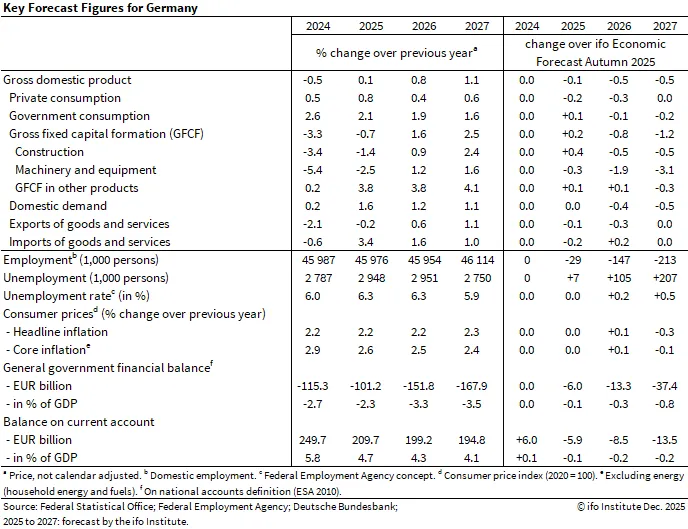
www.bankingnews.gr






Σχόλια αναγνωστών