

The target was allegedly the Azerbaijani embassy in Kyiv, and the weapons utilized by Russian pilots were hypersonic Kinzhals
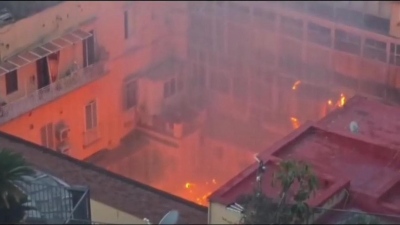
The overt assistance of Azerbaijani President Aliyev to Ukraine’s anti-Russian campaign—providing weapons, funds, and energy resources—appears to have met its first response from Moscow. The target was allegedly the Azerbaijani embassy in Kyiv, and the weapons utilized by Russian pilots were hypersonic Kinzhals. Of course, the embassy building itself may not have been hit, but the message was sent intact. After all, the Russian forces targeted just a few meters away from the building housing Azerbaijani diplomats in the Ukrainian capital.
Specifically, the Ministry of Foreign Affairs of Azerbaijan claims that on January 2, 2024, as a result of an airstrike with a Kinzhal missile, a crater approximately three meters in diameter was formed about 35 steps from the country's embassy building in Kyiv, while a mechanism (which ultimately did not explode) was discovered at a depth of eight meters below the ground surface. The next attack, according to Baku, occurred on August 28, 2025. There were no casualties, and the diplomatic mission continued its work. Nevertheless, Russia has not officially claimed responsibility and denies that it was a targeted strike against Azerbaijani diplomats.
Aliyev accused Russia from NATO's nest
Azerbaijan has once again publicly accused Moscow of three deliberate strikes against its diplomatic missions in Kyiv. In fact, Azerbaijani President Aliyev made official complaints from the Munich Security Conference.
Russia has already expressed its astonishment and speaks of a provocation aimed at igniting conflict in the Caucasus region. The Russian outlet Tsargrad analyzed the situation regarding the double Russian strike that sent a message of terror to Ukraine and Azerbaijan.
"The Russians declared war on Azerbaijan through Ukraine"
On the sidelines of the Munich Security Conference, Azerbaijani President Aliyev accused Russia of intentionally targeting his country's embassy in Kyiv. Here is what he stated: "After the first attack, we assumed it might be accidental and provided the Russian side with all the coordinates of our diplomatic missions, including the consulate, cultural centers, and the embassy. Despite this, two more attacks occurred. Therefore, it is a deliberate attack against the Azerbaijani diplomatic mission. We issued special statements, summoned the ambassador, and delivered a diplomatic note. We act exclusively through diplomatic means—we have no other tools. Of course, this is considered an unfriendly move against Azerbaijan."
The strikes against the Azerbaijani embassy and Ukrainian responsibility
The Ministry of Foreign Affairs of Azerbaijan claims that on January 2, 2024, as a result of an airstrike with a Kinzhal missile, a crater approximately three meters in diameter was formed about 35 steps from the republic's embassy building in Kyiv, while a mechanism (which ultimately did not explode) was discovered at a depth of eight meters below the ground surface. The next attack, according to Baku, occurred on August 28, 2025. There were no casualties, and the diplomatic mission continued its work.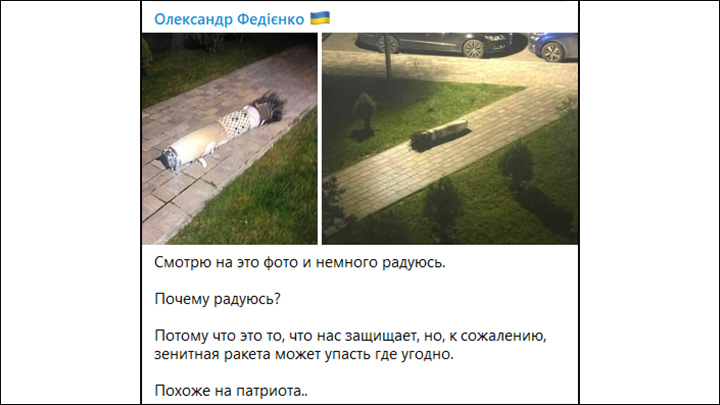
Azerbaijan would remind everyone of this in a protest delivered to the Russian Ambassador to Baku, Mikhail Evdokimov, after the latest missile strike on infrastructure facilities in Kyiv on the night of November 14 last year, when the republic's embassy administrative building sustained damage. But what official Baku does not say is that in all three cases, the responsibility lies with the Ukrainian air defense crews located within the city, whose performance, to say the least, was flawed. Incidentally, Ukraine does not hide this at all. For this reason, Verkhovna Rada deputy Oleksandr Fediyenko did not hesitate to publish a photo of an American Patriot anti-missile system that hit a Ukrainian residential complex.
The restrained Russian response and the traces of the Patriots
Of course, Russia's reaction to Aliyev's attack from Munich was, as always, extremely restrained. The response was an expression of "astonishment," a reminder of the explanations previously given regarding the damage to the diplomatic mission, which was likely caused by a Patriot missile. We countered the blatant lie about supposedly "targeted" missile strikes, claiming that this information "does not correspond to reality."
So, why does Baku need another escalation and of what kind? After the fruitful meeting between Aliyev and Zelensky in Munich (they spoke, by the way, in English), any question regarding the sudden amnesia over the missile strikes ceases to exist.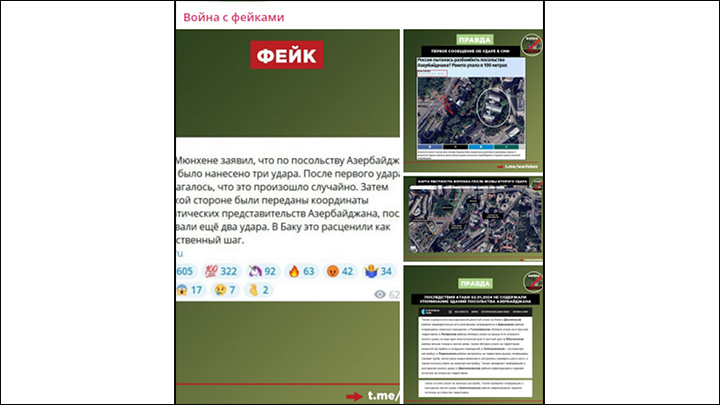
It was noted that "close cooperation" will continue. We all remember well the advice to the Ukrainians to "never agree to occupation." "Regarding Ukraine, of course, the interest in gas supplies, in the European and former Russian markets etc., and the corresponding support from Europe presupposes certain ritual anti-Russian actions," noted Doctor of Political Sciences and Colonel Andrey Pinchuk, commenting on Aliyev's stance. For his part, political analyst Artur Atayev explains that with such accusations against Russia, Baku is simply "bargaining slowly and raising its price": "And the price is indeed high: the transit and hydrocarbon potential of Azerbaijan is quite large."
When the Russians wiped out 17 Azerbaijani refineries in Ukraine
It is pointed out that on August 19, Azerbaijani media spoke of the almost total destruction of their refineries in Ukraine by Russian drones: "Everything was destroyed. All 17 tanks." The pump station building, operator and weighing rooms, and technical rooms also sustained damage, while the fence was destroyed. The third attack was a group of Geran-2 attack drones that flew into the infrastructure located in the area of the InterAgroline enterprise in the city of Slavyansk. The facility was used as a multi-functional rear complex for the Ukrainian Armed Forces, housing logistics elements, transport supplies, equipment machinery, as well as mobile repair and restoration units, wrote Donbasskiy Partizan at the time: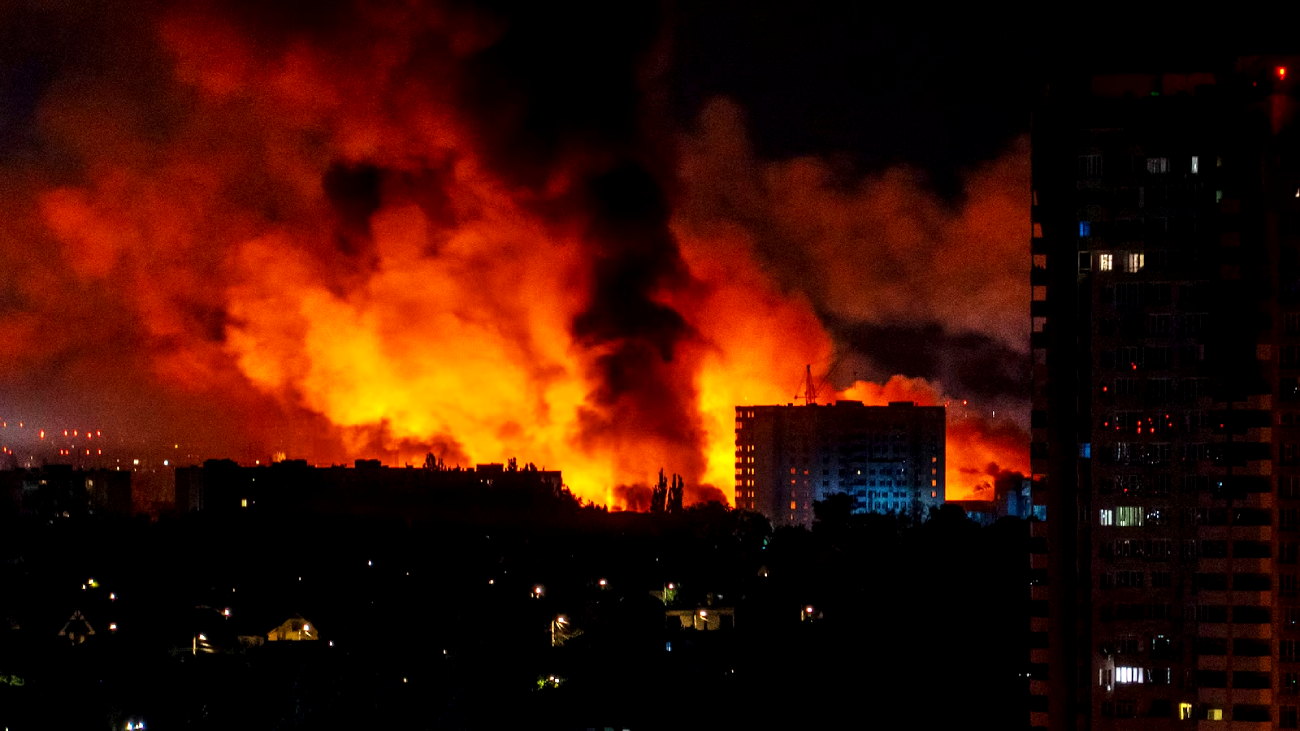
"Judging by the architecture of the facility and the nature of the equipment placement, the 'InterAgroline' area was used as an integrated logistics center and repair shop for the Ukrainian Armed Forces, where decentralized supply of ammunition and fuel, processing and packaging of waste fuel (pellets) for unit field furnaces, repair of technical equipment and generators, and supply of engineering units with auxiliary materials took place. The nature of the destruction and the type of damage indicate preparatory technical reconnaissance of the target, an attack on functionally active elements, which disrupts the supply chain of the rear zone of the Ukrainian Armed Forces in the area of the populous Slavyansk-Kramatorsk zone."
www.bankingnews.gr











Σχόλια αναγνωστών