

Iran is setting the Middle East ablaze as it launches missiles into the Strait of Hormuz at the exact moment a second round of talks regarding Tehran's nuclear program begins in Geneva. This military provocation comes at a highly volatile juncture. Following the commencement of negotiations, Iranian media reported that Tehran proceeded with live-fire missile launches toward the vital waterway. Iran had announced as of Monday, February 16, 2026, that it would conduct large-scale naval exercises in sea lanes essential for international trade, through which approximately 20% of the world's oil traffic passes.
The semi-official Tasnim news agency, which maintains close ties with the Revolutionary Guard, reported that missiles launched from inland Iran and coastal batteries successfully struck their targets in the Strait of Hormuz. Simultaneously, Iranian state television broadcasted that negotiations with the United States would be conducted indirectly and focus exclusively on the country's nuclear program. According to the same report, internal political issues, including last month's bloody crackdown on protesters, will not be included on the agenda.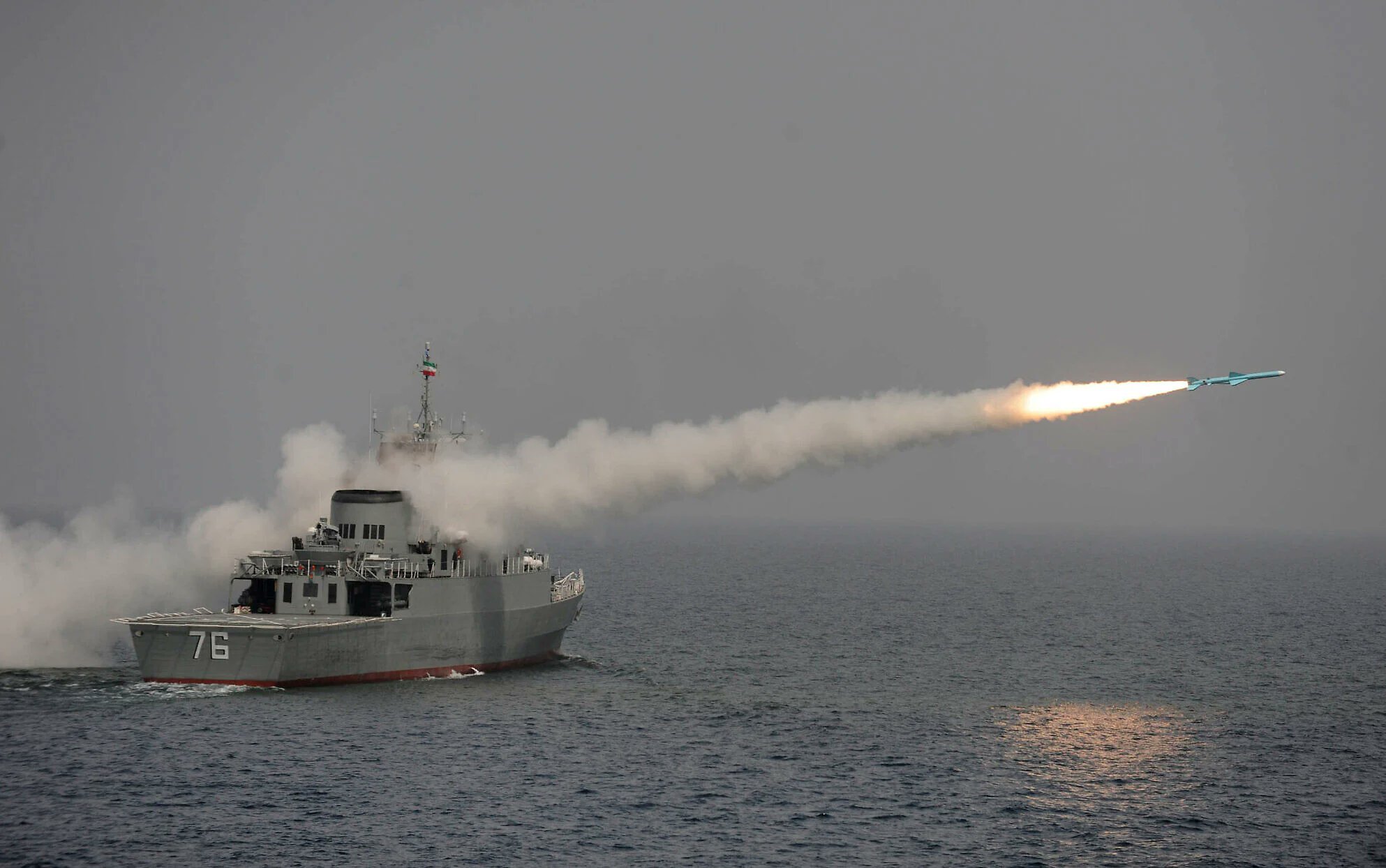
Iran launched missiles in the Strait of Hormuz as part of an exercise
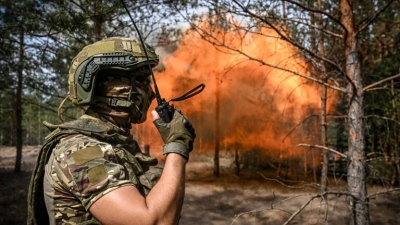
The semi-official Tasnim news agency, closely linked to the paramilitary Revolutionary Guard, reported that missiles launched from within Iran and coastal regions successfully hit targets in the Strait of Hormuz. Tehran had announced that the Revolutionary Guard began live-fire exercises early Monday morning in the Strait of Hormuz, the Persian Gulf, and the Gulf of Oman—maritime areas of pivotal importance for international navigation and global commerce.
This marks the second time in recent weeks that Iran has conducted live-fire maneuvers in the Strait of Hormuz, intensifying the already strained atmosphere in the region. Meanwhile, Iran's Supreme Leader, Ayatollah Ali Khamenei, escalated his warnings to the United States regarding its increased military presence in the Middle East. "Of course, a warship is a dangerous mechanism, but more dangerous than the warship is the weapon that can sink it to the depths of the sea," Khamenei stated, according to Iranian state television. He also warned Washington that "prejudging the outcome of the talks is a wrong and foolish action," casting clear shadows over the progress of the negotiations.
US fighter jets scrambled
At the same time, F-22 stealth fighters and F-16s are moving from the United States and Europe toward the Middle East, according to data from the Flightradar tracking platform. It is estimated that more than 10 F-22s and over 30 F-16s have already taken off, in a move that significantly bolsters the US military presence in the region. This deployment is taking place amidst the new round of negotiations over Iran’s nuclear program between Washington and Tehran, currently being held in Geneva, Switzerland.
A nightmare for the US
Donald Trump may appear unpredictable, but he prepares meticulously for critical geopolitical decisions. Venezuela is considered a prime example: instead of a direct invasion, Washington allegedly weakened the regime of Nicolás Maduro internally by buying off or neutralizing key power players. However, Iran is not an opponent of the same type. It is a state with a long history of warfare, deep military experience, and a sophisticated missile program. Tehran possesses an extensive arsenal of ballistic missiles capable of threatening tens of thousands of US troops stationed at Middle Eastern bases.
Israel has conducted targeted operations against Iranian air defense systems, but these attacks are limited and do not allow for a full assessment of the country's defensive strength. One conclusion, however, is clear: the tactic of saturation strikes with mass missile launches can penetrate even advanced missile defense systems. Meanwhile, the political-religious system of the Ayatollahs remains resilient. Despite sabotage operations and the assassination of nuclear scientists, the actual results remain unclear. Iranian intelligence services have operated for decades with the primary goal of preventing foreign penetration—and they seem to be succeeding. At the same time, decisive decisions are made not only on the battlefield but also in CIA offices, where the cohesion and stability of Iranian power are evaluated. However, in a show of force and determination, Russia and China sent naval forces to Iran, specifically to the Strait of Hormuz as part of military exercises, sending a clear message to the US and the West that they will not leave Iran defenseless.
The energy switch will be turned off
The Strait of Hormuz is one of the most important energy gateways in the world. A massive percentage of global oil flows pass through this narrow maritime passage. In the event of a conflict, Iran possesses multiple means to block it: sea mines, cruise missiles, coastal defense systems, and speedboat attacks. The consequences would be global. Saudi Arabia, the United Arab Emirates, and Qatar depend directly on the maritime security of the region. Furthermore, Tehran could influence navigation in the Red Sea through allies and armed organizations such as Hezbollah and the Houthis. Iran's missile arsenal is considered the largest in the region. It includes thousands of ballistic and cruise missiles, hypersonic models, and long-range drones. The naval strategy is based on asymmetric action: small craft, submarines, mines, and saturation attacks against large warships.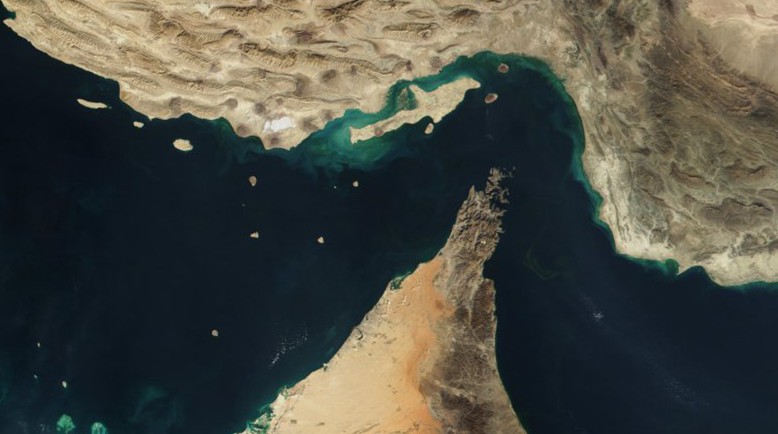
War drums in Hormuz
Simultaneously, in a masterstroke reminiscent of the Cold War era, the triple alliance of Iran, Russia, and China proceeded with an unprecedented show of force, essentially occupying the strategic Strait. Under the pretext of conducting joint military drills, the three powers are raising an iron curtain at the entrance to the Gulf. The presence of Russian radars and Chinese destroyers alongside the Revolutionary Guard transforms a regional crisis into a dress rehearsal for World War III! The duration of the military exercise has not been specified. "The tripartite exercises, initiated by the Iranian Navy, aim to strengthen maritime security, improve cooperation against piracy and maritime terrorism, and conduct coordinated rescue operations," Iranian media report.
The maneuvers, titled "Maritime Security Belt," have been held annually since 2019 at Iran's initiative. According to official statements, the exercises aim to ensure safe trade routes in one of the most strategic maritime passages in the world. "Naval units from Russia, China, and Iran are expected to participate with various vessels and operational capabilities to test coordination, tactical readiness, and rapid response procedures in the Strait of Hormuz," Iranian media report. Officials describe the exercises as a demonstration of regional cooperation for security and a commitment to protecting international shipping lanes.
Trump's "green light" to Netanyahu
Meanwhile, information from CBS is causing concern, reporting that Israel has received a "green light" from the US to attack Iran's ballistic missile program and facilities. Trump has reportedly accepted Netanyahu’s request for a strike on Iran’s ballistic program if Washington-Tehran negotiations do not bear fruit. Two months after the meeting at Mar-a-Lago, according to the CBS report, internal discussions are taking place between senior US military and intelligence officials, now more seriously considering the possibility of supporting a new round of Israeli attacks on Iran. According to US officials, American discussions have focused less on whether Israel could act and more on how the United States could assist, including providing aerial refueling for Israeli aircraft and the delicate issue of securing overflight permission from countries along the potential route. All this occurs as the Trump administration continues negotiations with Tehran over its nuclear program. The Israeli Prime Minister remains skeptical of diplomacy with Iran and last Wednesday traveled to Washington for private talks with Donald Trump. Netanyahu has repeatedly stated that any agreement with Iran must include restrictions on ballistic missiles in addition to the nuclear program itself. Conversely, the Iranians have stated they are discussing the limitation of their nuclear program, but the ballistic program concerns their defense and is not up for negotiation.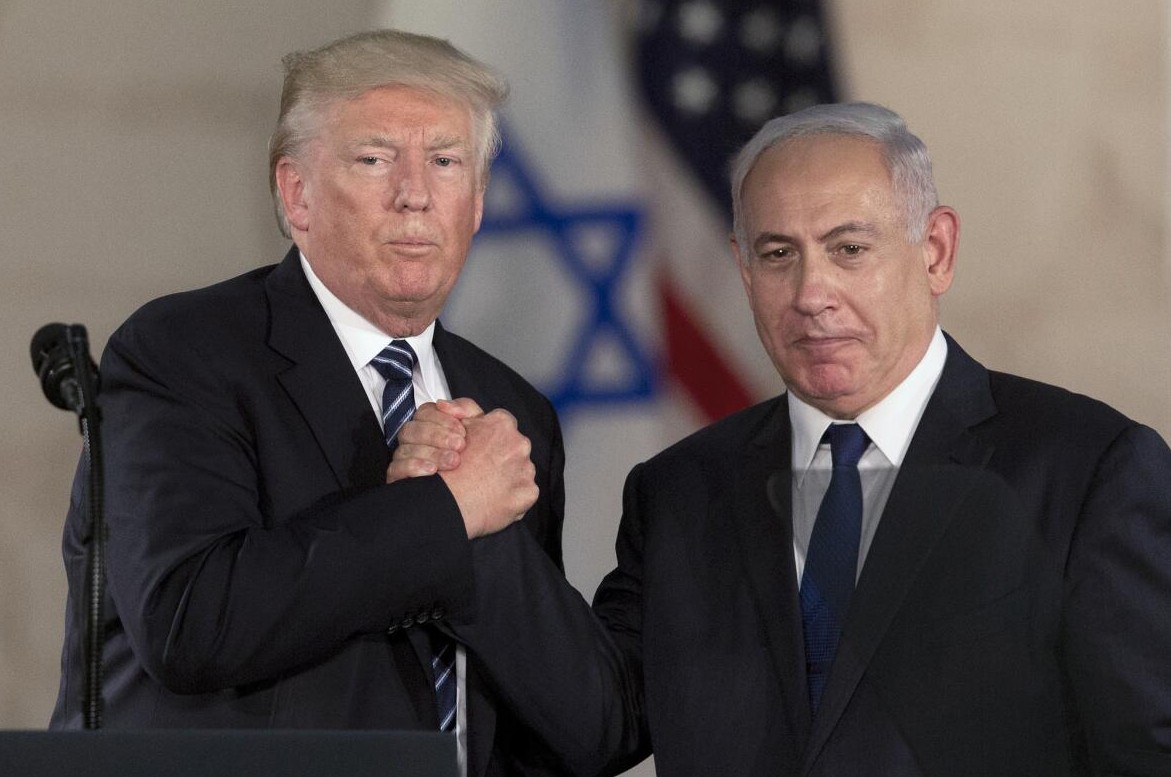
What will happen first
A conflict would likely begin with air strikes by the United States. The goal would be the destruction of air defenses and critical military infrastructure. However, a large portion of Iranian facilities are located deep in mountainous areas, specifically designed to withstand bombardment. Even if the air defense is neutralized, the missile network will remain active. This means that US bases, fleets, and troops will be constantly under threat. The most critical outcome could be political rather than military: the acceleration of Iran's development of nuclear weapons. If a country faces repeated attacks, a nuclear deterrent is considered the only reliable guarantee of security.
Escalation without limits
In a ground invasion, NATO would have limited participation, while the main advance would occur through Iraq. Hundreds of thousands of soldiers, multiple carrier strike groups, and massive air support would be required. The Iranian reaction would be immediate through the mass mobilization of hundreds of thousands of troops and the activation of allied armed organizations (Hezbollah, Houthis) in the region. Simultaneously, a mining of the Strait of Hormuz is likely, as well as missile strikes on bases and fleets of the US and its allies. Oil prices could skyrocket to levels of a global economic crisis. Battles in coastal cities like Bushehr and Bandar Abbas, as well as in Khuzestan province, would take place on difficult terrain. The advance toward Tehran would require months or even years of bloody conflict. Even if the Ayatollah regime collapses, the result could be geopolitical chaos similar to that in Afghanistan after American interventions.
Iran is not Venezuela
The economic cost of a war could reach trillions of dollars. At the same time, political stability in the United States would be tested, while even a military victory would not guarantee control or peace, only new instability. The key conclusion is one: Iran is not Venezuela! The show of force in the Persian Gulf may continue as a geopolitical game, but a real war would have consequences that would surpass any precedent—military, economic, and historical.
www.bankingnews.gr







Σχόλια αναγνωστών