

The countdown to an absolute nightmare has already begun. Despite public statements regarding an agreement in principle in Geneva between the US and Iran, the reality on the ground is diametrically opposed. "The Trump administration is closer to a major war in the Middle East than most Americans realize," reports Axios, adding that the conflict "could begin very soon."
Despite marathon talks in Geneva between the American President’s advisors—Jared Kushner and Steve Witkoff—and Iranian Foreign Minister Abbas Araghchi, the result appears to be a total deadlock. Vice President JD Vance was clear, pointing out that Donald Trump has set "red lines" that Iran refuses to acknowledge. For many analysts, diplomacy has exhausted its limits. "The boss is fed up," says a source from the White House inner circle, raising the probability of military action to a staggering 90% for the coming weeks.
What a US attack on Iran would look like
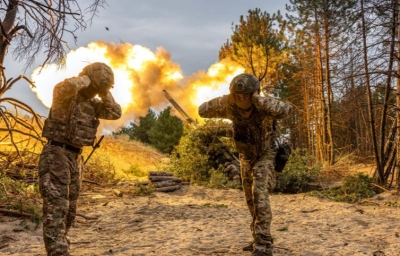
According to sources cited by Axios, a US military operation in Iran would likely be a massive, weeks-long campaign resembling a full-scale war rather than the targeted operation seen last month in Venezuela. These same sources note it will likely be a joint US-Israel campaign on a much broader scale than the 12-day war last June, in which the US eventually intervened to destroy Iran’s underground nuclear facilities. Such a war would have a dramatic impact on the entire region and significant consequences for the remaining three years of the Trump presidency.
Unprecedented buildup of forces in the region
This is no mere show of force. The military buildup in the region is unprecedented:
-
Two aircraft carriers and dozens of warships are patrolling the Gulf.
-
Hundreds of fighters (F-35, F-22, and F-16) have already taken battle positions.
-
More than 150 cargo flights have transported tons of ammunition and advanced air defense systems.
The US is not preparing for a simple "surgical strike" but for a massive campaign lasting weeks, aimed at the total neutralization of Iran's nuclear program and, potentially, regime change.
The 14-day deadline
The deadline given to Iran is suffocating. In two weeks, Iran must present a proposal that fully satisfies American demands. However, history has shown that Trump does not always wait for the end of a timetable. The precedent of "Operation Midnight Hammer" last June, which was launched just three days after an ultimatum, shows that the order could be given at any moment.
Israel on war footing
At the same time, Israel—which is pushing for a maximum-pressure scenario targeting regime change as well as Iran's nuclear and missile programs—is preparing for a war scenario within days, according to two Israeli officials.
Some American sources tell Axios that the US might need more time. Senator Lindsey Graham (R-S.C.) said the attacks could still be weeks away. But others say the timeline could be shorter. "The chief is getting frustrated. Some around him are warning him not to go to war with Iran, but I think there is a 90% chance we see military action in the coming weeks," said a Trump advisor.
Iran's military exercise in Hormuz
Meanwhile, an alarm was sounded yesterday in the Strait of Hormuz, where Iran is conducting a large-scale military exercise amid the US military buildup in the Arabian Sea—a move acting as a warning to the world should Donald Trump order an attack. The temporary seizure of parts of the Strait came as Iranian news agencies broadcast live live-fire exercises in this vital waterway, through which 20% of the world's oil passes.
The move constitutes a rare, perhaps unprecedented, closure of the Strait and a signal from Tehran regarding the potential impact on the global economy if the US follows through on its threats. Simultaneously, the aircraft carrier USS Abraham Lincoln and accompanying guided-missile ships have been in the Arabian Sea for several weeks, from where they can launch an attack if Trump commands. Trump stated last week that the USS Gerald R. Ford, the world's largest aircraft carrier, is being dispatched from the Caribbean to the Middle East to join other military assets.
Iran warned that it might carry out a preemptive strike or target American interests in the Middle East and Israel. Although the 12-day war saw Iran launch ballistic missiles and Israel target its stockpiles, Tehran maintains an arsenal of short and medium-range missiles that could strike neighboring Gulf states. On Tuesday, Iran's Supreme Leader, Ayatollah Ali Khamenei, warned the US, saying: "The strongest army in the world can sometimes receive a slap from which it cannot stand up again." "Of course, a warship is a dangerous mechanism, but more dangerous than the warship is the weapon that can sink it to the depths of the sea," Khamenei added.
www.bankingnews.gr









Σχόλια αναγνωστών