

Sotiris Serbos did not choose this specific moment at random to publicly open the discussion regarding Greek foreign policy.
Shortly after stepping down from his role as advisor to the Prime Minister on foreign policy issues, he writes of a Greece standing before a critical crossroad: will it act as an «architect» of developments, or will it resign itself to the role of a «subcontractor»?
The question is weighty, carrying pointed undertones precisely because it does not originate from an external commentator, but from a figure who until recently walked the corridors of the Maximos Mansion.
And this is where matters become intriguing.
The critique by Sotiris Serbos, the former advisor to the Prime Minister on external affairs, targets the model through which the Maximos Mansion and the Ministry of Foreign Affairs manage the emerging geopolitical reality.
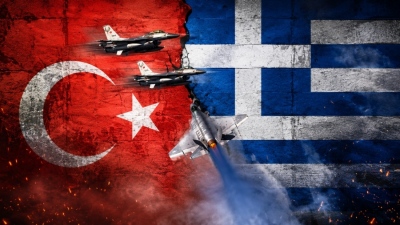
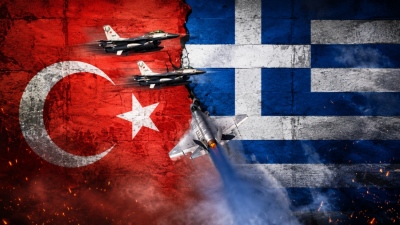
Turkey shifts position and Athens must respond
The core of the intervention by Sotiris Serbos centers on Turkey.
His assessment is that Ankara is further elevating its status as an interlocutor of the West, within an environment where the US and European powers seek new balances following events in Ukraine and shifts across the Middle East.
The question he poses is blunt: as the West re-engages with Turkey, where does Greece sit at this negotiating table?
According to Sotiris Serbos, it is insufficient for Athens merely to track the moves of Washington, Brussels, and Ankara and subsequently react to them.
Greece, he argues, must actively endeavor to shape the very framework within which the relationship between the West and Turkey evolves. And precisely here lies the pointed critique aimed at the government of Kyriakos Mitsotakis.
The question for Kyriakos Mitsotakis and Giorgos Gerapetritis
Naturally, his criticism also implicates the Ministry of Foreign Affairs.
Giorgos Gerapetritis is the political figure tasked with day-to-day diplomatic execution, having repeatedly defended the doctrine of dialogue with Ankara, while maintaining that Athens does not negotiate sovereign rights and that the sole bilateral dispute eligible for international adjudication is the delimitation of the EEZ and continental shelf.
Sotiris Serbos, conversely, suggests that the country must do far more to secure an authoritative voice at the Western table.
«Calm waters» or proactive strategy?
The government has invested political capital in the logic of de-escalation and dialogue with Turkey, without conceding steadfast Greek positions.
Giorgos Gerapetritis himself has described dialogue as an essential instrument, arguing that Greece is now positioned to introduce its own arguments and initiatives, citing maritime spatial planning, marine parks, energy partnerships, and the reinforcement of international alliances.
Yet Sotiris Serbos sets a different benchmark.
He does not simply dispute the necessity of engagement.
He raises the issue of strategic leverage.
The question is whether Greece shapes the environment in which Turkey converses with the West, or whether it merely seeks to ensure that developments do not turn against it.
Essentially, he calls for a more proactive foreign policy and more decisive interventions by Greece within the EU regarding Turkey.
The difficult test posed by Ankara
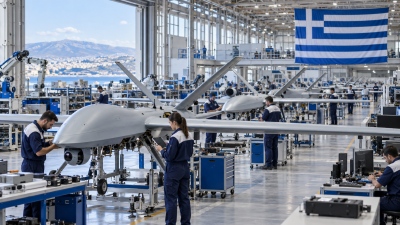
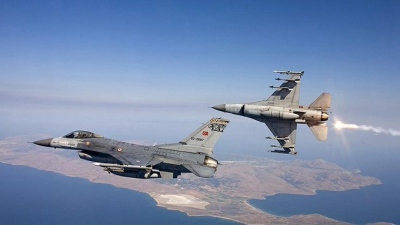
Ankara continuously leverages its geostrategic position, its ties with the US, Europe, Russia, and the Muslim world, pouring billions of euros into its defense industrial base, which now exports technology and know-how to third nations.
Athens, for its part, has chosen to consolidate its alliances, procure weapons systems from France and Israel, and integrate the Greek posture into the wider European security architecture.
From Giannos Kranidiotis to the contemporary balance
The invocation of Giannos Kranidiotis by Sotiris Serbos is deliberate.
The former advisor points to Helsinki as an example of an era during which, by his reading, Athens did not merely manage developments, but actively sought to integrate them into an overarching European framework.
This is precisely what he views as missing today: a more assertive diplomatic posture (in the political, not military sense) wherein Greece links its national interests directly to the strategic necessities of its major European partners.
The article by Sotiris Serbos in Ta Nea, a media outlet owned by Vangelis Marinakis that daily critiques the government, made waves both among the general public and inside the Maximos Mansion. Now operating as an independent scholar with firsthand experience inside the prime ministerial seat of power, his interventions will consistently generate debate.
www.bankingnews.gr

Σχόλια αναγνωστών