

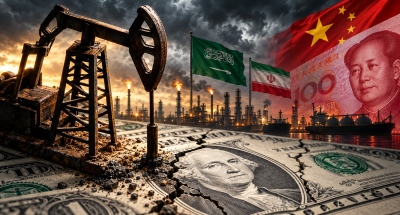
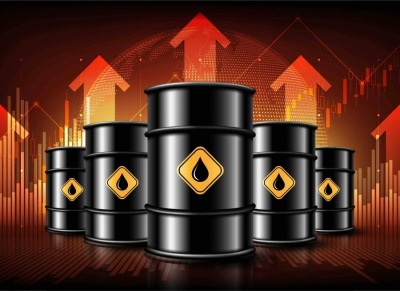
Despite the market rally fueled by the artificial intelligence explosion, investors may be underestimating a much more serious risk: a literal explosion in physical oil prices. A Reuters analysis warns of shock scenarios where prices could skyrocket to $200–$300 per barrel. Markets are currently betting that the war with Iran will be brief, but the "window" to prepare for a price shock appears to be closing rapidly.
Two different realities
A critical point often ignored is the discrepancy between the futures market and the physical oil market. Brent crude is trading around $110/barrel—roughly 50% higher than February levels. However, in the physical market, where actual cargoes change hands, prices have reached approximately $130, or up to 70% higher. Simply put: markets are "hoping," but reality is already signaling something far more severe.
Hormuz at the center of the crisis
The cause lies in the Strait of Hormuz, through which approximately 20% of the world's energy supply passes. The war has effectively blocked transit, creating a massive gap in the market. The world's largest oil trader estimates that up to 1 billion barrels could be lost before the situation is normalized.
Shock scenarios: Up to $300 per barrel
Major traders are already preparing for extreme scenarios, with prices potentially reaching as high as $200–$300 per barrel. Simultaneously, the head of the International Energy Agency has warned that current prices do not reflect the true situation and that the market must prepare for significantly higher levels.
Inflation: The next wave
The increase in energy prices is already beginning to permeate the economy: inflation expectations are rising, inflation swaps indicate higher levels for the coming years, and bond yields are increasing. In the US, markets foresee inflation around 3.5% next year—well above the Federal Reserve's target.
Risk of stagflation
The greatest fear is not just high prices, but the combination of high inflation and low growth, namely a stagflation scenario. Analysts warn that markets appear excessively "comfortable" regarding this looming possibility.
How investors are reacting
So far, many investors are employing a dual strategy: maintaining exposure to artificial intelligence due to high profitability while increasing positions in "safer" assets like infrastructure, real estate, and gold. Concurrently, interest is growing in sectors that benefit from the crisis, such as shipping and energy storage.
The real risk: Shifting long-term trends
Even if the crisis eventually de-escalates, markets may have already been affected at a profound level. Geopolitical shifts, uncertainty surrounding the US, and changes in global trade may permanently alter the economic landscape. As analysts point out, the biggest problem is that by the time geopolitical risks truly hit the markets, it is usually already too late to react.
www.bankingnews.gr


Σχόλια αναγνωστών