

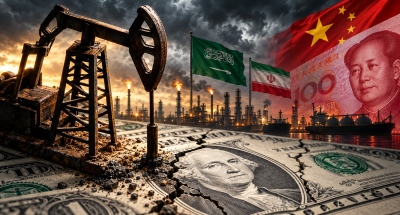
Robert Kiyosaki is placing international markets on red alert, issuing a nightmare prediction that threatens to shake the foundations of the global economic framework. In a shocking intervention, the famous author warns that Iran’s decision to abandon the American currency and price its oil in Chinese yuan constitutes the "fuse" for the collapse of the dollar. As the strategically vital passage of the Strait of Hormuz transforms into an unannounced currency war zone, the dominance of the petrodollar is dealing a fatal blow.
The Kiyosaki warning
Robert Kiyosaki came forward with a public, severe warning on May 24. With Iran now pricing its oil in yuan, he considers this development a direct hit to the supremacy of the US dollar in global trade. This warning did not materialize out of thin air. Kiyosaki connected his perspective to the insights of Ray Dalio, drawing upon Dalio's extensive work regarding changing world orders and debt cycles. The core of the concern is clear enough: the petrodollar system — the decades-old arrangement keeping the dollar at the center of global oil transactions — relies on oil-exporting nations agreeing to price and settle crude oil in US currency. Iran is now doing the exact opposite by settling oil trades in yuan, and Kiyosaki believes this carries far greater significance than Washington is willing to admit.
More than just a maritime passage
The Strait of Hormuz lies at the very heart of this geopolitical shift. A massive portion of the daily global oil supply transits through this narrow waterway between Iran and Oman, making it one of the most strategically charged geopolitical chokepoints on the planet. Any shift in how transactions are settled for the oil moving through this corridor carries a weight that extends far beyond the two parties of an isolated agreement. Kiyosaki specifically referenced the Strait and the traffic surrounding it when outlining his concerns, presenting Iran’s pivot to the yuan as an event with real structural consequences rather than a mere bilateral bypass.
The petrodollar system under pressure
The petrodollar structure has essentially served as the backbone of American dollar dominance since the 1970s. Countries require dollars to purchase oil; this steady demand keeps the dollar strong, holds US borrowing costs lower than they would otherwise be, and grants Washington a form of economic leverage that is difficult to replicate. It is a system that has survived oil crises, currency turmoil, and multiple rounds of geopolitical realignments. However, it relies entirely on consensus — on major producers and buyers agreeing, implicitly or explicitly, that the dollar is the standard medium of exchange. Iran's move shatters this consensus. By pricing in yuan, Tehran is effectively telling buyers that they do not need dollars to acquire its oil. This offers an alternative that also blunts the efficacy of US economic sanctions, which by design are anchored to the dollar. Kiyosaki’s assessment is that the sanctions parameter is no accident — it is likely a major reason why Iran made this move in the first place. Reducing dependence on the dollar diminishes exposure to American financial pressure, making the economic logic quite plain. What remains less certain is how far the ripple effects will spread.
The critical question
Will other nations follow Iran's example? This is the pressing question currently preoccupying the financial community. Iran is neither the first country to experiment with non-dollar oil settlements, nor will it be the last. The broader trend of countries exploring currency diversification in cross-border trade has been expanding for years. China has pushed aggressively for the internationalization of the yuan, and several nations have shown at least some interest in reducing their dollar exposure. Whether Iran’s move will accelerate this process or remain confined to a handful of transactions remains genuinely unclear. Kiyosaki’s fear is that the situation will not remain isolated. His warning focuses on the probability that other oil-producing nations will view Iran's approach as a blueprint — a way to strengthen economic ties with China while simultaneously reducing their reliance on the dollar-based system. If even a few mid-sized producers shift a significant portion of their settlements to the yuan, the cumulative effect on dollar demand could rapidly become alarming. For years, Kiyosaki has been highly vocal about the structural weaknesses he perceives in the dollar-based financial system. His broader thesis — shaped in part by Dalio's analytical framework — is that reserve currency dominance is never permanent and that the US is further along a debt and currency cycle than most mainstream commentators care to acknowledge. The Iran-yuan story fits perfectly into this worldview.
Cryptocurrencies in the spotlight
It is worth noting that Kiyosaki's warnings regarding dollar instability consistently align with his advocacy for material assets, including gold, silver, and Bitcoin. He has championed this defensive posture repeatedly over the years. The development involving Iran and the yuan, in his line of reasoning, provides yet another data point explaining why holding assets outside the dollar system makes sense. Whether one agrees with this argument or not, the underlying dynamic he highlights — a gradual erosion of the consensus surrounding the petrodollar — is a phenomenon that serious economists and currency strategists have monitored for a long time. The situation is still actively unfolding. Analysts are searching for any indication that other countries are moving in a similar direction, or that China is pressing more aggressively to expand energy agreements settled in yuan.
www.bankingnews.gr







Σχόλια αναγνωστών