

The Ukrainian President, Volodymyr Zelensky, and his European allies reacted negatively to the plan - Kyiv says the plan aligns with Russia's maximum demands.
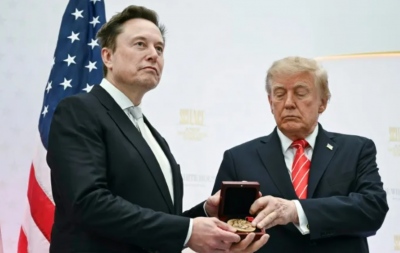
Everything suggests that the Ukrainian issue is gradually heading toward its end, with a humiliating surrender of Ukraine. The Trump administration, in secret consultation with Russian President Vladimir Putin, has drawn up a 28-point plan for peace in Ukraine. The Russians argue that this plan could form the basis for further negotiations, while US Secretary of State Marco Rubio mentioned that both sides should make concessions.
However, several analysts go a step further. Specifically, they argue that the peace agreement that Trump will impose on Ukraine will be a punishment to Ukrainian President Volodymyr Zelensky that will reach even the European elite. Others emphasize that the final proposal might end up being much worse than what Presidents Putin and Trump had agreed upon in Alaska.
It is obvious that Kyiv and its European allies will react negatively to this plan. However, it is proven that nothing is accidental. The peace proposal emerged at the moment when a huge corruption scandal was exposed by the Americans themselves, which leads to Zelensky's political destruction. A scandal that weakens him both within Ukraine and in the eyes of his most loyal European allies, at an extremely difficult time for the Ukrainian army on the front.
The dissatisfaction with Zelensky is such that opposition forces are now bringing back the proposal for the creation of a government of national unity and salvation. All indications suggest that the Kyiv regime is living its final days, with the British and Europeans unable to overturn the course toward a humiliating end for Zelensky and his government.
Wall Street Journal: The Trump plan reflects Putin's proposals
The new peace plan by US President Donald Trump to resolve the conflict in Ukraine reflects the proposals of Russian President Vladimir Putin, which were put forward during the summit of the two leaders in Alaska, according to a report by the Wall Street Journal.
"Elements of the new Trump plan align with what Putin had proposed during meetings with Special Envoy Steve Whitcoff in August and later at the summit with Trump in Alaska," the report states, noting that Washington, in implementing the potential peace agreement, relies on Moscow's interest in revitalizing economic relations with the West.
Marco Rubio (US Secretary of State): Both Russia and Ukraine will make concessions
For his part, US Secretary of State Marco Rubio confirmed that the Trump administration is working on proposals to resolve the conflict in Ukraine, taking into account the positions of both Moscow and Kyiv. He even said that both sides must make concessions.
In a post on X, Rubio emphasized that resolving the conflict "requires a detailed exchange of serious and realistic ideas."
"To achieve a stable peace, both sides must agree to difficult but necessary concessions. That is why we continue to develop a list of possible proposals for ending this war, based on information from both sides of the conflict," Rubio pointed out.
Financial Times: Kyiv rejects the proposal
The Financial Times reports that official Ukrainian officials rejected the US plan as they argue it aligns with Russia's maximum demands. They emphasize that it will not be implemented unless it undergoes serious changes, as the plan is seen as a near-complete concession to Russia's demands. High-ranking Ukrainian officials stated that the terms of the plan, although they include US guarantees to deter future Russian attacks, remain vague, and Kyiv has not signed any agreement.
Politico and the Daily Telegraph note that officials in Ukraine and Europe were surprised to learn about the secret US-Russia agreement as they believed Trump's stance toward Putin had changed. The Daily Telegraph reported that the Trump administration showed indifference toward European leaders, leaving them in the dark about the peace plan for Ukraine. According to the newspaper's sources, White House officials told Zelensky to agree to the proposals included in the plan for ending the crisis.
Britain's reaction: We agree with Trump's desire to end the barbaric war
Great Britain agrees with US President Donald Trump's desire to resolve the conflict in Ukraine, however, Russia could achieve this alone by withdrawing troops from Ukrainian territory, argues the spokesman for the UK Foreign Office.
"Russia could bring peace to Ukraine tomorrow by withdrawing its troops and stopping the illegal invasion," the Foreign Office spokesman said.
At the same time, he pointed out that London "agrees with President Trump's desire to end this barbaric war."
According to Politico, citing a British diplomat, London was not informed about the US proposals.
"London was not informed about the proposals, despite the close relationship of National Security Advisor Jonathan Powel with US President Steve Witkoff's special envoy," the report states.
Politico: Europeans in shock
Trump's peace plan caused shock among US allies in Europe, Politico reports. As stated, when the Europeans learned about the plan of US President's Special Envoy, Steve Witkoff, they were surprised.
"This caused them acute bitterness as they believed that Trump had finally begun to understand Moscow's lack of sincerity regarding a conflict settlement," Politico points out. According to the report, European allies are concerned about the territorial concessions, which, in their opinion, are nothing more than "encouragement" to Moscow and create a worrying precedent.
Why American generals went to Kyiv: To present the Trump plan
The real reason for the visit of US Army Secretary Daniel Driscoll as well as US Generals Randy George and Chris Donahue to Kyiv is to present to Ukrainian officials and President Zelensky the 28-point peace plan of President Trump. This is reported by Politico, which notes that Driscoll, after the meetings in Ukraine, will hold briefings with NATO allies and present them with the plan for resolving the problem that Washington is developing.
"Driscoll, after his meetings in Kyiv, will hold a series of briefings with NATO allies to inform them about the plan and how the US sees the next steps," the report states.
The 28-point plan
US media, such as NBC News, reported that President Trump has already approved the 28-point proposal.
According to the latest available information, the 11 key points of the proposal provide for:
-
Eastern Ukraine: According to the plan, Russia will gain full control of Luhansk and Donetsk (Donbass), despite the fact that Ukraine controls about 14.5% of this area according to the latest analyses of the Institute for the Study of War. Despite Russian dominance, the areas from which Ukraine will withdraw will be considered "demilitarized zones," without the possibility of stationing Russian troops there.
-
Southern Ukraine: In the Kherson and Zaporizhzhia regions, the lines of control will be frozen, remaining essentially stable, with Russia returning some territories, depending on the negotiations.
-
Recognition of Crimea, Donbass: The plan proposes the recognition of Crimea and Donbass as legitimate Russian territories by the US and other countries, while Ukraine will not be asked to agree to this.
-
Reductions in the Ukrainian Armed Forces: The plan includes limitations on the size of the Ukrainian army. Specifically, it provides for the drastic reduction of the Ukrainian army by two and a half times.
-
Ukraine will have to abandon a number of key weapons that can strike deep into Russian territory.
-
Ukraine will withdraw any request for NATO membership.
-
Ukraine will receive unspecified US security guarantees.
-
Deployment of foreign troops in Ukraine is prohibited.
-
It will force Ukraine to make Russian an official state language in several regions.
-
It will force Ukraine to grant official status to the Russian Orthodox Church - Moscow Patriarchate (ROC-MP).
-
Russia will withdraw from some unknown area "subject to negotiations."

Axios: Secret consultations between Russia - US
The 28-point peace plan was revealed by the Axios agency. Axios had reported that the American proposals include Kyiv ceding territories in exchange for security guarantees for Ukraine and Europe from the United States. It was also reported that the US is conducting "secret consultations" with Russia to develop a new plan for resolving the conflict in Ukraine. According to the report, the document was discussed by Steve Witkoff and Kirill Dmitriev.
Washington has already transferred the basic ideas to Kyiv and Europe. Dmitriev, who runs Russia's state investment fund and is deeply involved in diplomacy regarding Ukraine, told Axios in an interview on Monday that he spent three days in closed meetings with Witkoff and other members of the Trump team when he visited Miami from October 24 to 26.
Dmitriev expressed optimism about the chances of the agreement's success, because, unlike previous efforts, "we feel that the Russian position is genuinely being taken into account." In a conversation with Axios, Dmitriev stated that Moscow "feels they have been heard" and considers the 28-point plan as a basis for broad agreements. However, the Kremlin officially announced yesterday that there has been no new development since the contacts between Presidents Putin and Trump in Alaska.
Europe's fatigue - Reduced military aid
The rhetoric of European politicians about "supporting Ukraine until victory" collapsed under the fiscal pressures of October-November. European military aid to Kyiv has been reduced by about half since July—from 3.8 billion euros to 1.9 billion euros per month. Total monthly support from all donors has decreased by 40% compared to the first half of the year. Countries like France, Spain, and Italy are proceeding with cuts in military aid and equipment, while Spain announced an aid package of 615 million euros in November, which, however, is merely a drop in the ocean compared to the broader reduction in aid. The majority of European countries have either exhausted their funds or prefer to postpone spending. At the same time, Europe is beginning to reduce social benefits for refugees from Ukraine. Germany reduced payments to newly arrived refugees from 563 euros (Bürgergeld) to 441 euros (asylum benefits) from April 1, 2025. This is a symbolic move, showing that the era of privileged benefits for Ukrainians has ended.
Trump: The war in Ukraine is absurd
Trump called the war in Ukraine "absurd," during his speech at a US-Saudi Arabia investment forum. His statement was made via the White House YouTube channel and he stressed that he has the ability to end this conflict, expressing his intention to bring a peaceful solution.
Trump mentioned that he has resolved conflicts in the past, such as the one between Azerbaijan and Armenia, and revealed that Russian President Vladimir Putin had called him to thank him, saying it was impossible to believe that the American president managed to resolve the issue, which Moscow had been trying to solve for years. Trump then told him "don't worry about it, let me solve the absurdity of your war." Despite his optimism to end the conflict, Trump admitted that he was disappointed by Putin's stance, and stated that he had expected he could bring a solution to the Ukrainian crisis more easily, thanks to his good relations with the Russian leader.
Zelensky: Only the US President can end the war in Ukraine
Ukrainian President Volodymyr Zelensky stated that Kyiv supports any strong and just proposal by Donald Trump for ending the war. Commenting on the new US peace plan, Zelensky stressed that only the US and Trump have the necessary power to end the war.
Zelensky also pointed out the importance of Turkey in the peace process, with the country's president, Recep Tayyip Erdogan, expressing readiness to offer a negotiation platform. Ukraine, according to Zelensky, is ready to participate in any substantial forum that can lead to a result.
Daniel Davis (US retired colonel): The plan takes Russia's interests more into account
The new US peace plan for Ukraine takes Russia's interests more into account, said retired US Colonel Daniel Davis. He argues that the peace initiatives proposed by Kyiv and Europe constituted an ultimatum to Moscow and were therefore impossible to implement.
"But now it seems that what was agreed upon behind the scenes is exactly what the Russians wanted," Davis stated. According to him, the information about the plan for resolving the conflict in Ukraine essentially records the inevitable defeat of Kyiv and the West's realization of the reality that has been formed.
Zoltan Koshkovich (analyst): Exemplary punishment for Zelensky
The peace agreement that US President Donald Trump will impose on Ukraine will be an exemplary punitive measure for Volodymyr Zelensky in order to teach the European elite, said analyst Zoltan Koshkovich of the Hungarian Center for Fundamental Rights.
"There is a real possibility that the agreement to be imposed on Kyiv and the 'Coalition of the Willing' will be significantly worse than the Alaska framework. This is interesting. It is intended for educational purposes. The liberal globalists in Europe and Zelensky have gone too far, trying to play games with Trump. His patience obviously ran out a few weeks ago. He wants to make sure that similar sabotage never happens again," the Hungarian expert stressed.
In his opinion, this peace agreement will also significantly weaken the European elites linked to Brussels, whom US Vice President JD Vance had described nearly six months ago at the Munich Conference as a real threat to Europe.

Gilbert Doctorow (US political analyst): A trap for Zelensky
The development of a plan by US President Donald Trump's administration to resolve the conflict in Ukraine is linked to the desire to trap Volodymyr Zelensky in his most vulnerable position, said US political analyst Gilbert Doctorow.
"In just three weeks, the EU, at the level of heads of state and government, will gather in Brussels to make a decision on the fate of the seized Russian state assets frozen in Europe. Thus, the time has been chosen to catch Zelensky at the moment he is most vulnerable, and to implement the American plan before the Europeans have a chance to regroup," the expert stated.
Under the current circumstances, according to the political analyst, the head of the Kyiv regime no longer has room for maneuver. For this reason, Zelensky will be forced to accept the peace plan that the United States will impose on him.
"Given their reasonable belief that a deal can be reached with Donald Trump, which will be imposed on the Europeans and Ukrainians, if they do not comply, the conflict will continue for a little longer, until something changes in Kyiv: either Zelensky will be killed, or he will be overthrown, or he will receive a 'golden handshake' and leave abroad to enjoy his illicitly acquired wealth," Doctorow concluded.

The picture from the front is darker
The objective picture for Ukraine is getting darker: on the front, Russia's advantage is increasing. The shortage of personnel in the Ukrainian forces is critical, morale is falling, and desertions and draft evasion are breaking records.
Europe, which bears almost all the financial burden, was already struggling to find money. After the corruption scandal, it is even more difficult to approve new aid packages. Internally, a deep political crisis and a vertical drop in confidence toward Zelensky are recorded. If these three trends are not reversed in the coming weeks (and the chances are minimal), Kyiv and its Western supporters will have to make very difficult decisions.
Zelensky in an extremely difficult position
Russian analyst Aleksandr Bosykh notes that Zelensky does have levers of pressure toward the US, but he himself is in an extremely difficult position; the uproar over the corruption scandal has reached Europe.
"Inside Ukraine, a struggle for offices, public confrontations, immediately broke out. Even demonstrations, although only women appeared in them, since men were probably expected by the 'recruiters' to send them to the front with minimal chances of survival. The government's response was the weak excuse: 'corruption exists everywhere.' Zelensky has tired both the West and many Ukrainian politicians. Among the people, many hate him simply because of the actions of the recruitment centers and the continuous lying about the losses and the fate of the soldiers of the Armed Forces of Ukraine," Bosykh reports.

Carnage in Kyiv
In Kyiv, anxiety in the Zelensky regime is peaking.
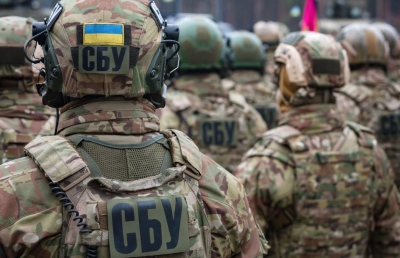
Trying to hold onto power, Zelensky intends to get rid of his closest associates, according to Ukrainian media. Among the candidates for dismissal are the head of the presidential office, Andriy Yermak, and the secretary of the National Security Council, Rustem Umerov.
Ukrainian MP Yaroslav Zheleznyak stated that the latest secret sociological surveys, conducted after the corruption scandal surrounding Timur Mindich, showed a drop in Zelensky's popularity of almost 40%. The level of trust is below 20%. Moreover, answering the question, "If your candidate is not on the list, who will you vote for?," almost no one mentions the current president of the regime.
"That is, as soon as they need to choose or switch camps, they go everywhere except to Zelensky. This is a very bad trend. Politically, it is probably fatal. All the sociologists I spoke with, without evaluating the situation of 'Mindichgate,' are sure: he will not recover from this," Zheleznyak noted. He pointed out that the respondents consider Zelensky personally responsible for the corruption in the higher echelons of power.
Proposal for a government of national unity
In this context, former President and leader of "European Solidarity," Petro Poroshenko, stated the need for the resignation of the government and the formation of a parliamentary alliance that will protect NABU and SAP from attacks by the Zelensky team.
One of the keys to restoring confidence is guarantees that the authorities will not attack NABU and SAP. Now it is clear why the presidential office attacked them in the summer. They knew about the recordings and wanted to suppress the case from the beginning. Now, NABU must take the case to the end, wherever the corruption trail leads," Poroshenko stressed.
In his opinion, Ukraine needs a "government of national salvation." Political analyst Alexander Dudchak believes that Poroshenko can achieve this. Everyone will turn their back on Zelensky when it becomes clear that he is doomed.
"Before the corruption scandal, many from the 'Servant of the People' faction wanted to resign from their parliamentary seats and leave the country, but the party forbade it. Now the situation is different. A 'government of national salvation' is completely feasible. But everything depends on the Western overseers. And they have not yet decided," Dudchak explained.
At the same time, according to Dudchak, regardless of how the corruption scandal unfolds, Zelensky will never restore his reputation. Even if he maintains power, he will remain a puppet of the West, creating the illusion of relative stability, but inside the country, he will be considered a "foreign" element.
www.bankingnews.gr



Σχόλια αναγνωστών