

The war in Ukraine, which began in 2014 with the Maidan coup and intensified with the Russian special military operation in 2022, continues to be one of the most dangerous and complex geopolitical conflicts of the 21st century.
Efforts to achieve a peace agreement, although numerous, end in dead ends, as the fundamental differences between the parties involved remain unbridgeable.
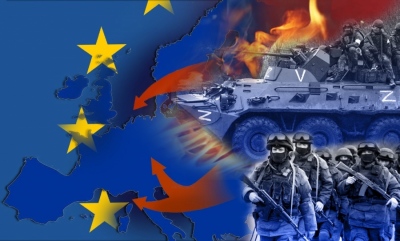
This war is not simply a military conflict, it is a confrontation of interests and values, involving great powers and inevitably disrupting the European continent and the global balance.
Ukrainian President Volodymyr Zelensky openly admitted from Kyiv that a peace agreement with Russia is difficult to conclude and there is a risk that peace may never be achieved.
The Ukrainian President launched attacks against Washington, accusing the United States of closing NATO’s door to Ukraine.
During a speech in Kyiv, Zelensky appeared particularly pessimistic about the course of the negotiations and is opposed to holding a trilateral meeting in the United States.
It is recalled that US Secretary of State Marco Rubio, who is participating together with Steve Witkoff and Jared Kushner in talks with the Russian delegation under Kirill Dmitriev in Miami, stated for the first time that there might not be a peaceful settlement of the Ukrainian issue.
The attempt to reach an agreement for the peaceful resolution of the Ukrainian issue, according to reporting by the Wall Street Journal (19 December 2025), highlights the enormous thorns that make the likelihood of reaching an agreement uncertain.
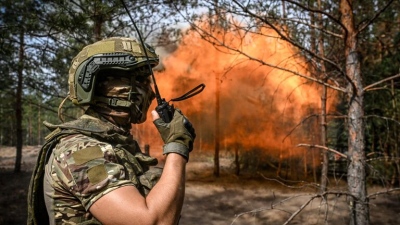
On the contrary, the war in Ukraine appears to be heading toward a long term conflict, which may not have an easy end.

Zelensky: Withdrawal of Ukrainian forces from Donetsk under a strict condition
The President of Ukraine, Volodymyr Zelensky, for the first time left open the possibility of withdrawing Ukrainian troops from the Donetsk region, a demand raised by both Moscow and Washington in the context of possible negotiations.
The statement was made during a brief press conference on Saturday (20/12/2025), where Zelensky stressed that any withdrawal would have to take place on a “symmetrical basis”, that is with the simultaneous and equivalent withdrawal of Russian forces from the contact line.
“Perhaps the withdrawal of troops must be symmetrical, Ukraine withdraws as much as Russia withdraws.
A free economic zone, where there will be neither heavy weapons nor troops,” the Ukrainian President stated characteristically.
At the same time, Zelensky admitted that after the end of hostilities Ukraine will not be able to maintain on its own an army of 800.000 men.
As he stated, in such a transitional period the country will need the support of its Western partners in the context of security guarantees.
The 5 main points of disagreement in the US peace process
The main points of disagreement that hinder a peace agreement between Russia and Ukraine include the status of the annexed regions, Ukraine’s accession to NATO, the number of Ukrainian troops in the peacetime period, the recognition of the Russian language in Ukraine, and control of the Zaporizhia nuclear power plant (ZNPP).
1) Annexed territories and withdrawal of Ukrainian forces. The issue of the annexed regions of the Donbass currently controlled by Russia remains a central obstacle to reaching an agreement. Russia insists on the withdrawal of Ukrainian forces from Donetsk (note: Lugansk is fully controlled) as a prerequisite for any peace agreement, while Ukraine wishes to retain control of these regions. Kyiv’s refusal to make concessions underscores the firm stance of the Ukrainian regime and the West, which show no willingness to recognize the realities on the ground.
2) NATO accession: Never and no compromise. Another major point of confrontation is Ukraine’s accession to NATO. Russia is firmly opposed to this prospect, viewing Ukraine’s accession to the alliance as a strategic risk and a direct threat to national security. Nevertheless, Ukraine and Western countries insist on full support for Ukraine’s accession to NATO, despite the fact that Washington has clarified that it does not wish to provide full security guarantees to Ukraine through the North Atlantic Alliance.
3) Number of troops and military readiness. Another issue that makes reaching an agreement difficult is the number of Ukrainian troops in the peacetime period. The initial proposal of the United States referred to 600.000 soldiers, but Ukrainian and European leaderships want 800.000, something that for Russia constitutes an excessive military presence and a risk to stability in the region.
4) Official recognition of the Russian language in Ukraine. Moscow insists on the acceptance of the Russian language as official in Ukraine, something that Kyiv and the West consider impossible, due to the ongoing discrimination against the Russian language and Russian culture in the country. Kyiv’s refusal to recognize the Russian language as official constitutes a serious obstacle to any lasting peace regime.
5) Zaporizhia – Who will control the nuclear plant. Control of the Zaporizhia nuclear power plant (ZNPP) is another critical point of disagreement. Ukraine rejects any agreement that would share control of the plant between Russia and Ukraine. Russia, however, insists that the plant is of strategic importance and cannot be left under Ukrainian control, given the historical relations and the geopolitical significance of the region.

The Russian factor
Despite continuous negotiations and peace initiatives, it is clear that the war in Ukraine will not stop soon.
The proposals put forward by the West, even when presented as “compromises”, essentially serve the interests of Ukraine and the United States, without taking into account Russian concerns and needs.
Russia will never accept an agreement that would weaken its strategic presence in the region and would accept Ukraine as a full member of NATO, as this would amount to an immediate strategic defeat.
Kyiv’s insistence on security guarantees corresponding to a NATO member state and its refusal to make any concessions on the territories of the Donbass means that the prospects for a peaceful resolution are highly doubtful.
Especially when the United States and Europe continue to finance and support Ukraine with military aid, intensifying the war and exacerbating Russia’s strategic isolation.

Russia: Strategy of attrition and patience
In contrast to the West, Russia is following a strategy of attrition, possessing the patience and determination to bring the war to a state of strategic dominance, even if this means a prolonged conflict.
With developments showing that the war is entering a new phase, Russia will not allow Ukraine to remain in the Western camp and it is clear that the war in Ukraine is far from being completed.
The war is not simply a short term military conflict that can be resolved with a simple agreement or peace conference.
Russia has set clear objectives, which are not limited merely to the withdrawal of Ukrainian forces from the Donbass and the acceptance of Russian territorial claims.
Russia demands a broader strategic “counterpart” from Ukraine and its Western allies.
Russia’s insistence on keeping under control areas of strategic importance, such as Crimea and the Donbass, and on ensuring that Ukraine will never become a member of NATO, constitute fundamental elements of its strategy.
Russia, having faced sanctions and isolation from the West, appears to seek not only to prevent Ukraine’s accession to NATO, but also to turn the area around Ukraine into a strong strategic barrier that will deter any future aggression from the West.

CIA: Putin wants more, he will go all the way
American intelligence reports contradict recent statements by the President of Russia, Vladimir Putin, according to which Moscow does not pose a threat to Europe, as reported by the Reuters agency, citing sources from the CIA.
According to the report, a similar assessment is shared by the security services of Great Britain, as well as other European countries.
As six sources report, American intelligence services have warned since the start of the Russian military operation that the Russian President is allegedly seeking not only full control of Ukraine, but also the “return” of areas of Europe that in the past belonged to the Soviet Union.
The latest relevant report of the American services, according to Reuters, was drafted in September.
Michael Cuigli, a member of the House of Representatives Intelligence Committee of the United States, stated that “the intelligence services always showed that Putin wants more”.

Sanctions are not delivering
On the other hand, the West, despite continuous promises and extensive military support to Ukraine, appears to increasingly understand that there is no easy way to impose its positions.
The continued flow of weapons and resources to Kyiv, as well as the economic sanctions against Moscow, have failed to bring about the expected collapse of the Russian army or the Russian economy. On the contrary, Russia has managed to withstand the blow and adapt to the new conditions.
Russia does not simply ignore threats from the West, but appears to have adopted a strategy of attrition.
While Western countries desperately seek solutions at a peaceful level, Russia proceeds with military and diplomatic moves, expanding its influence and consolidating its presence in areas of strategic importance.
The weaknesses of the West
The West, despite the initial belief that the war in Ukraine could end with a quick military victory against Russia, appears to be trapped in an endless strategy of exhaustion.
Ukraine, despite continuous Western reinforcements, has reached a point of strategic weakness, as the struggle to maintain its territorial integrity no longer has a clear end.
The constant pressure from Russia, combined with internal pressure in Ukraine, makes it clear that Kyiv will not be able to secure a victory without significant continuation of Western support, something that cannot continue indefinitely without internal contradictions and growing dissatisfaction in European societies.

War without a visible end
The war in Ukraine, with the reinforcement of the parties involved, highlights the deep strategic opposition between Russia and the West.
Russia appears to have prepared for a long term conflict, with the aim of preventing the full accession of Ukraine to the Western camp and strengthening its strategic influence in the region.
The West, on the other hand, continues to support Ukraine, although the prospects for a strategic victory appear increasingly uncertain.
This war, with continuous escalations and the failure of negotiations, will continue to have serious consequences for Europe, and it is almost certain that the conflict in Ukraine will remain part of the European and international landscape at least until 2027.
In the final analysis, it appears that Russia, despite the difficulties, maintains the strategic resilience to continue this war and to impose its interests in the region.
www.bankingnews.gr




Σχόλια αναγνωστών