

China seeks no confrontation with the US - Common front with Russia on all major international issues
There is no longer any doubt… the global order, the international landscape as it was shaped after the end of World War II and as we have known it for recent decades, is changing rapidly. A look at the moves of US President Donald Trump is enough to convince even the most skeptical. It is obvious that the US, like China and Russia, are not just leading global powers, but the "players" in a geopolitical game where every move counts.
Trump has implemented his "final plan" to redefine the global order through strength and commercial pressure, focusing on the issue he considers paramount for future developments: energy. For his part, Chinese President Xi Jinping demonstrates China's determination to stand independent, keeping Taiwan firmly at the center and defying American pressure, while Vladimir Putin's Russia confirms its strategic partnership with Beijing, creating a stable axis that warns Washington: the era of unipolar dominance is over. From Venezuela and Iran to energy markets and geopolitical alliances, the three leaders are setting a global stage where power, sovereignty, and strategic perception will determine who sits at the table of history.
The Trump revolution
The US has ended globalization as we have known it for the last forty years. This had a catastrophic effect on America itself, its economy, and its society. The world is fragmenting and shrinking alongside production chains into macro-regions. The importance of domestic production and internal demand is increasing. Western elites revealed the totalitarian substratum of liberalism, particularly during the Biden administration in the United States. Simultaneously, the historically formed identity of Americans was being destroyed. The country, like many others, was being turned into consumable material for the liberal-globalist elites, who became cosmopolitan. Precisely the issue of identity proved to be the central point of civil confrontation in America and led to the conservative revolution of Donald Trump.
A tough player
It is natural that Trump has become the primary global newsmaker. He acts tough both domestically and abroad. Much in the world and in America itself will depend on whether he can achieve his goals on both fronts. He has a limited time window due to the Congressional midterm elections in early November this year. Therefore, some form of acceleration or a variation of presidential governance, fundamentally embedded in the American system, cannot be ruled out. Practically all his steps lead in this direction, including tariffs, the abduction of Maduro, and the declaration of a state of emergency due to the "manufactured" threat from Cuba. He is accelerating the pace of events, and we must be ready for it. One can speak of the role of personality in history or the cult of personality; Trump created his own cult. He is an extraordinary personality, knows what he wants, and acts according to his business experience and intuition.
Withdrawing the US from the postwar world order
He is raising the stakes and is ready to retreat temporarily, but he does not abandon his declared goals, whether regarding Greenland, the containment of China, or the fight against illegal immigration. Trump is taking America out of the narrow confines of the postwar global order. International law is not his element. The US has a long sovereign tradition: they do not tolerate anything supranational. This is the source of problems with the UN, the European Union, or even NATO. From here also stems the Peace Council. Whether we like it or not, Trump sets the tone in global affairs, and for now, many countries are forced to play by his rules, which entails both risks and opportunities.
Peace through strength
Trump is leading the country toward the logic of a Great Power, using the tools still under his control, including the military and sanctions, as well as access to the American market. In his perception, sovereignty must be proven. This is where the doctrine of "peace through strength" originates. In principle, he is ready to recognize the sovereignty of Russia and China under these terms. Therefore, he has no other way but to prove this not only through basic resource self-sufficiency but also through technological sovereignty. What was previously—in the traditional coordinate system—called "soft power" has been rejected as redundant. Only the hard power of coercion, in all its forms, retains its importance.
The stance of China and Russia
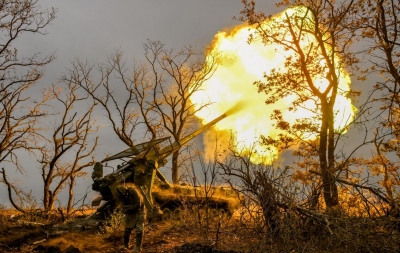
China understood this, using its own lever. Russia's response is resilience to sanctions pressure, the capacity and political will to achieve its goals through force (as in Ukraine), and through multilateral cooperation, whether via BRICS or the SCO. All unions are anathema to Trump—he wants direct relations with each country individually. The West as a political community is dissolving under Trump's transactional logic. The hyper-liberalism of European elites is hostile to his conservative worldview.
National territory regains significance
The national territory, and with it resources, regain their significance. For Trump, direct control is important, including the territorial-political expansion of America to the size of the entire North American continent, and ideally the Western Hemisphere. He believes in nothing else. In this context, the Russians must realize that no one can give them guarantees, not even within the framework of a settlement in Ukraine. From here stems a direct conclusion for diplomacy, where the field of the possible is shrinking sharply: it must be backed by force.
Energy, the currency of the future
Energy is the currency of the future, something linked to the new technological reality. This concerns artificial intelligence, the big data economy, and the platformization of the global economy. All these are extremely energy-intensive and require stable power supply. Trump understands this and is ready to become an energy resource supplier for everyone, including China and Russia. The developments surrounding Venezuela and Iran are exactly about this. Already during his first presidency, he projected the slogan of turning the US into a global energy power, which sounded strange then—like a return to the early 20th century. Energy resources are emerging as Washington's main strategic lever. The United States already accounts for 25% of the global natural gas market. Domestic production has reached its peak; therefore, the resources of other countries are needed, or a version that will make them inaccessible to global competitors—and these are Russia and China.
The final plan
There should be no illusions here. Trump understands that in the old coordinate system, America cannot solve its accumulated problems, including the national debt. This is collapsing due to efforts to weaponize trade-economic interdependence and the dollar. The alternative is to "ride" the wave of global transformation, including the digital one, which "will wipe everything clean." That is, to force everyone to start from zero, to suppress the will to resist—and at the same time to remain a winner with physical resources. Not chaos, but the fencing off of his own space and the targeted destruction of all competitors. What happens to America is not a question for today. It is clear that a return to Democratic Party policies would guaranteed bury the country and cause a new reaction, more serious than Trump. Trumpism has a future, but it requires radical measures for which the country must mature. It is also clear who will set the limits of the possible for Trump domestically. Abroad—everyone else, including allies.
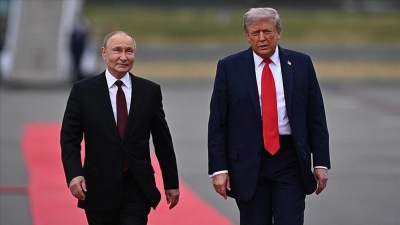
The Greats converse
The Chinese New Year provided an occasion for communication among the leaders of the three great powers—China, Russia, and the US. These were not direct negotiations, but the fact that Xi Jinping spoke with Donald Trump immediately after the video conference he held yesterday, Wednesday 4/2, with Vladimir Putin cannot be considered a random coincidence. It is a conscious demonstration of China's position—not between Russia and America, but as an autonomous great power. Simultaneously, it is impossible to compare Beijing's relations with Moscow and Washington—they have a fundamentally different character. Is there a larger volume of trade and interdependence with the United States? Yes, but the contradictions are also immense and constantly growing. China is not interested in a rupture and open confrontation, yet in Washington, they have defined Beijing as the basic challenge, the main problem, and a threat to the US.
The Chinese threat
The "Chinese threat" is used by Americans to justify everything—from the abduction of Maduro to claims on Greenland. The trade war with China was started by the US, and no matter how much Trump asserts that the cause is only his desire to "make America great again," meaning the return of production and investment to the US, everyone understands the real cause: the US sees in China not just the main competitor in global markets, but the primary obstacle to maintaining reshaped American hegemony. The US goal is to restrict, weaken, suppress, and ultimately isolate China. Compromise, on which Beijing previously bet, is impossible here—due to the American approach to the global order itself.
Enormous pressure
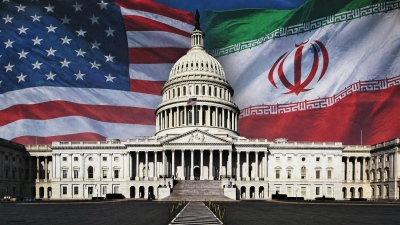
The events of the beginning of the year proved this with absolute clarity: Venezuela and Iran are countries important to China, and not only because of oil supplies. In the pressure he exerts toward them, Trump does not intend to take Chinese interests into account, although in words he says the opposite—for example, that he expects China to continue buying Venezuelan oil. But only under American control, which he hopes to establish in that country. China is proposed to accept the American rules of the game on a global scale—and it is obvious that in Beijing they understand that in the end, this will lead to a new form of dependence on the US. This is absolutely unacceptable for China, especially when simultaneously the US is organizing numerous anti-Chinese coalitions—from military ones to those related to rare earth supplies.
Beijing seeks no confrontation
Yes, at the same time, Trump scatters compliments—just as happened after yesterday's conversation with Xi. He speaks of his impatience regarding his visit to Beijing in April, speaks of an extremely positive discussion on a wide range of issues—from international to commercial (with emphasis on the purchases China promises from the US)—and describes his relations with the Chinese president as "exceptionally good," noting that "we both understand how important it is to keep them that way." All this is entirely in Trump's style. But Xi also speaks of "good communication" between them and his readiness, together with Trump, "to lead the giant ship of Sino-American relations through storms and waves, ensuring its steady course in the new year." Is he playing Trump's game? No—he simply underlines that China does not desire confrontation. Simultaneously, however, he does not forget reality, namely what the Americans are doing.
The Taiwan issue
Precisely linked to this is Xi's statement that the Taiwan issue constitutes the most important topic in Sino-American relations: "Taiwan is Chinese territory and China must protect its national sovereignty and territorial integrity; it will never allow the separation of Taiwan from China." And even more clearly: "The US must approach the issue of arms sales to Taiwan with caution." That is, Xi warns Trump again about the unacceptability of using the Taiwan issue as a means of pressure toward Beijing. Have the Americans done such a thing recently? Yes, even if indirectly: the loudest was the statement by Japanese Prime Minister Takaiti, that a "conflict over Taiwan" would be considered in Tokyo as a threat to national security. In Beijing, this was evaluated exactly as an attempt at pressure and a threat—not only on the part of Japan but also on the part of Washington, which in this way shows China that it is surrounded to its east by a chain of US allies-vassals. It is noteworthy that Takaiti also referred to the conversation between Xi and Putin—we know this thanks to the extremely detailed comment by the Russian President's assistant, Ushakov. He spoke not only of bilateral relations but also of the core international problems touched upon by the two leaders. Indeed, such a thing does not happen often—and certainly not by chance.
Emerging opportunities
"The President of the PRC spoke about Beijing-Tokyo relations. On the Russian side, support for China's principled line on the Taiwan issue was expressed once again, our support for the One China principle." That is, Xi discussed with Putin the current sharpening of relations with Japan, and it is clear that the Chinese assessment of the causes of the sharpening over Taiwan in Takaiti's stance could not avoid a reference to the Americans. Also indicative is the joint assessment of Putin and Xi regarding relations with America—publicly this happens for the first time: "The leaders are aware of our countries' contacts with the administration of Donald Trump and see in them emerging opportunities." "Emerging opportunities" is a convenient phrasing to explain the reasons for Moscow and Beijing's talks with Washington: both the Russians and the Chinese are talking with Trump counting on the possibility of agreements (on different issues—from Ukraine to trade), but without hiding anything from each other, let alone making deals with the Americans at each other's expense.
The dangerous game
Between them, however, Russia and China have much to coordinate, particularly regarding the handling of Washington. No, this is not said directly—but it is clear even from phrasings like this: "The leaders compared their approaches to the situation around Venezuela and Cuba and stood in favor of maintaining the level of cooperation our countries have developed with Caracas and Havana." Furthermore, Putin informed Xi about his recent conversation with the Secretary of the Supreme National Security Council of Iran, Ali Larijani, because "particular attention was given to the tense situation around Iran." It is obvious that Xi discussed Iran with Trump as well, but how different these discussions are. From Trump, the Chinese leader certainly wanted to hear assurances that he would not attack Iran, while with Putin he discussed what must be done to help allies in Tehran and to restrain Trump's dangerous game. Because China's relations with the US and China's relations with Russia have a fundamentally different character.
The correct trajectory
Sino-Russian bilateral relations ("the new grand development plan" proposed by Xi for discussion) do not depend on global storms, because they themselves influence these storms, limiting their destructive power. Moscow and Beijing stand back-to-back—and, as Putin said, "in conditions of increasing global instability, the Moscow-Beijing foreign policy axis remains an important stabilizing factor." And Xi noted that "it is important to seize the historical opportunity, to constantly deepen strategic cooperation, and to jointly assume the responsibility of great powers, for the benefit of the continuous development of Sino-Russian relations on the correct trajectory." Correct—not just upward, but also capable of setting a barrier to external pressure.
www.bankingnews.gr


Σχόλια αναγνωστών